Germany and Ukraine as leaders in European security: building a win-win partnership
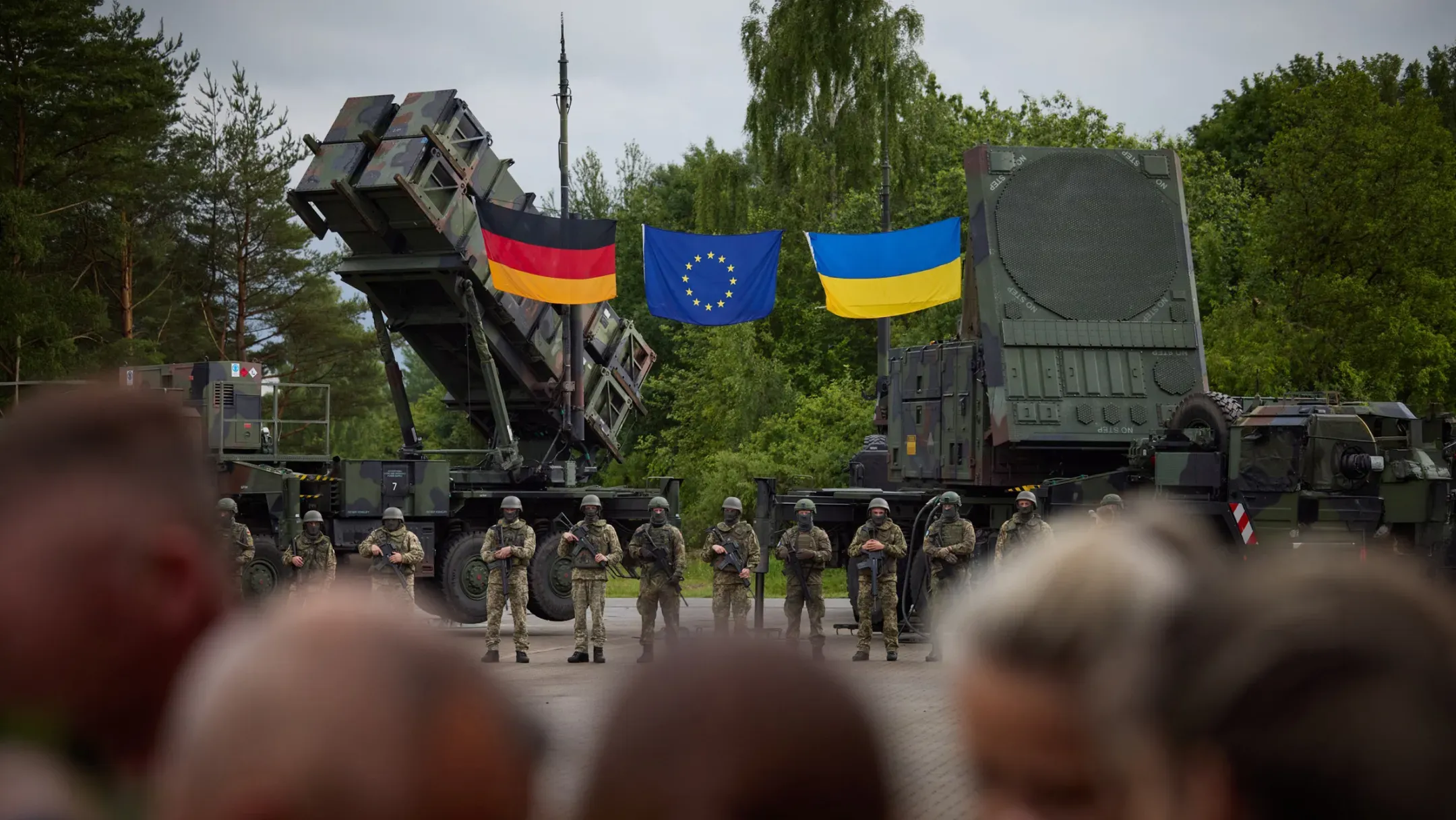
Germany is Ukraine’s largest security assistance partner, accounting for around one-third of all assistance provided to Ukraine. At the same time, cooperation between Ukraine and Germany extends beyond the traditional donor support model.
It is a win-win partnership in which Germany strengthens key Defence Forces capabilities — air defence, Ukrainian drones and missiles, and long-range artillery munitions — while Ukraine provides access to unique combat experience, technologies, and data from modern warfare.
This cooperation both strengthens Ukrainian warriors today and helps shape Europe’s future security architecture, in which Ukraine and Germany are becoming key security leaders.
Support for key priority areas
Germany’s support is focused on the areas that are now critical to Ukraine’s ability to implement its strategy: protecting its skies, containing russia’s offensive on the front line, and striking the aggressor’s economic potential.
In 2026, Germany plans to provide at least €11.5 billion in military assistance to Ukraine. These funds will support both previously signed contracts and the ongoing needs of the Defence Forces of Ukraine.
Air defence: protecting cities, energy infrastructure, and critical infrastructure
Air defence remains one of the main areas of German support.
At the April meeting of the Ukraine Defense Contact Group in the Ramstein format, Germany announced a major package to strengthen Ukraine’s air defence and strike capabilities. An additional $4 billion was allocated to air defence, and $600 million to deep-strike and middle-strike capabilities.
Another important step was the initiative launched by German Federal Minister of Defence Boris Pistorius to urgently strengthen Ukraine’s air defence. The initiative secured €2 billion in contributions from partners. This initiative enabled Ukraine to obtain critically important air defence missiles during the most challenging period.
Another strategic project involves an agreement with Raytheon to supply several hundred Patriot missiles. The agreement is valued at €3.2 billion and is financed by Germany.
Furthermore, the agreements provide for the delivery of launchers for IRIS-T air defence systems. The project is valued at nearly €200 million and is likewise financed by Germany.
Germany is also a key contributor to the PURL (Prioritised Ukraine Requirements List) mechanism, which enables the rapid procurement of critically important U.S.-made weapons for Ukraine. Overall, German contributions to PURL are already approaching $1 billion. This is a direct contribution to protecting Ukraine’s skies, particularly through the provision of missiles for Patriot systems.
Drones and missiles: scaling Ukrainian solutions
The second key area is the scaling of Ukrainian drones and missiles.
Germany is investing in capabilities that have already proven effective on the battlefield. In particular, this includes middle-strike capabilities — systems capable of striking enemy logistics, warehouses, command posts, air defence systems, and other critical enemy targets more than 20 kilometres behind the front line.
Agreements have also been reached on financing Ukrainian deep-strike capabilities with a range of up to 1,500 kilometres. In particular, €300 million will be invested in the production of domestically manufactured long-range weapons.
Ukraine and Germany are also expanding joint production of unmanned systems. The parties agreed to begin joint production of middle-strike drones featuring innovative technologies, including artificial intelligence solutions.
The project provides for the establishment of a joint venture in Germany, to be financed by the German side, with all manufactured systems to be supplied to the Defence Forces of Ukraine. At the initial stage, the project envisages the production of several thousand middle-strike drones.
Other joint manufacturing projects involving German and Ukrainian companies are already underway. Under the partnership between Germany’s Quantum Systems and Ukraine’s Frontline Robotics, a service centre has been established, and UAV production has been localised in Ukraine. In 2026, 10,000 Linza UAVs are expected to be delivered.
This marks a transition from the traditional assistance model to joint production, in which Ukraine scales combat-proven technologies while Germany gains access to solutions validated by modern warfare.
Long-range munitions: supporting artillery on the front line
The third priority area is long-range artillery munitions.
Germany is among the important participants in the ‘Czech initiative’ for the supply of ammunition. The Federal Government has financed an ammunition supply project for Ukraine worth nearly €900 million.
Long-range munitions are particularly important for Ukraine, as they enable Ukrainian artillery to operate more effectively and strike enemy targets at greater distances.
Brave Germany: joint innovations for the warfare of the future
Another cooperation track is defence innovation.
Ukraine and Germany are launching Brave Germany, a joint programme to develop defence technologies and support innovative start-ups.
The programme provides for grant support to Ukrainian and German start-ups engaged in critical areas of defence technology:
- unmanned technologies;
- artificial intelligence;
- new communications solutions;
- missile technologies;
- other domains of modern warfare.
Brave Germany is part of a new model of cooperation in which Ukraine not only receives support but also provides partners with access to combat experience, technologies, and data unavailable to other countries.
Data exchange: advancing the partnership to a new level
Ukraine and Germany have also signed Ukraine’s first defence data exchange agreement with partners. This ushers in a new level of cooperation in defence technologies and analytics.
The memorandum envisages the launch of joint projects focused on data exchange. In particular, this includes analysing the use of German weapons systems, including the PzH 2000, RCH 155, and IRIS-T, as well as exchanging Ukrainian expertise and combat data.
German partners will gain access to unique data from DELTA and other digital systems. This will support the development of new technologies, enhance military capabilities, and help prepare armed forces for modern warfare.
Supporting the training of Ukrainian service members
Germany is also allocating more than €10 million to the European Union initiative aimed at establishing military training centres in Ukraine. This will contribute to more effective, safer, and more comfortable training for Ukrainian service members.
From assistance to building Europe’s collective strength
Ukraine and Germany are steadily transitioning from a model of assistance to a strategic partnership.
Germany finances critical Defence Forces needs, supports Ukrainian production, develops joint projects, and invests in innovation. Ukraine, in turn, offers partners access to technologies, operational data, and experience gained from modern warfare.
This is a win-win partnership that strengthens Ukraine today while shaping the future architecture of European security.
Ukraine expresses its sincere gratitude to Germany, the Federal Government, German Federal Minister of Defence Boris Pistorius, and the German people for their leadership and systematic support.
As previously reported, during his visit to Ukraine, Germany’s Federal Defence Minister Boris Pistorius and Ukraine’s Minister of Defence Mykhailo Fedorov visited frontline regions and several military headquarters near the front line.
Boris Pistorius became one of the few defence ministers of partner nations to personally visit areas so close to the front line.