100,000 drones delivered through DOT-Chain Defence, UK production of the Octopus interceptor, Denys Shmyhal’s visit to the South of Ukraine, and other key updates: this week’s MoD highlights
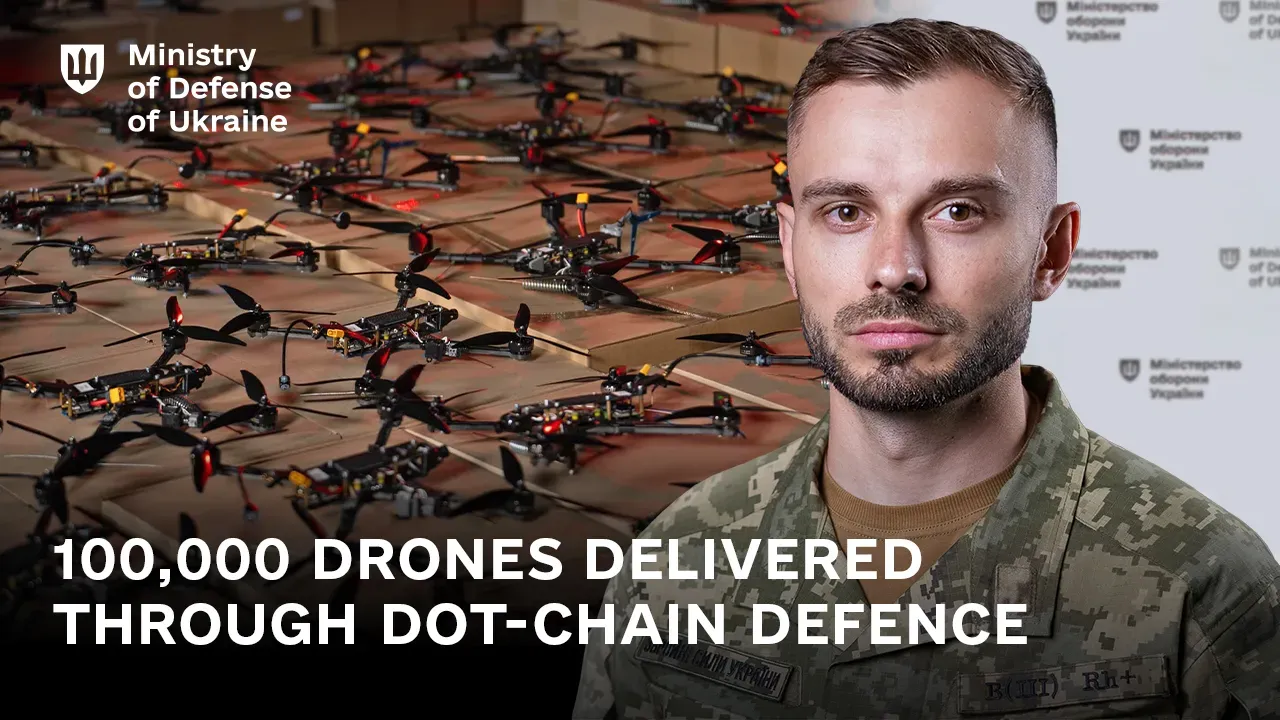
100,000 drones have been delivered to the military through the DOT-Chain Defence marketplace. Ukraine and the United Kingdom are launching large-scale production of interceptor drones designed to counter Shaheds. 55,000 service members have already changed their duty station through Army+.
These and other key MoD news items are featured in this week’s brief.
100,000 drones for Ukrainian defenders through DOT-Chain Defence
Through DOT-Chain Defence, the Ukrainian military have already received over 100,000 FPV drones — and the system has been operating for less than four months. Essentially, it is a marketplace — a simple and intuitive online store where the military can order drones directly from manufacturers in just a few clicks.
The range is extensive: over 180 FPV drone models are available from 40 Ukrainian manufacturers. In addition, DOT-Chain Defence offers reconnaissance drones, heavy bombers, electronic warfare (EW) equipment, and ground robotic systems. Furthermore, as of this week, military units can also order interceptor drones to combat enemy reconnaissance and strike UAVs.
The big question is: so who pays for it? All payments for equipment ordered by the military, as well as the full bureaucratic cycle — from contract conclusion to logistics oversight — are managed by the Ministry of Defence’s Defence Procurement Agency (DPA).
Military units simply select the drones they require on the front line, place an order, and receive them directly from the manufacturer.
The average time from order to delivery is 10 days.
A total of 180 brigades of the Armed Forces of Ukraine and two corps of the National Guard of Ukraine have already joined the project.
It should be noted that the Ministry of Defence plans to transfer 70% of next year’s drone procurement to the DOT-Chain Defence platform.
“Octopus” will also be manufactured in the United Kingdom
The Ukrainian Octopus interceptor drone is now set to be manufactured in the United Kingdom. This week, delegations from the Ministries of Defence of both countries signed this historic agreement.
Mass production of the interceptors is planned, potentially reaching several thousand units per month.
This was stated by Minister of Defence Denys Shmyhal.
The manufactured drones will be delivered to Ukraine to enhance the protection of Ukraine’s sky.
55,000 change-of-duty-station transfers processed through Army+
55,000 change-of-duty-station requests have already been approved through Army+. The simplified change-of-duty-station process was implemented in stages. At first, service members could change their duty station only within the Armed Forces of Ukraine or within the National Guard of Ukraine. Recently, transfers between the two have also been enabled. This has broadened the opportunities for service members to serve in positions where their skills provide the most significant benefit to national defense.
If the request is approved, personnel authorities issue an order for the change of duty station, which is mandatory for implementation.
Working visit of the Minister of Defence to the South of Ukraine
This week, Minister of Defence Denys Shmyhal visited the defenders of the Kherson and Mykolaiv regions. The focus of the visit was on protecting logistics in frontline regions. As of today, 78% of routes are already covered by anti-drone protection. The Minister set the following task: to protect all key routes that ensure the functioning and defense in the frontline regions.
Denys Shmyhal also met with warriors of the 34th, 39th, and 40th Separate Coastal Defence Brigades and discussed the security situation in the Kherson region. In the Mykolaiv region, the Minister of Defence visited a command post of an Air Defence Tactical Group. The command post was established recently, in September. The post maintains a continuous presence of representatives of the Armed Forces of Ukraine, the Navy, the National Guard, and the military administrations — all aimed at strengthening protection against russian air attacks on the South of Ukraine.
100 military units have transitioned to the “Impulse” system
The first 100 military units have transitioned to the “Impulse” digital personnel record-keeping system. These units have entered personnel data and are already preparing reports for their command, issuing personnel orders, finalizing daily orders, and maintaining attendance and personnel movement records. In addition, “Impulse” is used to register newly assigned personnel, issue appointment orders, and process personnel status changes for medical or family reasons.
Over time, “Impulse” will become the main system for daily personnel record-keeping within the Armed Forces of Ukraine.
“Chaika” and “Flyswatter” (“Muhobiyka”) simulators against enemy drones
Ukrainian service members are training on electronic simulators to shoot down FPVs, Lancets, Shaheds, and even cruise missiles.
The Ministry of Defence has already authorized several such systems for operational use in the Armed Forces of Ukraine, including the “Chaika” and “Chaika-M” simulator systems (the latter also known as “Muhobiyka”).
These simulators allow service members to practice using the Igla and Stinger MANPADS and the DShK and M2 heavy machine guns, as well as small arms, to engage aerial targets.
The simulators imitate real combat conditions, with enemy drones simulated to attack from multiple angles and at different speeds.
This enables service members to master effective action algorithms for different scenarios on the frontline.
New deferment option in Reserve+
Individuals liable for military service whose mother or father has a Group I or ІІ disability are now eligible to submit a deferment request through Reserve+.
After a request is submitted in the Reserve+ app, the system automatically verifies the data in state registers.
If the eligibility criteria are confirmed, the deferment is granted automatically. The entire process is fully automated — no certificates, queues, or visits to enlistment offices required — and usually takes from a few minutes to a few hours. Eleven types of online deferments are already available in Reserve+, and they can be obtained transparently, quickly, and without bureaucracy.