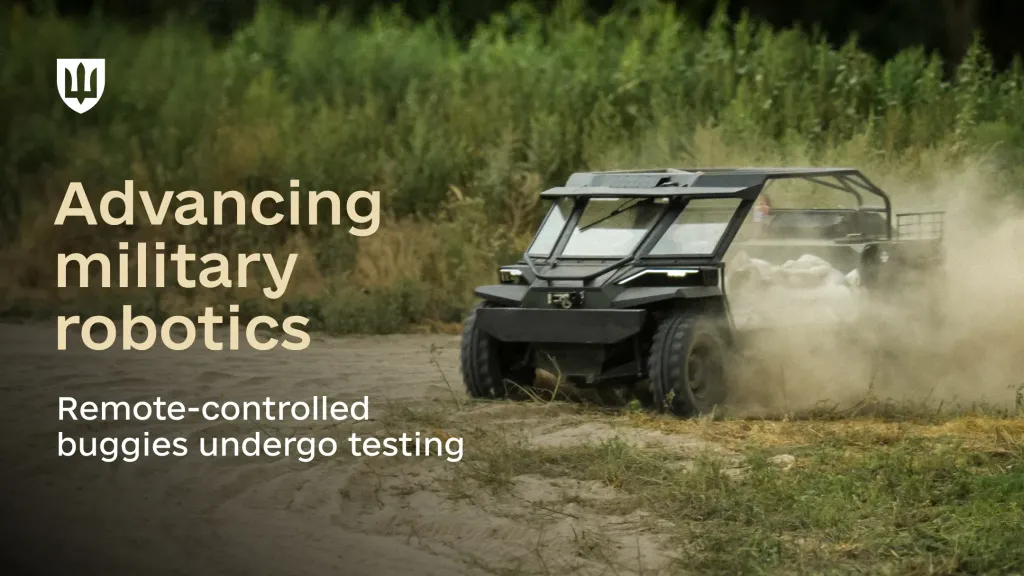
UGVs and cargo drones: how Ukraine is scaling up frontline logistics and evacuation
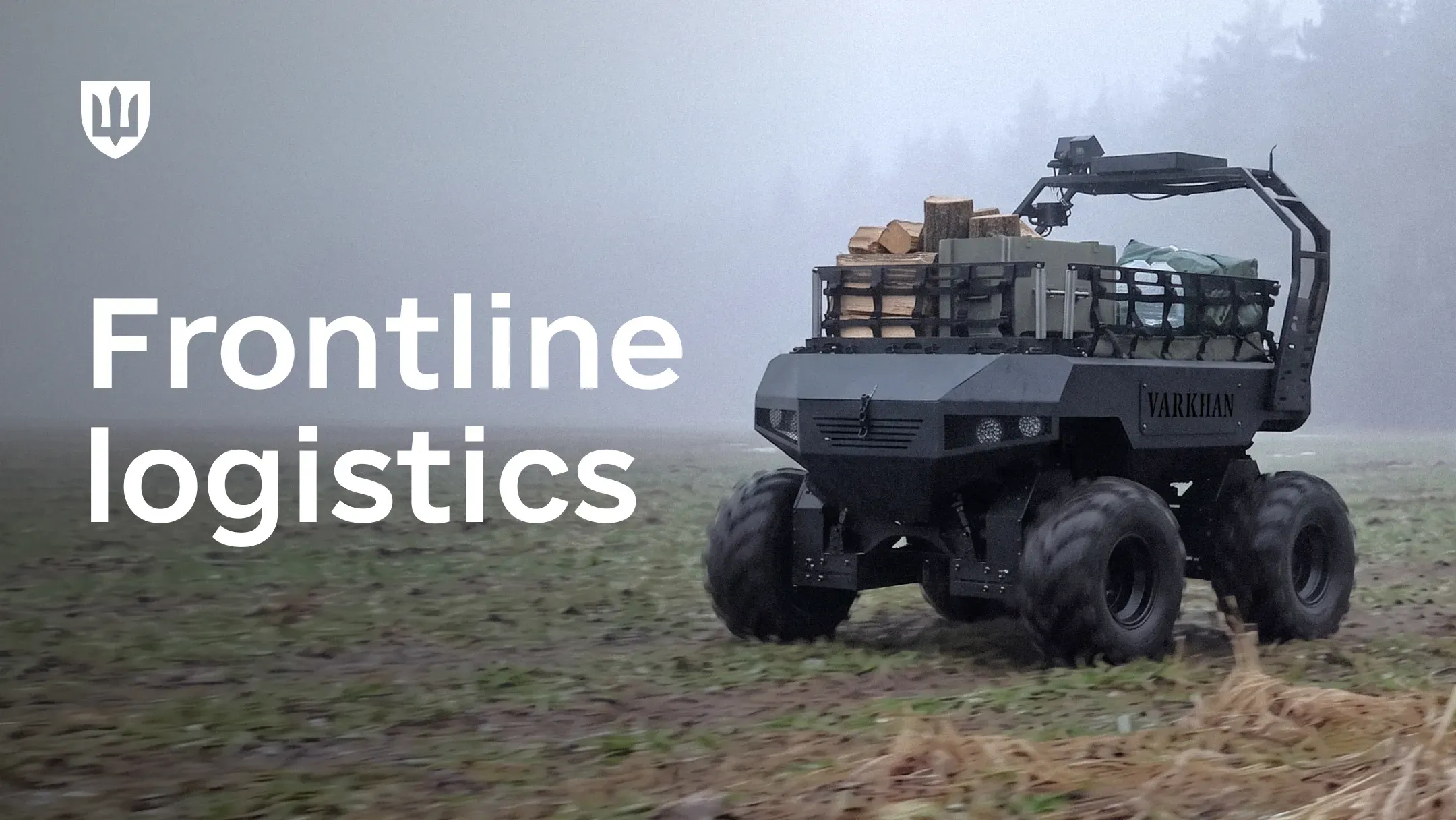
In October 2026, unmanned ground vehicles (UGVs) carried out 31,398 logistics and evacuation missions. This is the highest monthly figure since the ePoints Program was launched and 318% more than in January. The wounded are now also evacuated by air: after the world’s first medical evacuation using a heavy drone, the military carried out three more such operations by November 4.
Over ten months, units carried out more than 171,000 missions using UGVs. The robots deliver ammunition, water, and food to positions and bring the wounded back. Each such run can help protect service members’ lives and health.
How do evacuation drones rescue the wounded?
Ground evacuation from the front line is increasingly impossible due to the mass use of unmanned aerial vehicles (UAVs). The wounded are usually evacuated by UGVs, but a robot moves slowly, and for a severely wounded service member, a delay can cost a life.
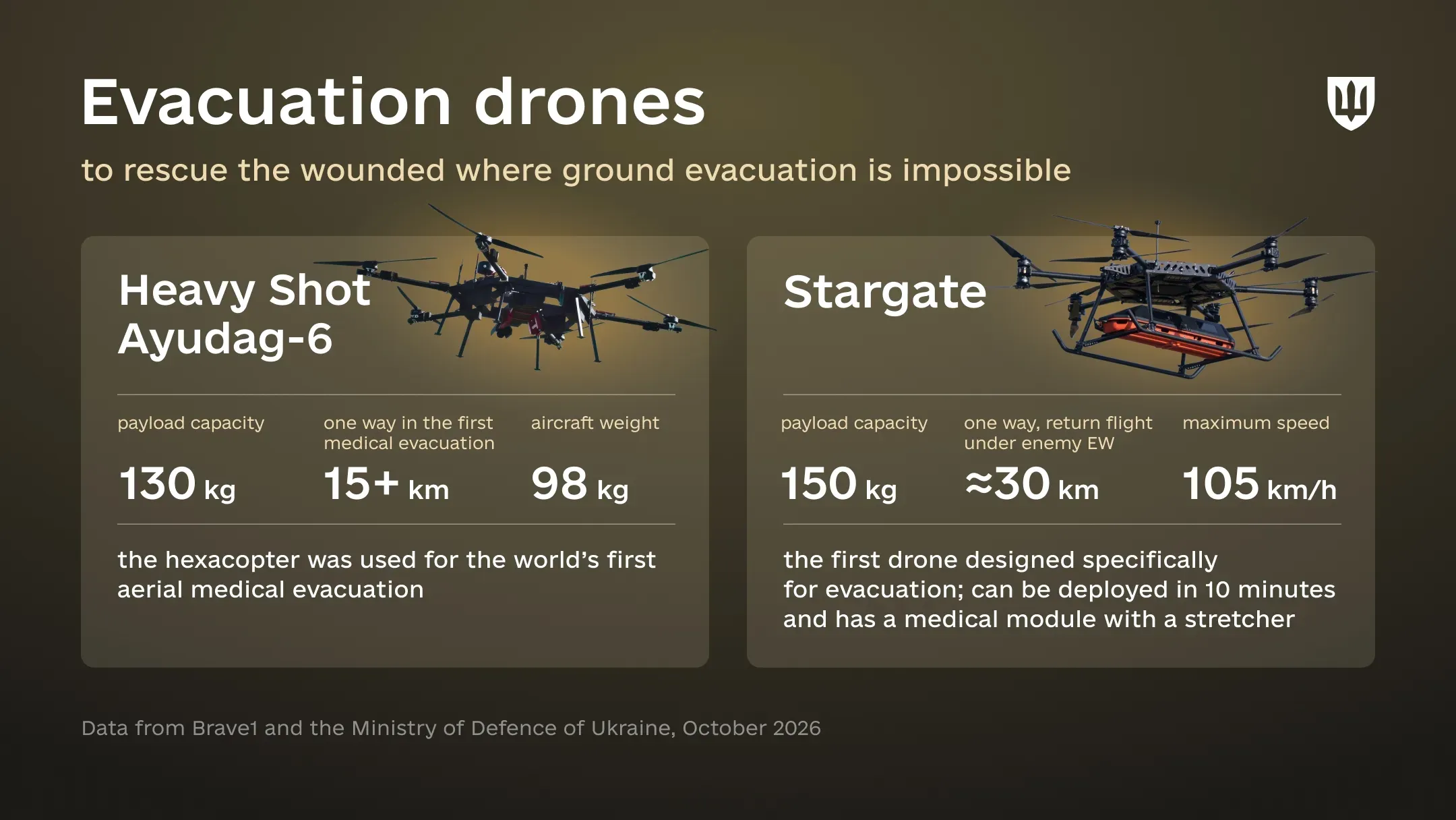
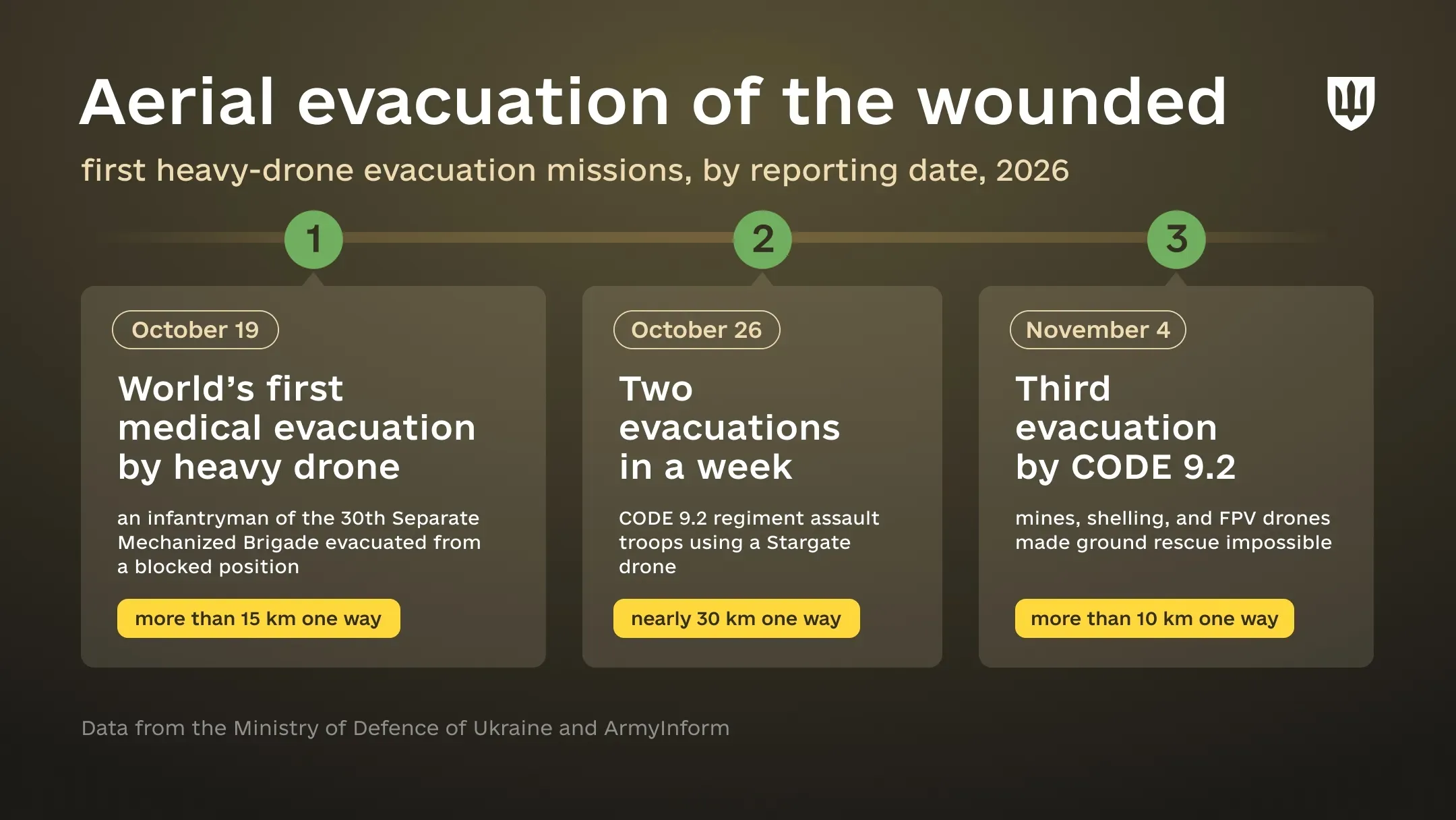
When a road is mined or cut off by the enemy, the wounded can only be evacuated by air. The first such operation took place in October: the Heavy Shot Ayudag-6 hexacopter evacuated an infantryman of the 30th Separate Mechanized Brigade from a blocked position. The military reported it on October 19.
The 98-kilogram drone lifts up to 130 kg and covered more than 15 km one way during this mission. Evacuation equipment had been dropped to the defender in advance, and during the flight, adjacent units launched bomber drones to divert enemy interceptor drones from spotting the rescue aircraft.
Ukraine is also advancing evacuation UAV development at the state level. The Brave1 defense innovation cluster is working on it together with the Ministry of Defence of Ukraine. Back in 2024, Brave1 and the military defined the following requirements for such drones:
- reliably carry 130 kg over a distance of at least 15 km;
- have at least three different communication options for operating under electronic warfare (EW) conditions.
Stargate is the first drone designed specifically to evacuate the wounded at the request of assault troops. It lifts up to 150 kg, flies at speeds of up to 105 km/h, and has a medical module with a stretcher. The drone can be deployed in 10 minutes.
Within a single week, assault troops of the CODE 9.2 regiment used Stargate to evacuate two severely wounded soldiers from the gray zone, as reported on October 26. The drone flew nearly 30 km one way. On the return flight, with the wounded on board, it was exposed to enemy EW, and artificial intelligence plotted its route.
The Ground Forces reported the unit’s third evacuation on November 4. This time, mines, shelling, and FPV drones prevented ground access to the wounded soldier. The drone covered more than 10 km one way and evacuated him.
What are UGVs and what types of unmanned ground vehicles exist?
UGVs are remotely controlled ground robotic platforms. They take on the heaviest loads and most evacuations at the front, while aerial evacuation is left for cases when there is no other way. The main advantage of UGVs over aerial drones is payload capacity: a ground robot can carry several hundred kilograms.
For the Brave1 cluster, UGVs are one of the priority areas, which it developed practically from scratch. As of October 27, 2026, the UGV section of the Brave1 Market military marketplace listed more than 280 solutions in eight subcategories.
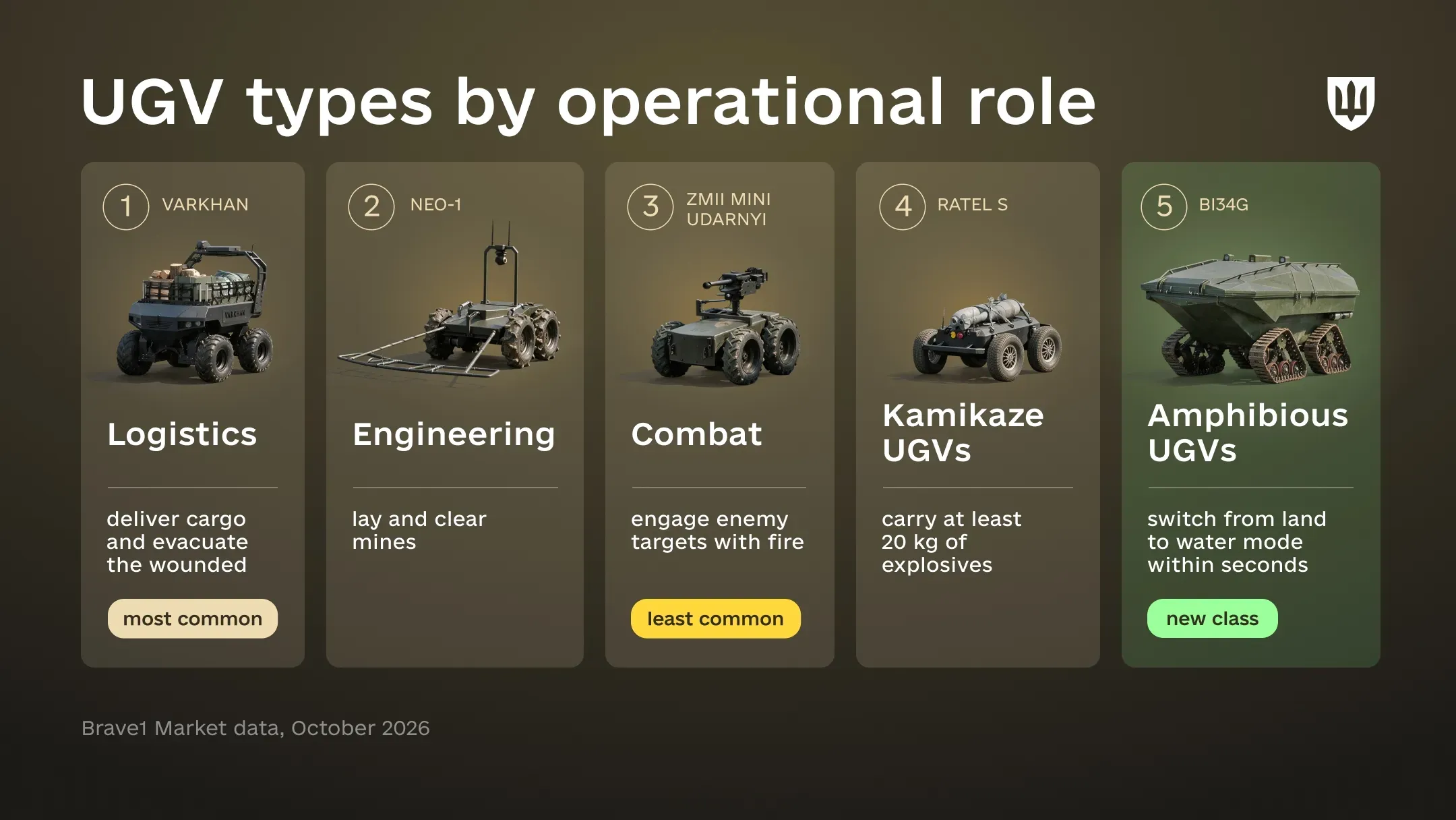
By purpose, UGVs are divided into logistics, engineering, combat, and kamikaze ground vehicles. Logistics UGVs are the most numerous, and combat UGVs the fewest. Amphibious UGVs are a separate new class that can switch from land to water within seconds.
Which logistics UGVs carry cargo to the front line?
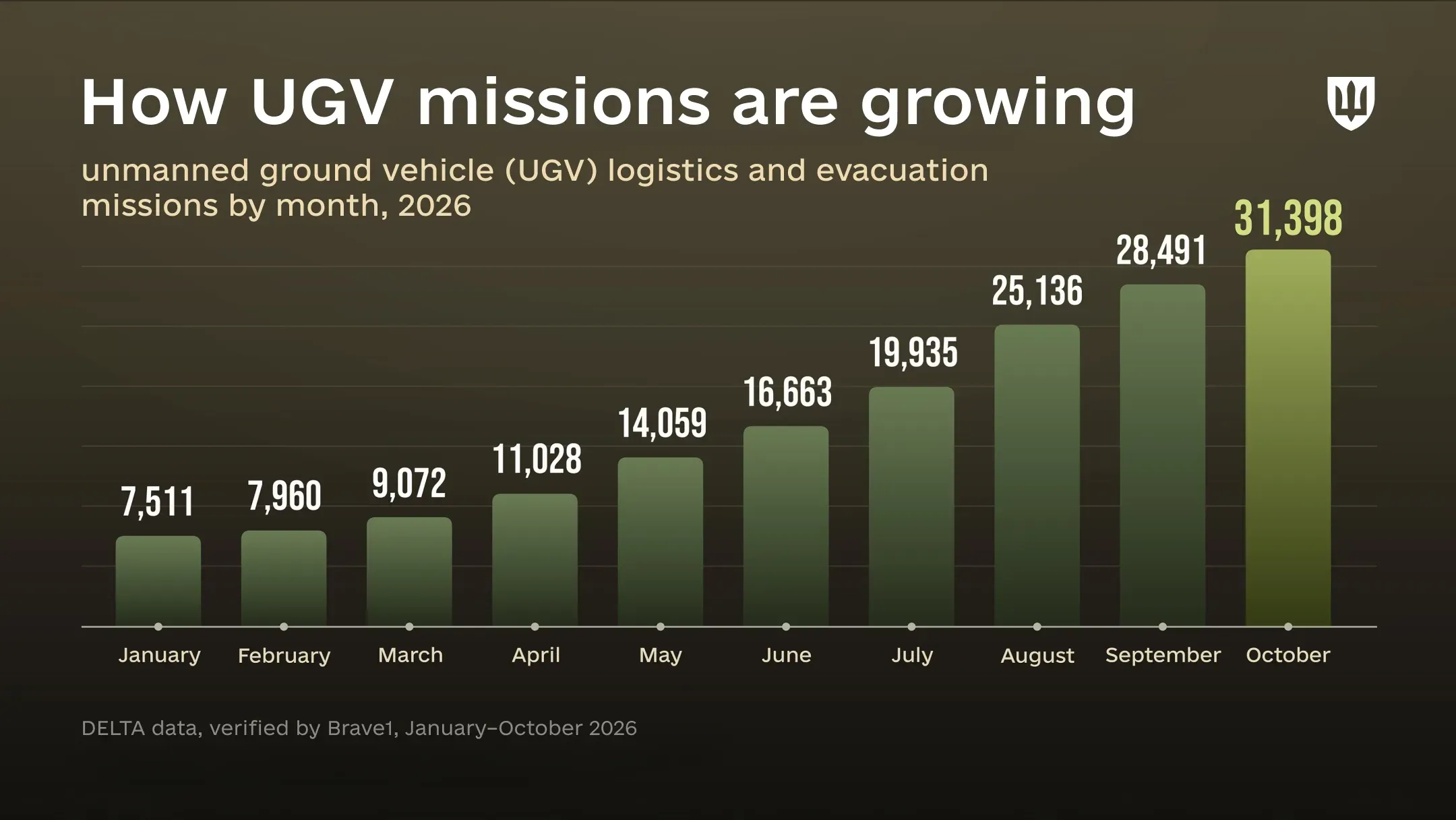
On October 5, 2026, the Ministry of Defence reported that it had codified the Varkhan logistics UGV and authorized it for supply to the Armed Forces of Ukraine. It delivers weapons, ammunition, and equipment and has an off-road range of up to 37 km with a load.
The vehicle has an all-wheel-drive 4×4 chassis, ground clearance of more than 200 mm, and quick-swap batteries, so it can carry out missions without interruption.
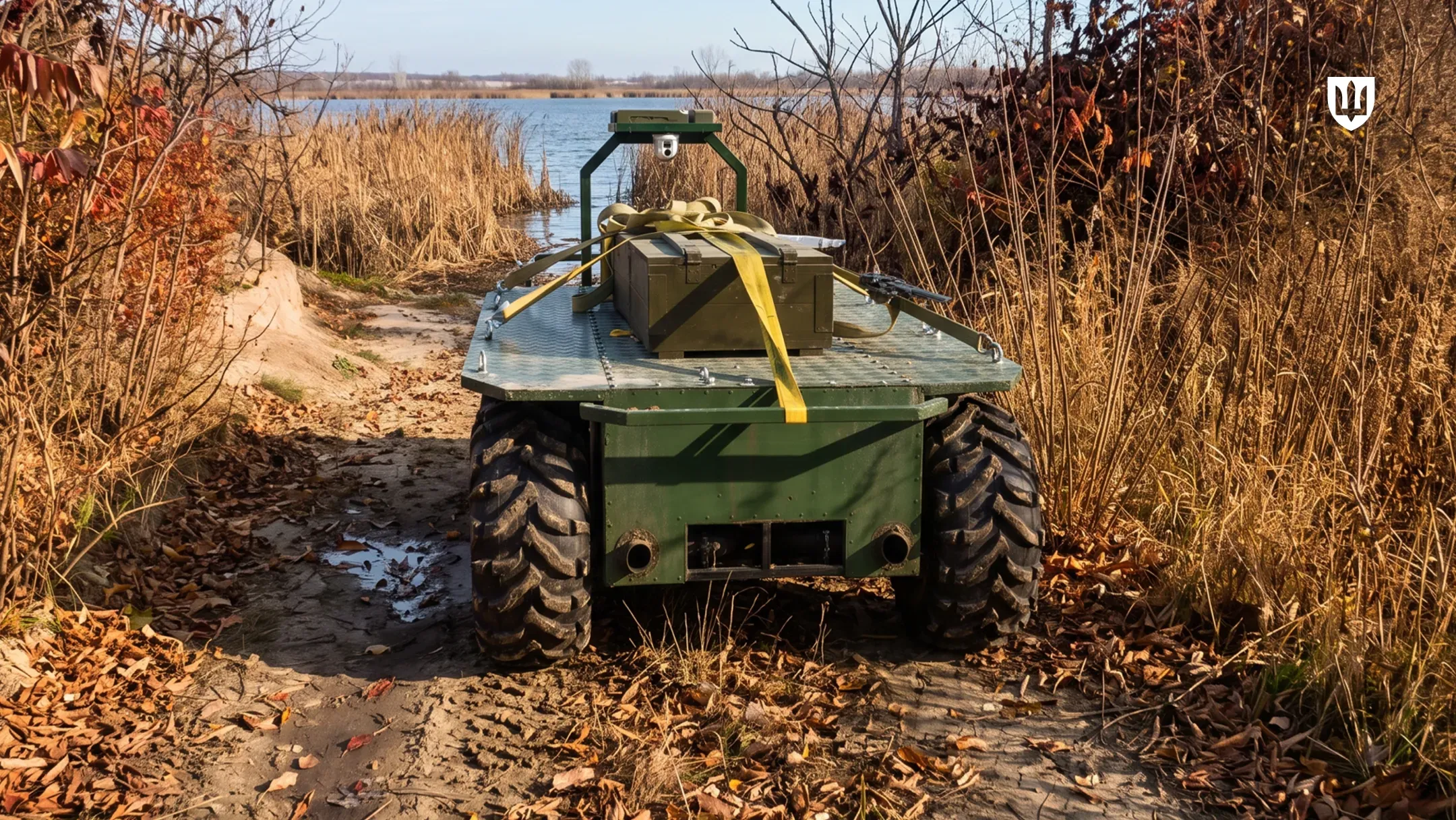
Rivers, canals, and marshes can block the route even for an off-road robot. Amphibious UGVs were designed for such routes: they move over land like conventional ground robots and, when needed, switch to water mode and continue their route afloat.
Service members of the Alter Ego unit of the 93rd Separate Mechanized Brigade carried out the first logistics mission using an amphibious UGV. During the mission, the vehicle traveled more than 40 km over land and water and delivered food and ammunition to the troops.
Why are UGVs and cargo drones carrying out more and more missions?
One reason for the growth is that there are more robots at the front. As of August 24, the Ministry of Defence had contracted more than 22,000 UGVs, nearly twice the figure for all of 2025.
Another reason is unit motivation. Every UGV mission is recorded in the DELTA combat system and verified by Brave1 specialists, and the unit receives ePoints for it. In this way, the program encourages the military to shift as much logistics as possible to robots.
Air delivery has also become widespread. As of October 1, more than 1.02 million drone logistics missions had been recorded in the Mission Control module of the DELTA combat system. By the number of reports, logistics there ranks behind only reconnaissance and strikes on targets.
Drones carry even more cargo thanks to multi-drone control, a technology for controlling groups of UAVs that the Ministry of Defence and Brave1 are introducing. The operator marks an area on the map, and the system automatically plots routes for the entire group and prevents the drones from colliding.
The drones fly to the designated point without GPS and, thanks to secure communications, maintain their orientation even under enemy EW. The operator takes manual control only in the final minutes of the mission.
Service members of the 108th Separate Assault Battalion “Da Vinci Wolves” of the 59th Separate Assault Brigade of Unmanned Systems named after Yakiv Handziuk were among the first to systematically use multi-drone control for logistics missions. Within a month, the battalion doubled the number of cargo deliveries.
Where do Ukrainian units order UGVs?
Units order ground robots on Brave1 Market, including with ePoints. The points can also be redeemed for UAVs, EW systems, and components.
Since October 28, the military has been able to order amphibious UGVs on Brave1 Market: a separate category with the first three products has been created for them. Military units will later be able to order these systems with ePoints as well.
Brave1’s ultimate goal is for UGVs to handle all logistics at the front and to minimize the risk to people on such runs.