Ukraine is the first in the world to develop evacuation drones
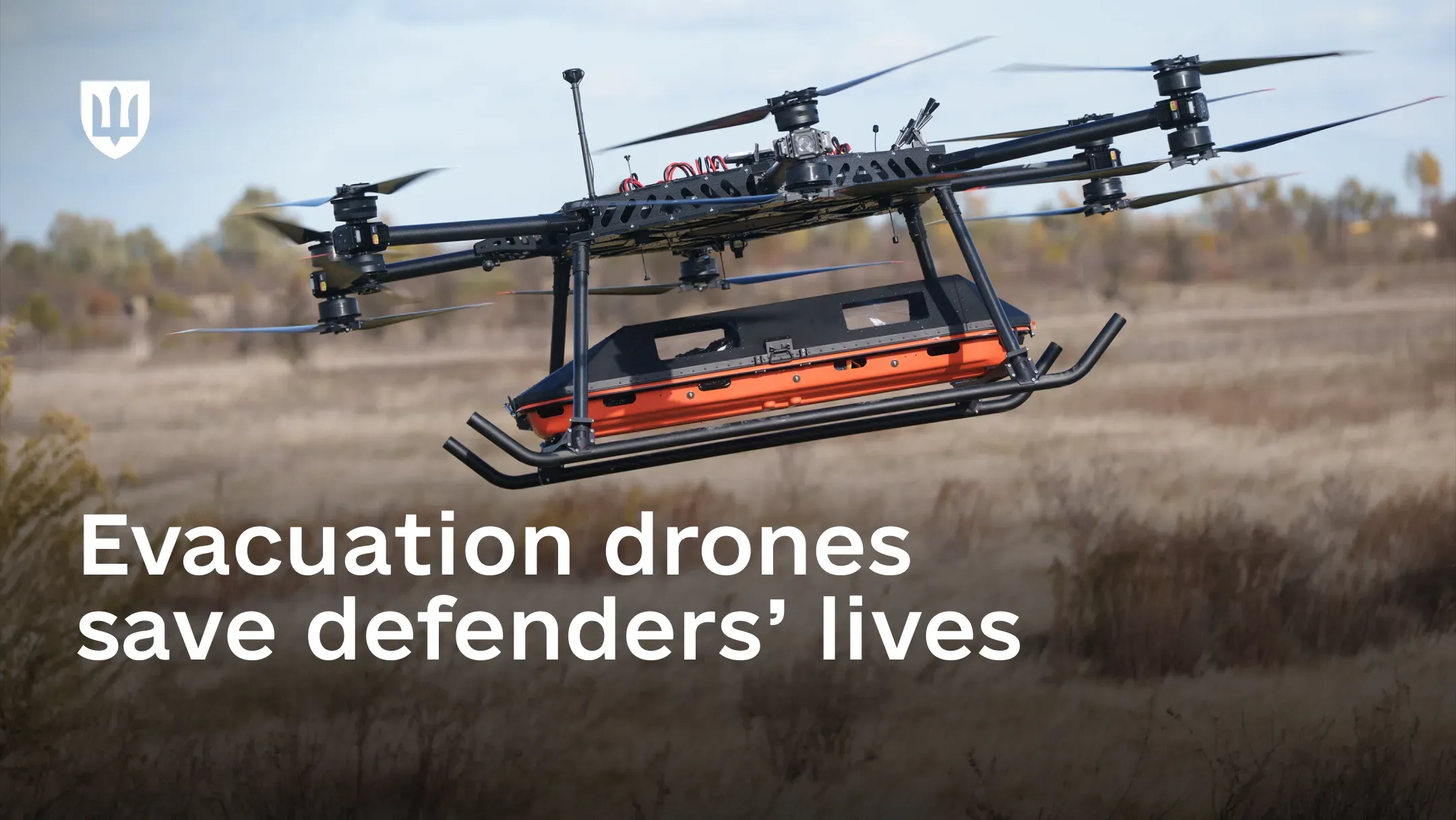
Ukraine is the first in the world to develop evacuation unmanned aerial vehicles (UAVs) as a dedicated capability, capable of rescuing service members where ground evacuation is impossible.
This year, Ukrainian defenders have already carried out the world’s first medical evacuation using a heavy drone. Later, they successfully tested a drone that returned with the wounded while exposed to enemy electronic warfare (EW) systems, thanks to navigation based on artificial intelligence (AI).
With the support of the Ministry of Defence of Ukraine, the Brave1 defense innovation cluster is working to advance evacuation UAV development.
Advantages of evacuation drones when every minute counts
In modern warfare, conventional evacuation methods are often unavailable due to the mass use of UAVs. That is why unmanned ground vehicles (UGVs) have now become the main means of rescuing service members. They successfully evacuate defenders from dangerous areas but have limited speed. At the same time, for a severely wounded service member, losing time can be critical.
When every minute counts and all routes are mined or cut off by the enemy, the sky remains the only option for evacuation. It is in such cases that heavy aerial drones can come to the rescue.
Brave1 requirements for evacuation UAV manufacturers
In 2024, Brave1, together with the military, defined a requirement and gave impetus to developing a new area: evacuation drones. They set out the following criteria for the defense tech market:
- the aircraft must reliably carry 130 kg over a distance of at least 15 km;
- to survive in an EW environment, the drones must have an integrated communication system (at least three alternative types).
Optionally, such drones can be equipped with lidars, optical stabilization systems, and GPS-free navigation systems.
Successful drone evacuations: Heavy Shot Ayudag-6 and Stargate
In October 2026, the Armed Forces of Ukraine carried out the world’s first medical evacuation using a heavy drone. An infantryman of the 30th Separate Mechanized Brigade was rescued from a position blocked by the enemy.
The Heavy Shot Ayudag-6 hexacopter, developed by a Brave1 participant, carried out the operation. The 98-kilogram aircraft has a payload capacity of 130 kilograms and covered more than 15 km one way during this mission.
Preparations for the mission took months and drew on the experience of the UGV company of the 92nd Separate Assault Brigade. Evacuation equipment had been dropped to the defender in advance, and he had to secure himself to the copter’s winch on his own. During the evacuation itself, adjacent units launched their bomber drones to divert enemy interceptor drones away from the rescue aircraft.
Recently, a Ukrainian company, a Brave1 participant, presented the Stargate system, the first drone designed specifically for evacuation at the request of assault troops.
The aircraft can be deployed in 10 minutes, is capable of carrying 150 kg at speeds of up to 105 km/h, and is equipped with a medical module with a stretcher. Thanks to AI-based software, the drone can independently plot a route and return to a safe area if navigation is completely jammed.
Using this drone, assault troops of the CODE 9.2 regiment carried out two successful aerial evacuations of severely wounded soldiers from the gray zone within a single week. The service members were 5 km from the border with russia, where difficult terrain, water obstacles, and the threat of FPV drones made ground rescue impossible.
The drone flew nearly 30 km one way and returned with the defenders on board while exposed to enemy EW, relying solely on AI navigation. Heavy strike drones covered the operation, heavily suppressing enemy positions.
As previously reported, in 2026, the Defence Procurement Agency DOT of the Ministry of Defence of Ukraine has contracted 300% more UAVs than last year. These are unmanned systems of various types and purposes.