Malloy T-150 octocopter: UK heavy-lift drone that helped destroy a bridge
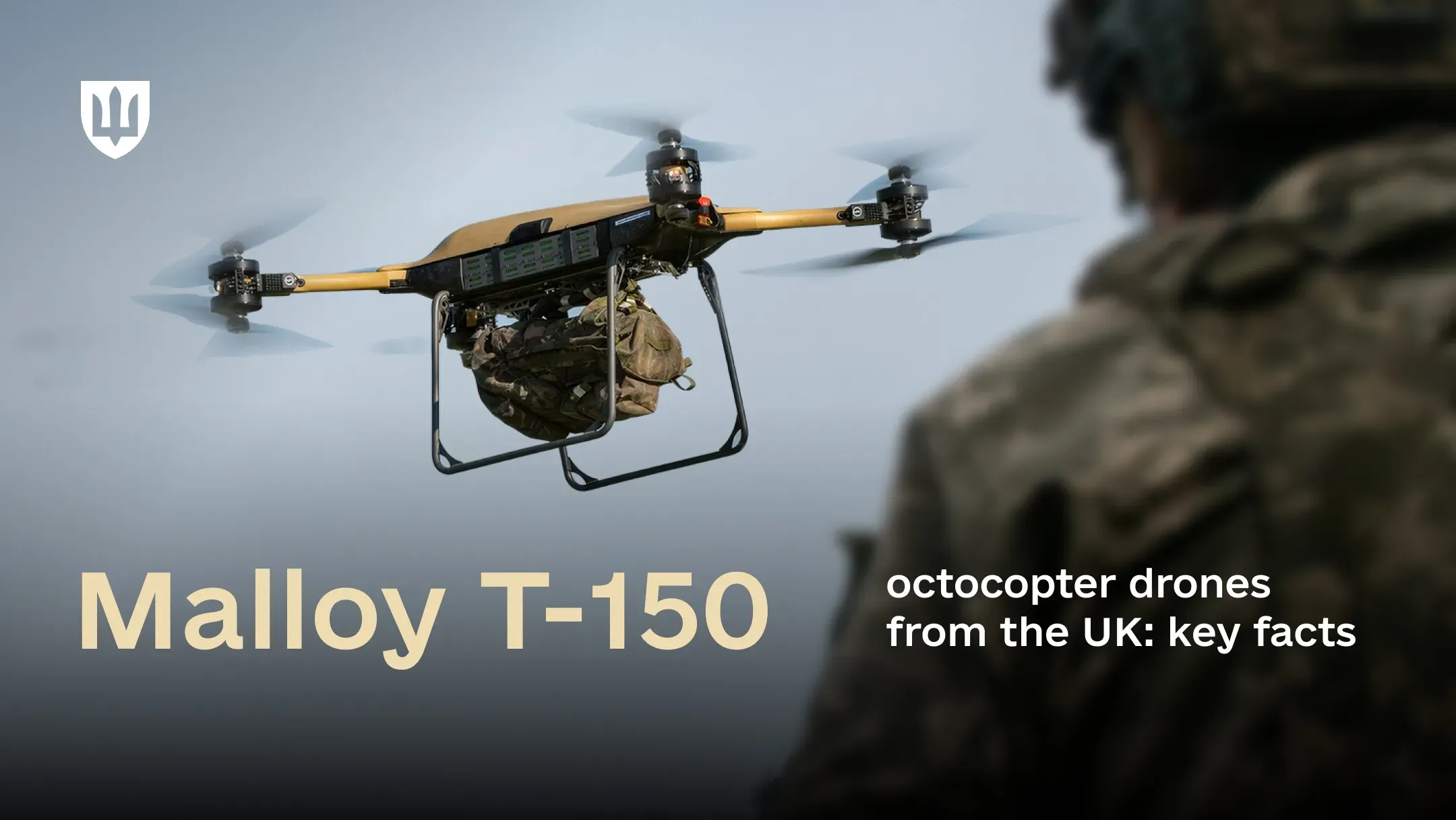
Malloy T-150 drones provided by the UK to Ukraine back in 2022 have proven reliable as ‘workhorse’ platforms, capable of performing logistics tasks even in challenging weather conditions.
They were recently reported to have been used in an operation to destroy a bridge in Kherson Oblast that the enemy used for logistics. These UAVs delivered explosives that caused significant damage to the bridge’s supports, allowing it to be subsequently destroyed.
The Ministry of Defence outlines key facts about the Malloy T-150 drones.
Operational purpose
The Malloy T-150 is an unmanned octocopter (i.e. featuring eight rotors) with a high payload capacity. Their primary role is the delivery of ammunition, medical supplies, spare parts and provisions directly to frontline positions.
These drones were first tested by the UK Royal Marines.
They maintain stable flight in harsher weather conditions than lighter drones.
Malloy T-150: technical specifications and design
The design of the Malloy T-150 enables rapid pre-flight preparation. The payload is secured using dedicated carabiners or placed in cargo compartments.
Malloy T-150: technical specifications
The Malloy T-150 is a relatively large drone, with the following dimensions:
- length: 2.65 m;
- width: 2.05 m;
- height: 0.71 m.
Its battery-swappable design enables the drone to rapidly return to operations after minimal maintenance downtime.
The Malloy T-150 specifications are as follows:
- payload capacity: up to 68 kg (150 lb, hence the name);
- operational range: up to 37 km;
- flight endurance: up to 36 minutes (depending on payload weight);
- maximum speed: up to 108 km/h;
- propulsion type: electric.
With these capabilities, the Malloy T-150 drones serve as a reliable support asset and a tool for precision operations in modern warfare.
Earlier, the Ministry of Defence codified and authorised the Ukrainian-made Shvidun unmanned aerial system (UAS) for operational use within the Armed Forces of Ukraine.