Fast and manoeuvrable: the advantages of CVR(T) armoured vehicles to be delivered to Ukraine
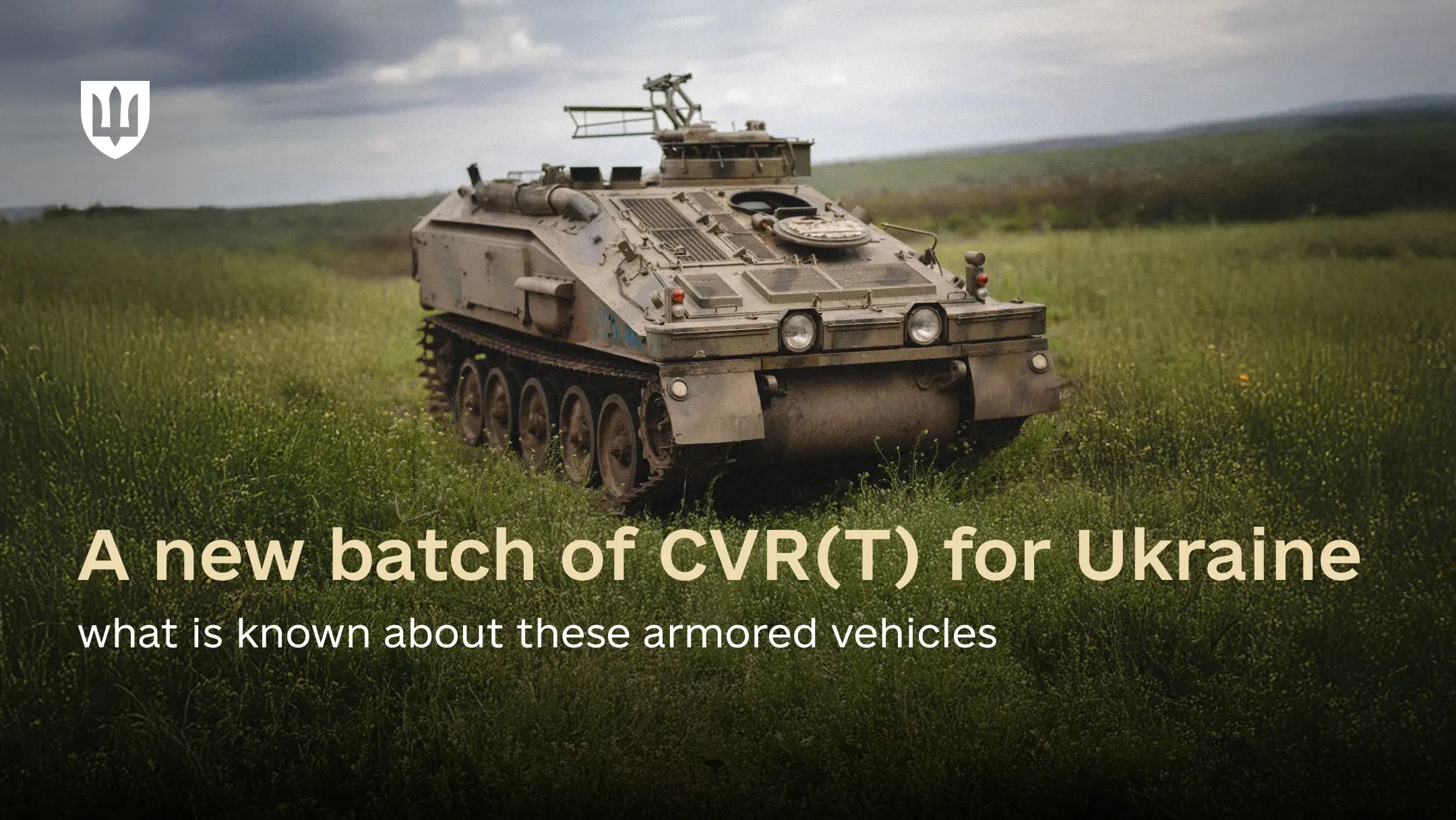
Ukraine will receive a new batch of CVR(T) armoured fighting vehicles from Latvia to equip a battalion-level unit. Vehicle deliveries have already commenced.
This was announced during a meeting between Ukraine’s Minister of Defence, Mykhailo Fedorov, and Latvia’s Minister of Defence, Andris Sprūds.
The Ministry of Defence of Ukraine outlines the key features of these armoured vehicles.
CVR(T) — Combat Vehicle Reconnaissance (Tracked) — is a family of light British armoured vehicles in service with armed forces in various countries worldwide.
High manoeuvrability is a key feature of these vehicles. This is achieved through a lightweight aluminium alloy hull that protects against small arms fire and fragmentation, as well as low ground pressure — wide tracks prevent the vehicle from becoming bogged down in sand or mud.
Variants of the CVR(T) family
The CVR(T) family comprises seven main armoured vehicle variants, all of which begin with the letter “S”:
- FV101 Scorpion – a light reconnaissance tank with a 76 mm L23A1 gun;
- FV107 Scimitar – a light reconnaissance tank armed with a 30 mm RARDEN cannon and a 7.62 mm machine gun;
- FV103 Spartan – an armoured personnel carrier armed with a 7.62 mm machine gun;
- FV105 Sultan – a command and control vehicle;
- FV104 Samaritan – an armoured ambulance;
- FV106 Samson – an armoured recovery vehicle;
- FV102 Striker – an anti-tank guided missile carrier vehicle armed with the Swingfire missile system.
Although designed for different roles, all seven variants use a common platform with standardised components, making maintenance and crew training easier.
Specifications of CVR(T) armoured vehicles
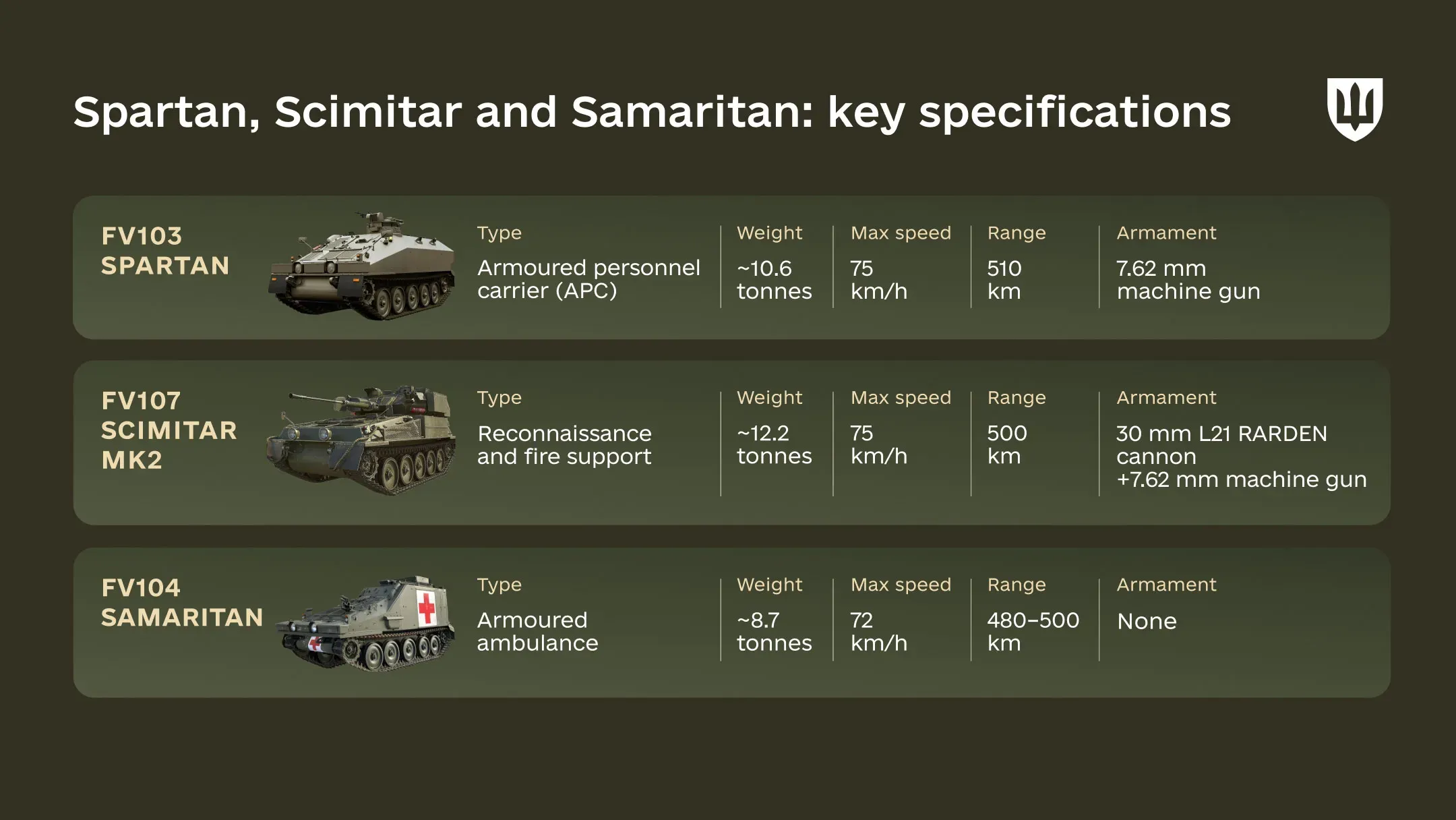
Among the armoured vehicles in service with the Armed Forces of Ukraine are the FV103 Spartan, FV104 Samaritan and FV107 Scimitar Mk 2.
FV103 Spartan armoured personnel carrier
The vehicle’s combat weight in its baseline configuration is approximately 8,170 kg (up to 10,600 kg in modern variants with additional armour).
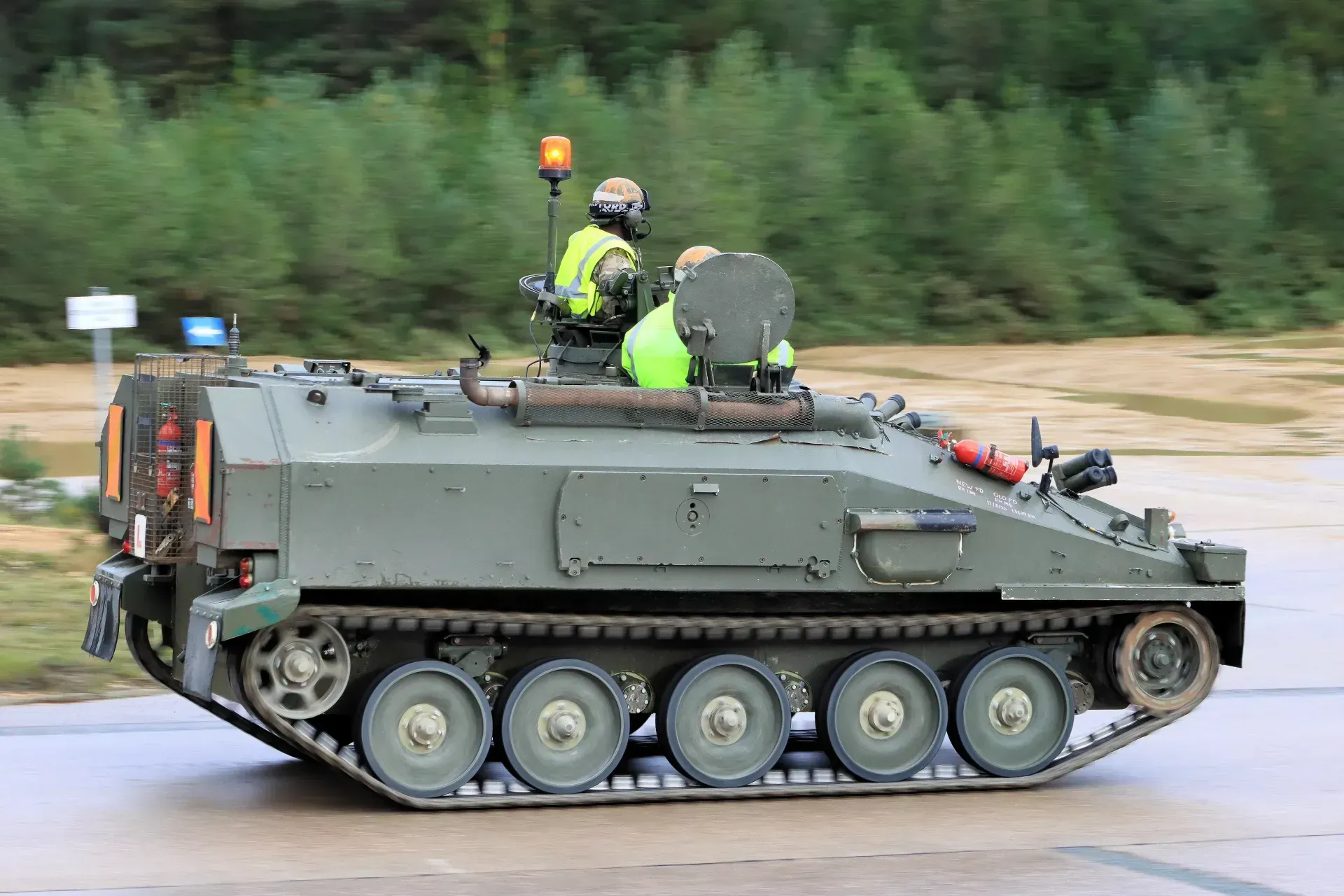
Its maximum speed in operational conditions is typically limited to 75 km/h to preserve the service life of the running gear. The range is 510 km. It can climb gradients of up to 60%.
The vehicle is designed to carry up to seven personnel. It is armed with a single 7.62 mm machine gun.
FV107 Scimitar Mk 2 reconnaissance vehicle
This variant represents a deep modernisation of the original Scimitar. It is based on the Spartan armoured personnel carrier hull, which is wider and more robust. As a result, the combat weight has increased to approximately 12,250 kg.
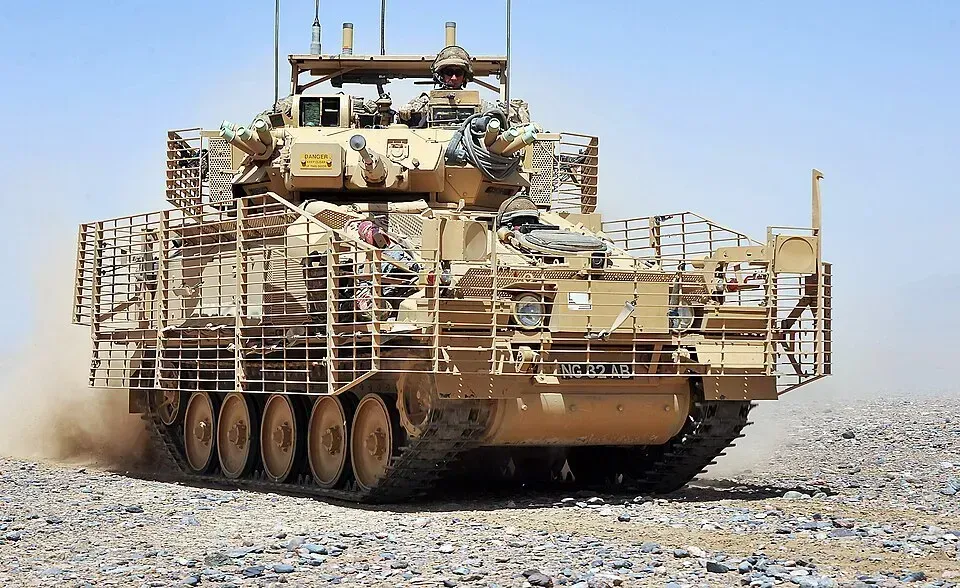
Protection has been significantly enhanced: ceramic armour has been added over the aluminium hull, and blast-attenuating seats have been installed for the crew. The armament remains unchanged — a 30 mm L21 RARDEN cannon with a coaxial 7.62 mm machine gun. However, the electronics, communications equipment, and sighting systems have been fully upgraded.
Maximum speed is approximately 80 km/h, with a range of up to 500 km.
FV104 Samaritan armoured ambulance
This is an unarmed armoured ambulance of the CVR(T) family, designed for casualty evacuation directly from the battlefield. The interior has been reconfigured for medical purposes: the Samaritan can carry up to four stretcher casualties or five to six seated casualties.
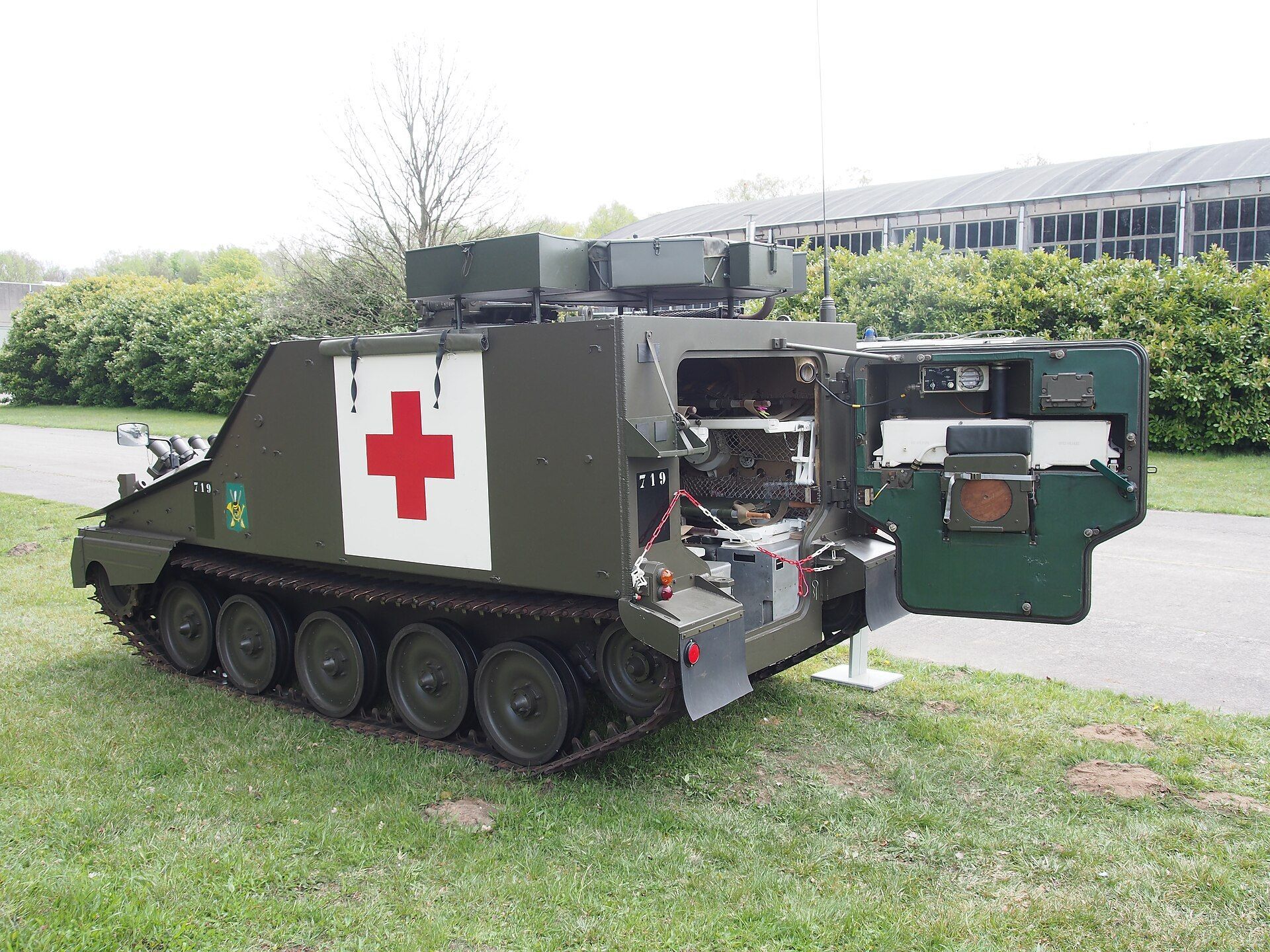
The crew typically consists of two personnel (a driver and a medic), allowing more space in the troop compartment.
The running gear is fully standardised with the rest of the CVR(T) family. The vehicle’s weight is approximately 8,700 kg, with a maximum speed of up to 72 km/h and a range of approximately 480–500 km. Its low profile and tracked configuration enable the Samaritan to operate effectively off-road, in mud and snow, where evacuation by wheeled vehicles is not possible.
Adding vehicles to the CVR(T) fleet will enhance the capabilities of the Defence Forces of Ukraine in combat operations requiring high mobility and protection in complex terrain.