A sinking fleet: russia’s largest losses in the Black Sea and the Sea of Azov during the war
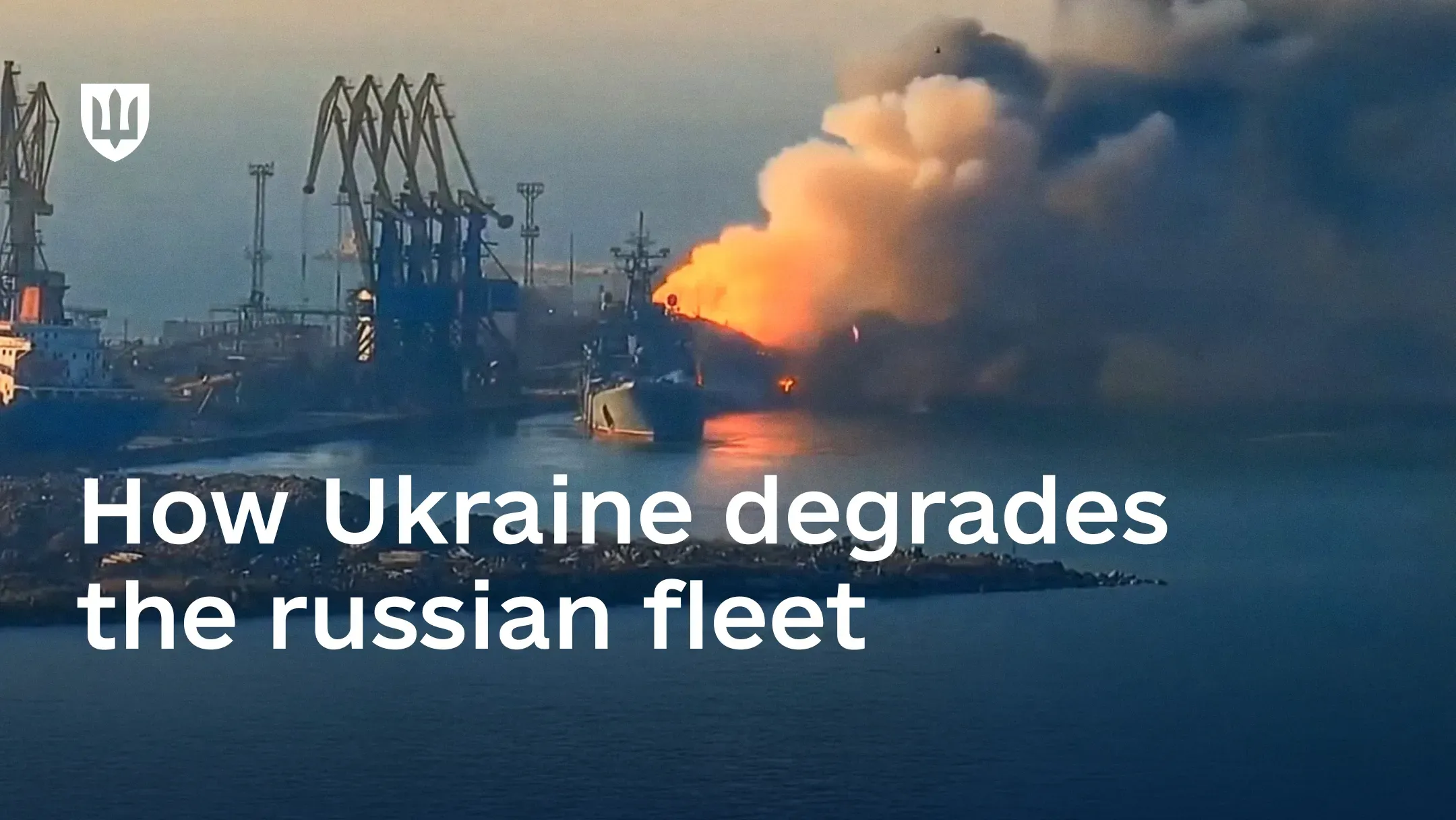
Ukraine has achieved what was once considered impossible even in military theory: a country without a major navy has effectively defeated the aggressor in waters it once regarded as its home domain.
The russian fleet has been deprived of its offensive capability and is now fighting for its own survival. As of early 2026, around 30% of the russian Black Sea Fleet’s combat assets had been destroyed or seriously damaged.
The Ministry of Defence of Ukraine outlines russia’s largest naval losses and how the Defence Forces of Ukraine have transformed the Black Sea and the Sea of Azov into a high-risk environment for any military vessel flying the russian flag.
Large landing ship Saratov
March 25, 2022
This russian vessel was destroyed in the port of temporarily occupied Berdiansk. The strike was conducted with a Tochka-U ballistic missile, a unique instance of a ground-based missile being used against a maritime target in port. Two other vessels, Novocherkassk and Tsezar Kunikov, were also damaged and were able to depart the pier with fires on board.
This marked the first major loss for the russian fleet. The destruction of Saratov disrupted the occupiers’ plans to conduct amphibious landings in southern Ukraine.
Guided missile cruiser Moskva
April 13, 2022
The flagship of the russian Black Sea Fleet was attacked with Ukrainian Neptune anti-ship missiles in the vicinity of Zmiinyi Island (Snake Island). Despite the crew’s efforts to save the vessel, the cruiser sank the following day while under tow to Sevastopol.
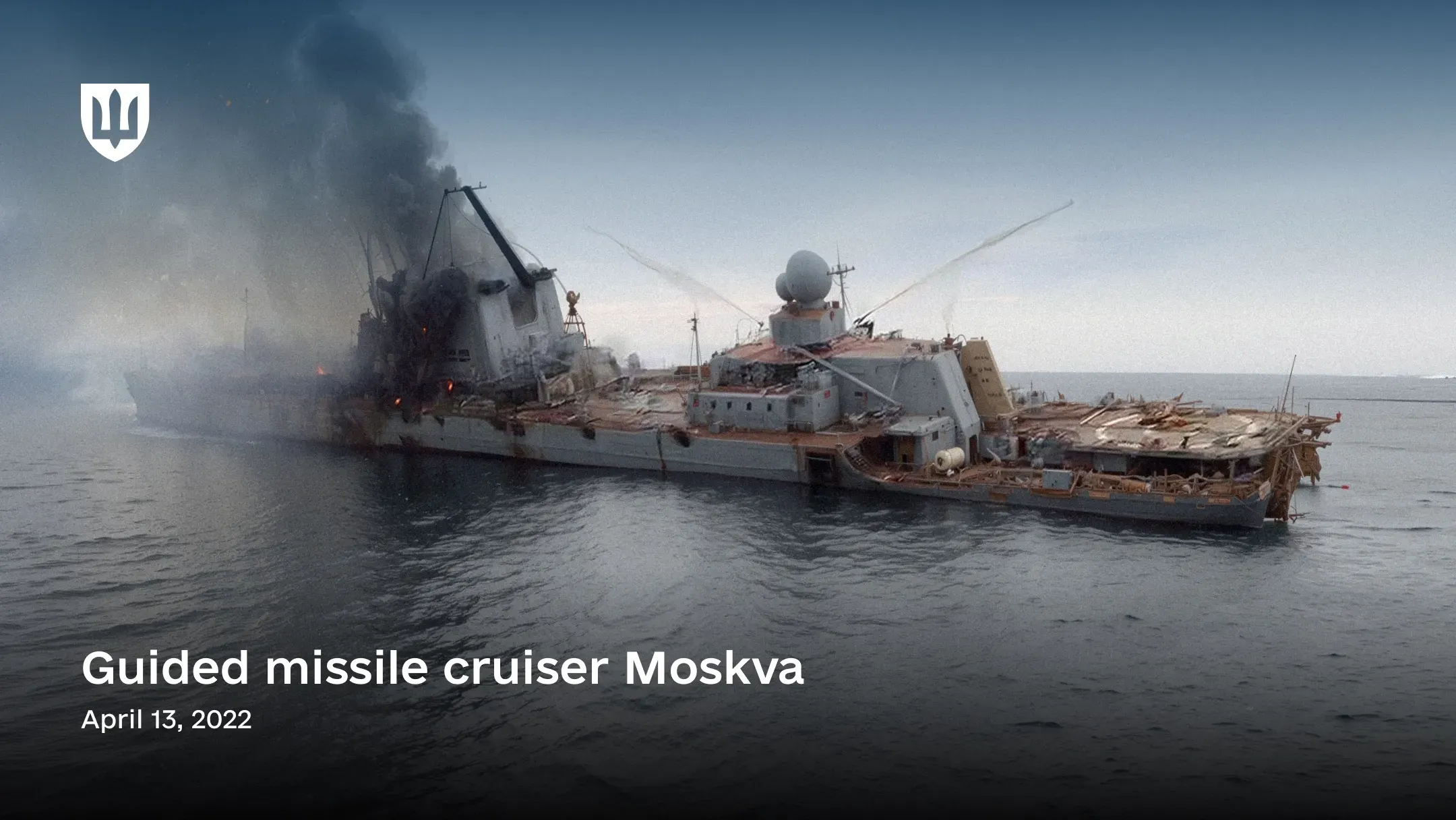
This marked the occupiers’ most costly loss. Moskva provided air defense cover for the naval group in the Black Sea using the S-300F system. Without this “umbrella,” russian vessels became vulnerable to aviation and unmanned systems, ultimately leading to the liberation of Zmiinyi Island (Snake Island) and the opening of the “grain corridor.” It also marked the first sinking of a vessel of this class since 1982.
Serna-class landing craft and Raptor-class assault boats
May 7, 2022
A group of vessels was struck near Zmiinyi Island (Snake Island) using Bayraktar TB2 strike drones. The operation involved a series of precision strikes: first, a Project 11770 Serna-class landing craft was destroyed while attempting to deliver a Tor surface-to-air missile system (SAM) to the island. At the same time, two Project 03160 Raptor-class assault craft maneuvering near the pier were also hit.
The destruction of the Serna, along with the Tor system, deprived the enemy garrison on Zmiinyi Island (Snake Island) of air defense. At the same time, the loss of the high-speed Raptor-class boats eliminated the ability to rapidly evacuate personnel or deliver reinforcements.
Logistics support vessel Vsevolod Bobrov
May 12, 2022
One of the newest vessels in the russian fleet, the Project 23120 logistics support vessel Vsevolod Bobrov (commissioned in 2021), was struck near Zmiinyi Island (Snake Island). As a result of a Ukrainian strike, a large fire broke out on board. Although the vessel remained afloat and was later towed to Sevastopol, it sustained severe structural damage and damage to costly equipment, rendering it inoperable for an extended period.
Vsevolod Bobrov served as a multifunctional logistics support vessel. Its disablement significantly complicated russia’s ability to deliver air defense systems and heavy equipment to Zmiinyi Island (Snake Island).
Rescue tug Spasatel Vasily Bekh
June 17, 2022
The Armed Forces of Ukraine struck the russian vessel with missiles while it was transporting ammunition, weapons, and personnel to Zmiinyi Island (Snake Island). The vessel was carrying a Tor surface-to-air missile system, which failed to intercept the incoming low-altitude missiles. This marked the first successful use of Western-supplied anti-ship missiles since the onset of the full-scale invasion.
The strike on Vasily Bekh cut off logistical support to the island. Once it became clear that support vessels would be destroyed on approach, russian forces withdrew, eliminating the persistent presence of hostile forces in the northwestern Black Sea.
Frigate Admiral Makarov
October 29, 2022, and April 6, 2026
The frigate was first struck during the historic attack by naval and aerial drones on Sevastopol Bay in October 2022. At the time, Admiral Makarov was effectively serving as the flagship following the loss of the guided missile cruiser Moskva and sustained damage to its hull and radar systems.
A second strike in April 2026, part of a large-scale combined operation against Novorossiysk, inflicted critical damage to its superstructure and Kalibr missile launchers.
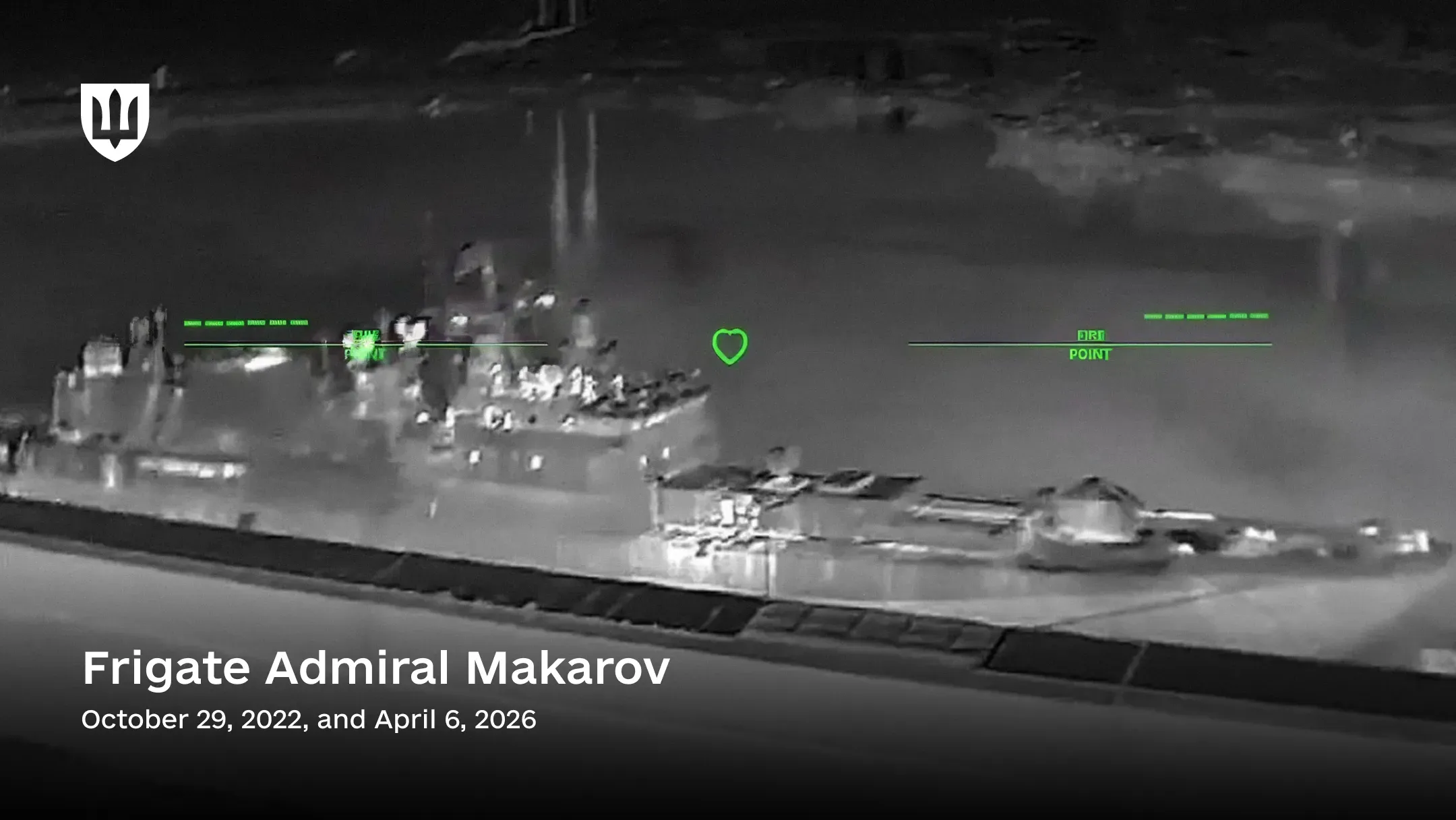
Admiral Makarov is among the most technologically advanced vessels in the russian Black Sea Fleet, equipped with the Shtil-1 and Kalibr systems.
Minesweeper Ivan Golubets
October 29, 2022
The Project 266M minesweeper Ivan Golubets was struck during the first large-scale Ukrainian naval drone attack on Sevastopol Bay. A direct hit to the hull triggered an onboard fire.
In addition to structural damage, the vessel’s specialized radar and mine countermeasure equipment were severely degraded, rendering it non-operational for an extended period.
The disablement of the minesweeper weakened the enemy’s ability to clear routes for its missile-carrying vessels, marking the first step toward a self-imposed maritime blockade driven by fear of drone attacks.
Large landing ship Olenegorsky Gornyak
August 4, 2023
The vessel was attacked by an unmanned surface vehicle (USV) in Novorossiysk Bay. This marked the first successful Ukrainian unmanned operation conducted beyond 700 kilometers from controlled territory.
A significant list to port was recorded, indicating flooding of internal compartments due to a hull breach in the engine room area.
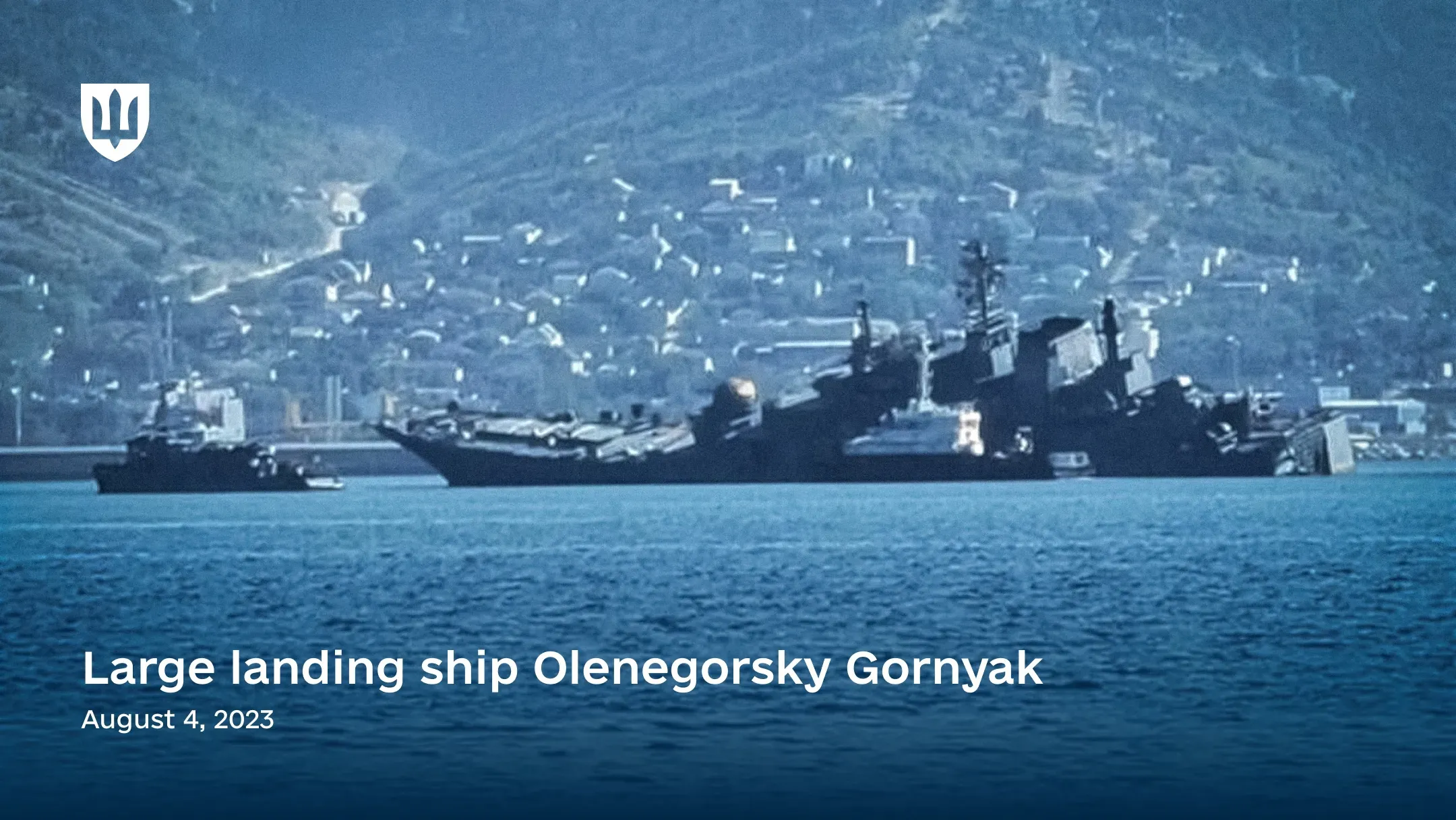
The operation forced russia to reassess the security of its most critical naval bases and significantly complicated the use of large vessels to transport military cargo to Crimea.
Submarine Rostov-on-Don and large landing ship Minsk
September 13, 2023
Both vessels were struck by missiles while in dry dock at the Sevmorzavod shipyard in Sevastopol. As a result of the strikes and subsequent fire, Minsk sustained critical damage to its superstructure and internal compartments, rendering its restoration economically unviable.
The submarine sustained two direct hits that penetrated its hull.
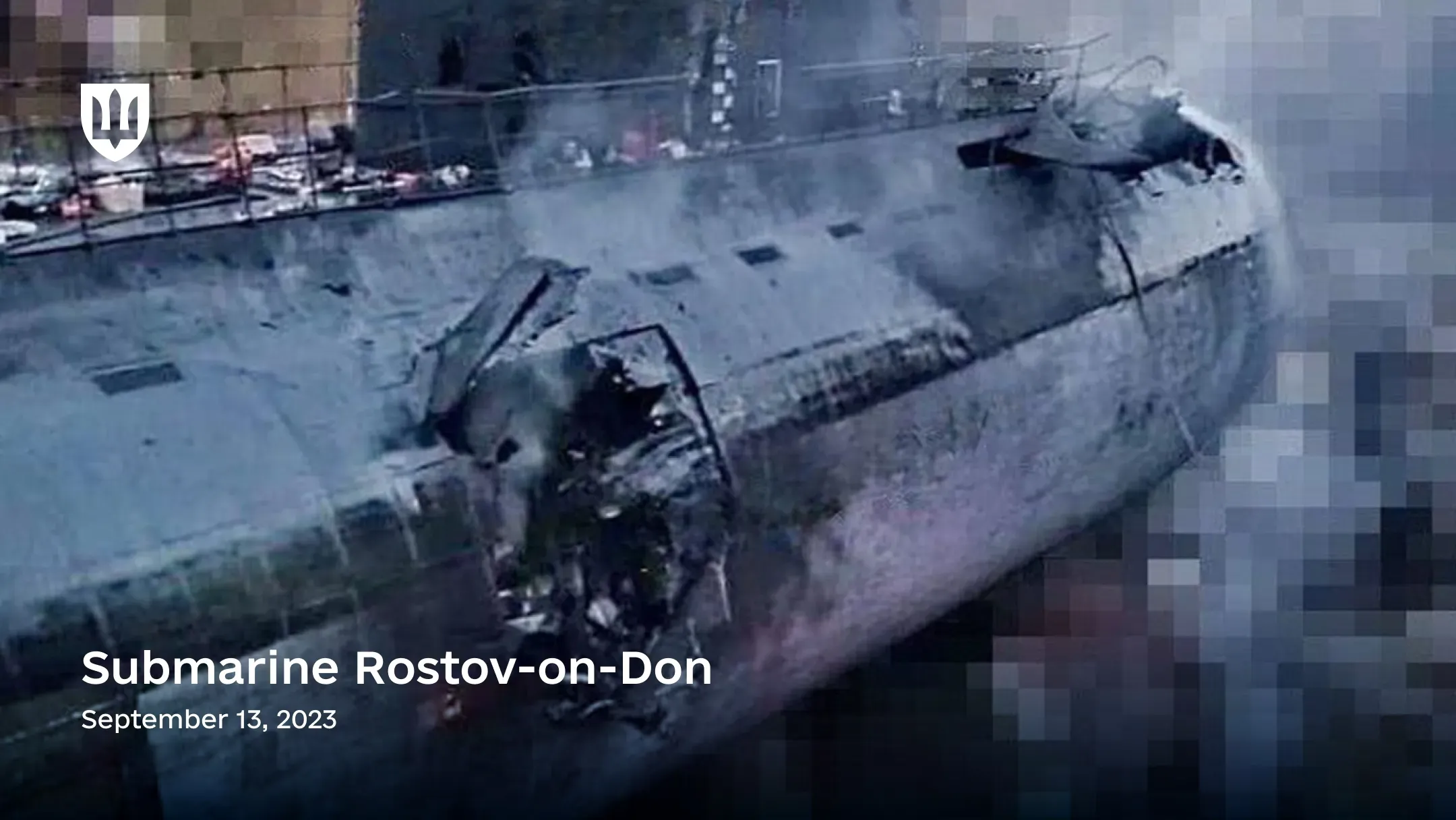
As B-237 Rostov-on-Don was a carrier of Kalibr cruise missiles, its disablement reduced the enemy’s salvo capacity. The successful strike on a protected base in Sevastopol forced russia to begin relocating its fleet to Novorossiysk, significantly complicating vessel maintenance.
Patrol ship Pavel Derzhavin
October 11, 2023
The Project 22160 patrol ship Pavel Derzhavin struck a Ukrainian naval mine on the outer roadstead of Sevastopol while on patrol.
Two days later, on October 13, it was targeted again by an unmanned surface vehicle (USV) while attempting to redeploy, sustaining further damage and requiring extended repairs.
This marked one of the first successful uses of remote mining in combination with coordinated operations.
Buyan-M-class missile corvette
October 13, 2023
The vessel was struck in an operation involving unmanned surface vehicles (USVs) equipped with experimental payloads. The strike occurred as the ship attempted to exit the bay following a series of explosions in the area shortly beforehand.
As a result, another Kalibr cruise missile carrier was put out of action. Buyan-M-class vessels are among the most actively used platforms for missile strikes against Ukraine.
Missile corvette Askold
November 4, 2023
The newest Project 22800 Karakurt-class missile corvette Askold, capable of carrying eight Kalibr cruise missiles, was struck at the Zaliv shipyard in Kerch. The vessel had not yet been officially commissioned into the fleet. Post-strike imagery showed significant damage to the central hull section and missile launch systems.
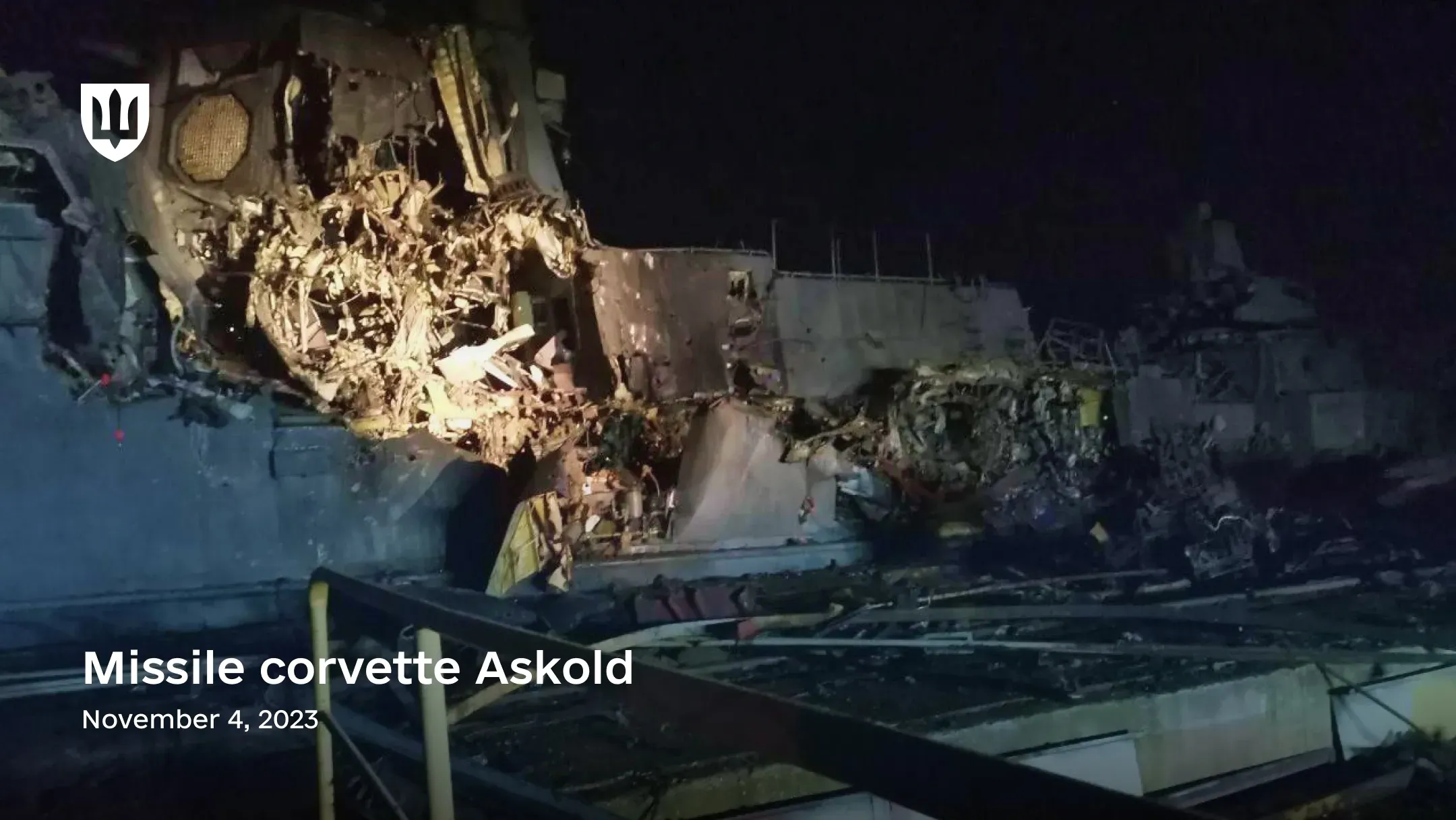
This attack demonstrated Ukraine’s ability to strike targets in the most remote part of Crimea—Kerch—and constituted a direct blow to the modernization program of the russian Black Sea Fleet.
High-speed Serna-class and Akula-class landing craft
November 10, 2023
In a nighttime operation in the vicinity of Vuzka Bay (Chornomorske, temporarily occupied Crimea), two russian high-speed landing craft were struck—one Project 11770 Serna-class and one Project 1176 Akula-class. The strike was conducted using unmanned surface vehicles (USVs), which breached boom barriers and struck the targets directly at the pier.
At the time of the strike, the landing craft were carrying crew and armored vehicles, including BTR-82s, which went down with the vessels.
The destruction of these landing craft represented a significant degradation of the occupiers’ mobile logistics capabilities. russia employed Serna- and Akula-class craft as high-speed platforms for transporting assault forces and air defense systems (such as the Tor-M2) to hard-to-reach coastal areas.
Large landing ship Novocherkassk
December 26, 2023
The vessel was struck by cruise missiles in the port of Feodosia. A powerful explosion, captured on video by local residents, indicated a large-scale detonation of onboard cargo. According to intelligence, the vessel may have been carrying Shahed-type strike UAVs. The vessel was effectively sunk, with debris scattered hundreds of meters across the city.
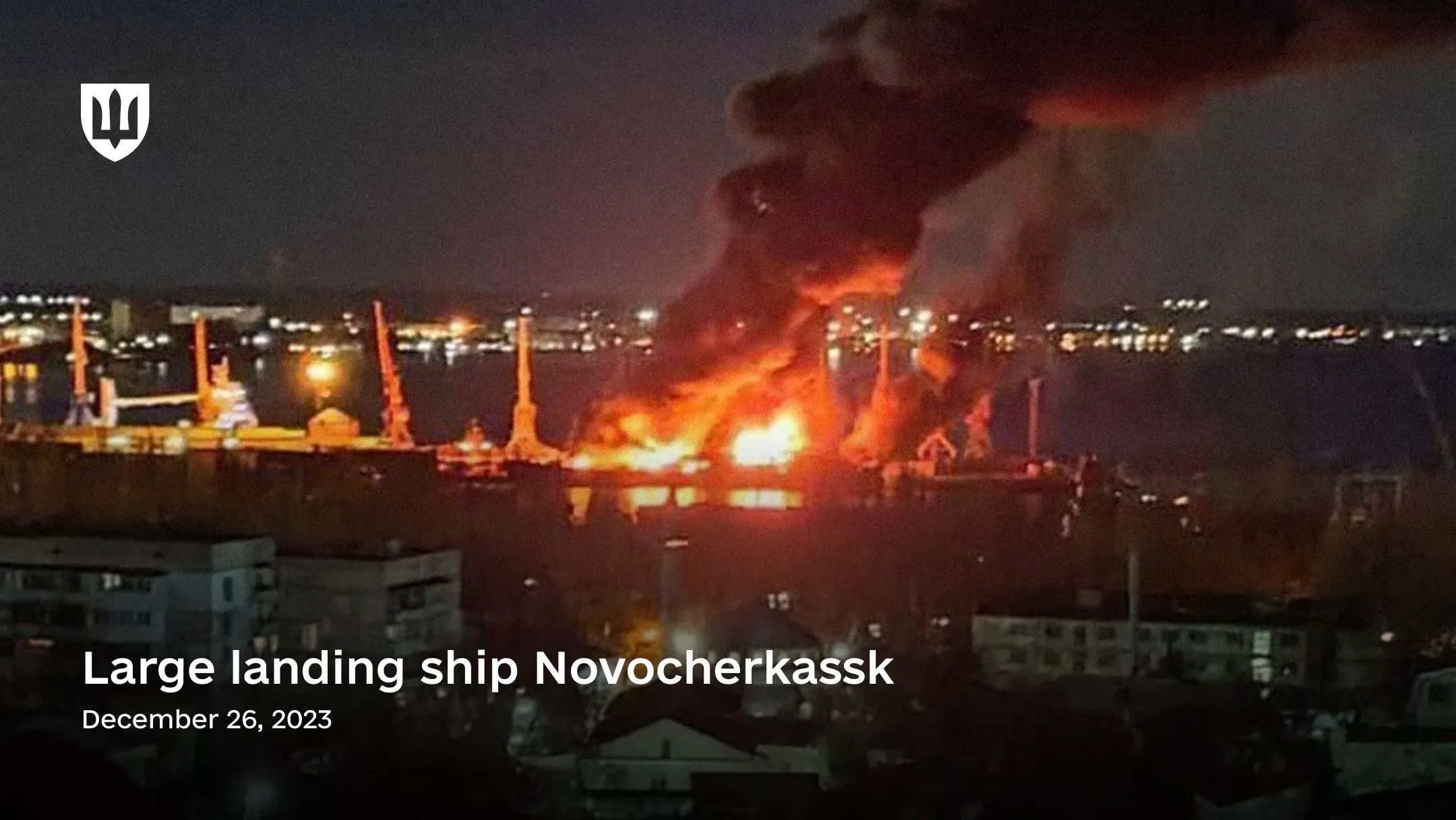
Following the loss of Novocherkassk, russian forces largely ceased using large landing ships for their primary role, fearing further attacks in Crimean ports. This also significantly disrupted the maritime supply of weapons to the front.
Missile corvette Ivanovets
January 31, 2024
The Project 12411 Molniya-class missile corvette Ivanovets was targeted and destroyed by unmanned surface vehicles (USVs) on the roadstead of Lake Donuzlav in western Crimea. Initial USV strikes immobilized the vessel, while follow-on impacts triggered the detonation of Moskit anti-ship missiles. The resulting explosions caused critical damage, leading to the vessel capsizing and sinking.
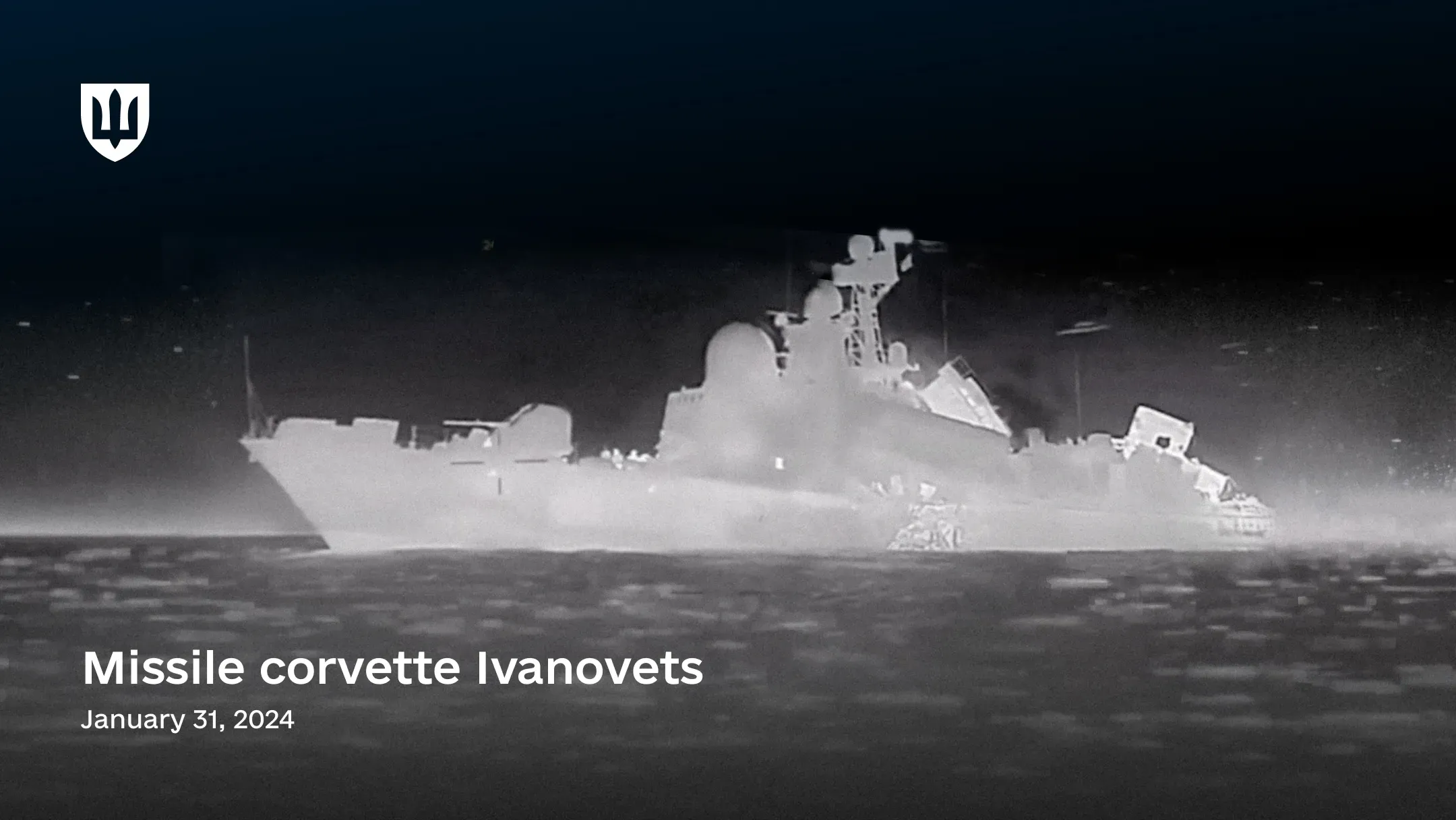
The destruction of Ivanovets significantly degraded the enemy’s combat capabilities: only three such platforms were in service with the russian Black Sea Fleet. The loss of a supersonic missile-capable platform weakened the occupiers’ naval grouping in the northwestern sector of the sea.
Large landing ship Tsezar Kunikov
February 14, 2024
The Project 775 large landing ship Tsezar Kunikov was destroyed in Ukraine’s territorial waters near Alupka by a swarm of unmanned surface vehicles (USVs). The USVs conducted a coordinated attack from both port and starboard, breaching the hull and causing a critical list that led to capsizing and sinking.
The event carried symbolic significance, as the Soviet officer after whom the ship was named died on February 14, 1943.
At the time of the strike, the vessel was being used as a large transport for military cargo.
Patrol ship Sergey Kotov
March 5, 2024
One of the most modern vessels of the russian Black Sea Fleet (commissioned in 2022) was attacked by a swarm of unmanned surface vehicles (USVs) near the Kerch Strait. Multiple hits to the hull caused critical damage, and the vessel sank.
The destruction of Sergey Kotov exposed the ineffectiveness of russian electronic warfare (EW) systems and small-caliber weapons against coordinated drone attacks. The vessel had been designed for patrol and counter-sabotage missions but proved unable to defend itself, casting doubt on the viability of the entire Project 22160 class.
Large landing ships Yamal and Azov, and the intelligence collection ship Ivan Khurs
March 24, 2024
The Defence Forces of Ukraine conducted a large-scale combined strike against Black Sea Fleet facilities in temporarily occupied Sevastopol. The attack confirmed damage to two Project 775 large landing ships—Yamal and Azov. Yamal sustained critical damage to its upper deck and internal compartments, resulting in a significant list, while Azov was struck in the stern section.
On the same day, a strike was recorded against the Project 18280 intelligence collection ship Ivan Khurs, which sustained damage to its intelligence-gathering systems and deck.
The large landing ships Yamal and Azov supported internal ammunition transport within Crimea, while Ivan Khurs is among the most advanced signals intelligence and fleet command support vessels in the russian fleet.
Rescue vessel Kommuna
April 21, 2024
The Defence Forces of Ukraine struck the historic vessel Kommuna, launched in 1913, in Sukharna Bay, Sevastopol. The attack resulted in an onboard fire and damage to specialized submarine recovery equipment and deep-sea systems.
It was the only vessel in the russian Black Sea Fleet capable of conducting deep-sea rescue operations and recovering sunken objects—including missiles, drones, and ship components—from the seabed. Kommuna had previously been involved in surveying the wreck of the guided missile cruiser Moskva.
Minesweeper Kovrovets
May 19, 2024
The Project 266M minesweeper Kovrovets was destroyed during a nighttime strike by the Defence Forces of Ukraine in Sevastopol. A direct missile hit resulted in critical damage to the hull and onboard equipment, rendering the vessel non-operational.
The vessel had been tasked with mine countermeasure and patrol operations.
Missile corvette Tsiklon
May 19, 2024
The Project 22800 Karakurt-class missile corvette Tsiklon was destroyed in Sevastopol by a missile strike. It was the last Kalibr cruise missile carrier based in Crimea. Although the occupiers attempted to deny the loss, satellite imagery later confirmed that the vessel had sunk at the pier.
Following this, russia was forced to relocate all operational missile carriers to Novorossiysk and Tuapse.
Rail ferry Conro Trader
August 22, 2024
The ferry was struck by a cruise missile in the port of Kavkaz in the Kerch Strait.
Loaded with 30 fuel tank cars, it caught fire and detonated in a series of explosions. Due to severe hull damage and uncontrolled burning, the ferry capsized and sank at the pier.
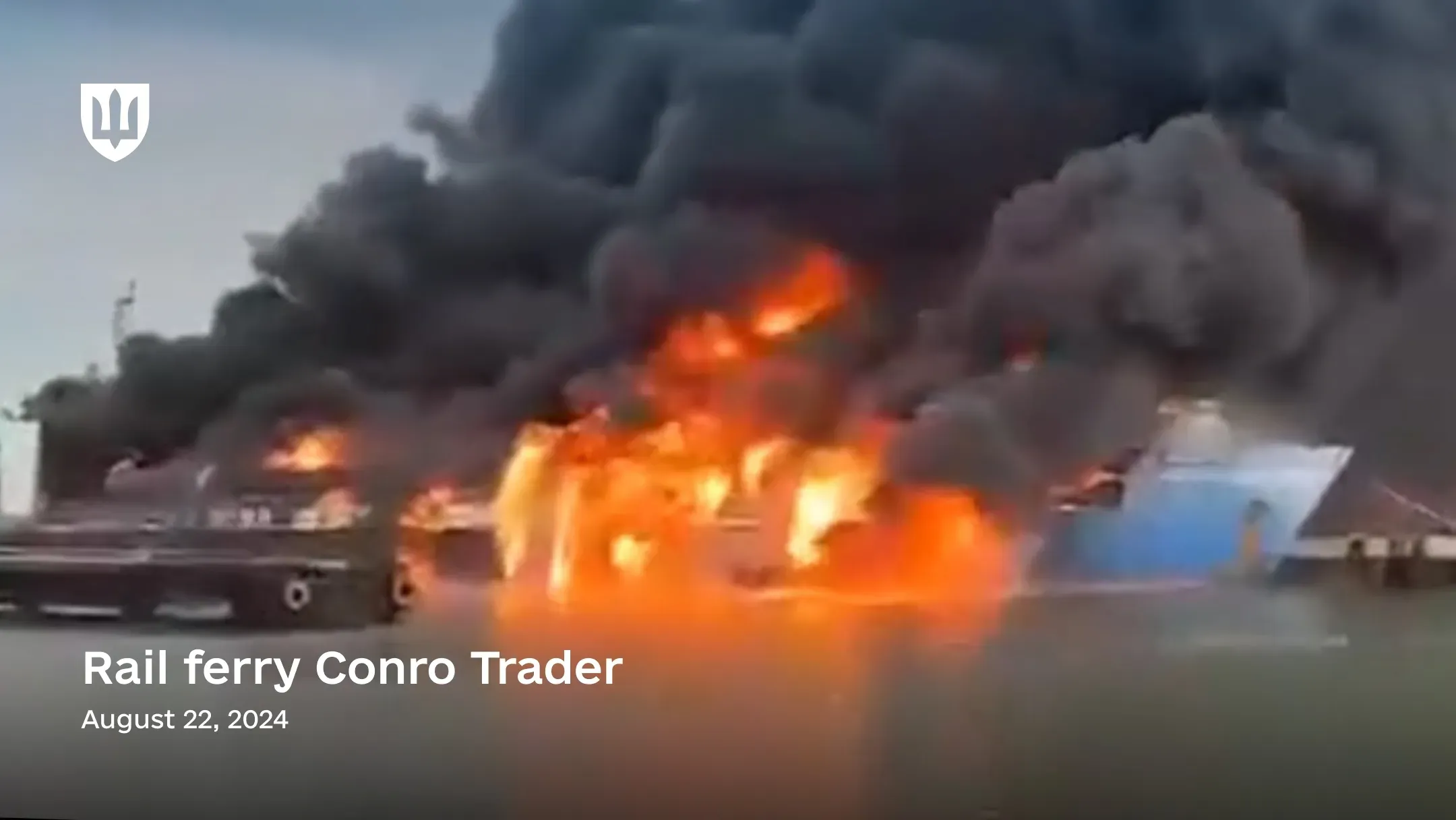
Conro Trader was the only large rail ferry providing regular transport of fuel and ammunition from russia to temporarily occupied Crimea, bypassing the damaged Kerch Bridge.
BK-16 and Raptor-class assault craft
April 1, 2025
The strike was conducted as part of a coordinated operation involving unmanned aerial systems (UASs) and next-generation unmanned surface vehicles (USVs) near the coast of temporarily occupied Crimea.
A group of vessels conducting patrol and coastal security tasks was caught off guard by a series of precision strikes. Intelligence reports indicate that the BK-16 sustained a direct hit to the engine compartment and sank, while the accompanying Raptor-class assault craft was severely damaged by blast effects and fragmentation, resulting in a fire and loss of propulsion.
The loss of these high-speed vessels significantly degraded the enemy’s ability to conduct coastal reconnaissance.
Buyan-M-class missile corvette
August 28, 2025
Another Project 21631 Buyan-M-class missile corvette was struck in the eastern Black Sea, near the coast off Novorossiysk. The vessel was attacked by a group of autonomous underwater vehicles (AUVs), which approached undetected while it was maneuvering on the outer roadstead. The explosion occurred in the propulsion and steering section, resulting in a total loss of propulsion and significant flooding of aft compartments.
The damaged vessel was subsequently towed to port; however, due to the nature of the damage, it was rendered non-operational for an indefinite period.
The strategic significance of the strike lies in further reducing the number of platforms capable of launching Kalibr cruise missiles.
Project 636 “Varshavyanka”-class submarine December 15, 2025
One of the most advanced diesel-electric submarines of the russian Black Sea Fleet, referred to by NATO as the “Black Hole” due to its low acoustic signature, was struck while on the surface near the entrance to Sevastopol Bay.
The operation was conducted as a combined strike: unmanned aerial systems (UASs) diverted air defenses, while a high-speed unmanned surface vehicle (USV) with an enhanced warhead struck the sail and the hull. The explosion resulted in the loss of submergence capability and caused significant damage to internal communication systems.
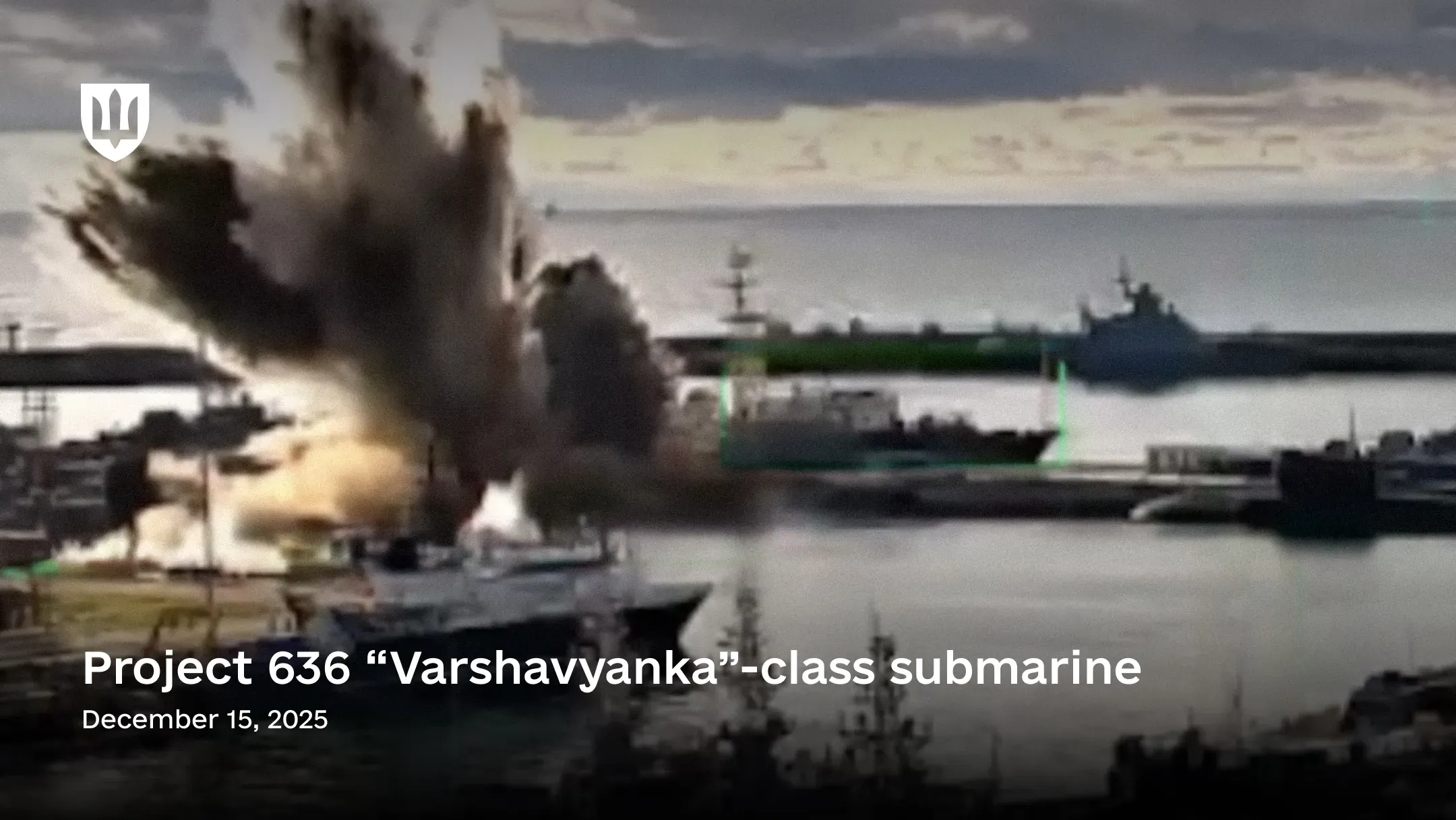
Submarines of this class are primary platforms for the launch of Kalibr cruise missiles from a submerged position.
Minesweeper Valentin Pikul and anti-submarine warfare ships Yeysk and Kasimov
March 2, 2026
A large-scale nighttime attack involving more than 200 drones was conducted against Novorossiysk, the principal base to which the russian Black Sea Fleet redeployed from Crimea. As a result of the combined strike, the minesweeper Valentin Pikul sank, while two anti-submarine warfare ships—Yeysk and Kasimov—sustained significant damage to their hulls and propulsion systems.
The loss of Valentin Pikul effectively degraded the base’s mine countermeasure capability in Novorossiysk. Damage to Yeysk and Kasimov further reduced russia’s ability to counter unmanned surface vehicles, increasing the vulnerability of the remaining fleet.
As was previously reported by the Ministry of Defence, the Defence Forces of Ukraine hit five strategic plants and ten oil refining facilities in March 2026.