A bold assault “warhorse” that can swim: BTR-4 Bucephalus overview
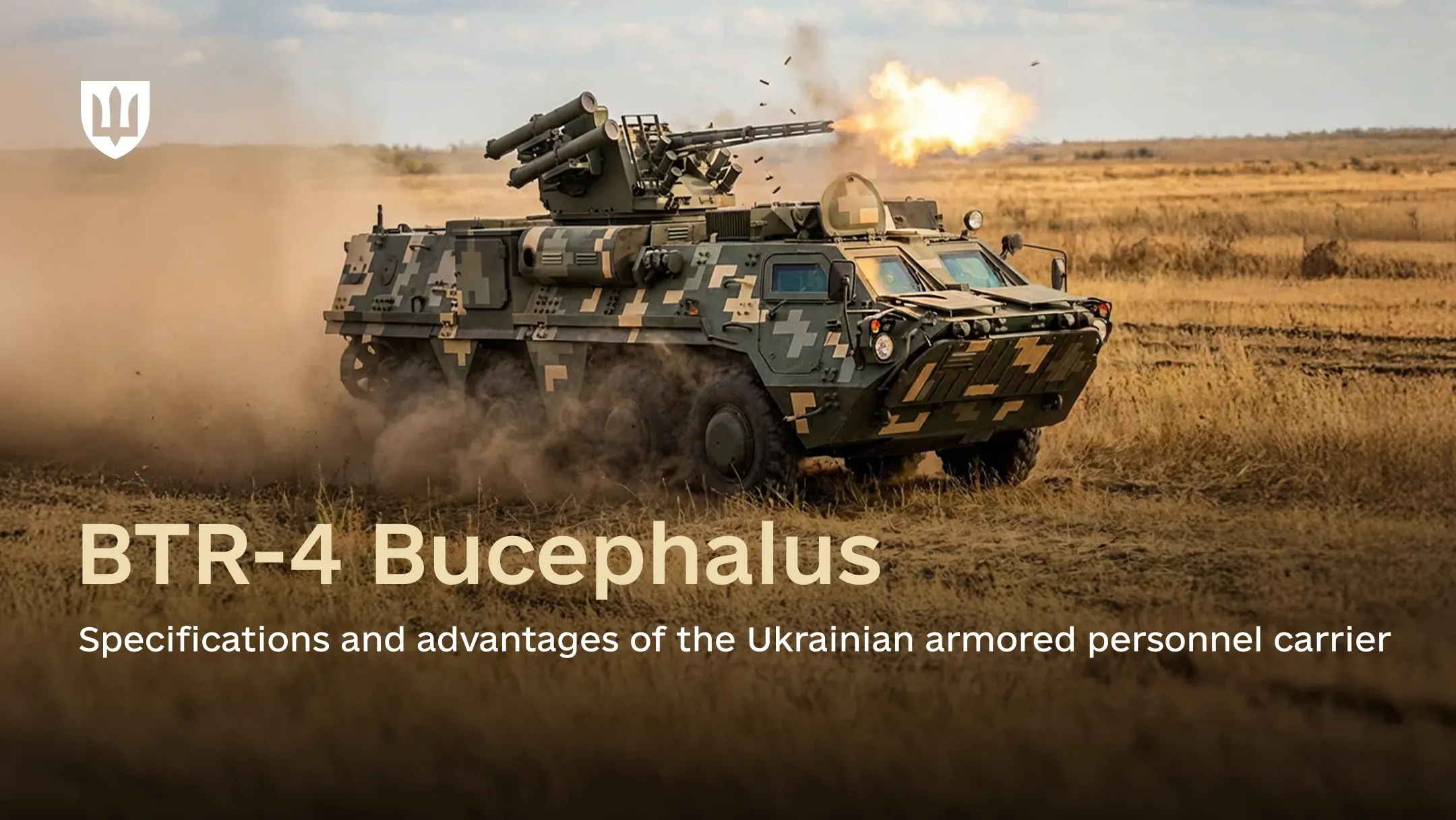
The development of the BTR-4 Bucephalus (Ukrainian: БТР-4 «Буцефал», romanized: Butsefal) armored personnel carrier (APC) by Ukrainian designers marked an important step away from Soviet-era design standards toward modern Western approaches to crew protection and firepower effectiveness. This armored personnel carrier is in service with the Security and Defence Forces of Ukraine and has demonstrated its effectiveness in combat.
For example, the 20th Operational Brigade “Lubart” of the National Guard of Ukraine operates the modern Ukrainian BTR-4E Bucephalus equipped with the BM-7 Parus weapon station. It has also been equipped with additional counter-drone protection.
To learn more about how the Bucephalus armored personnel carrier has been put through its paces in the brigade, watch the Army Media report video below (English subtitles and auto-dubbed audio available in the YouTube player settings).
The Ministry of Defence of Ukraine outlines key facts about the BTR-4 Bucephalus and its advantages.
BTR-4 Bucephalus APC: configuration and ergonomics
The BTR-4 Bucephalus is an armored personnel carrier with an 8×8 wheel configuration. One of its key features is a three-compartment layout, which sets it apart from the outdated BTR-70 and BTR-80.
- Front compartment: positions for the driver and commander, with large armored windows providing excellent visibility.
- Middle compartment: houses the engine. As a result of this deliberate design solution, the armored personnel carrier features a through-passage along its side. The crew can now move from the cab to the troop compartment without stepping outside under enemy fire.
- Rear compartment: troop compartment for seven personnel.
Importantly, troops dismount through rear double-leaf doors. This enables troops to dismount under the cover of the vehicle’s 20-ton hull — a critical advantage in assault operations.
Engine and speed
The Bucephalus is powered by a Ukrainian 3TD-series diesel engine. It is loud but compact.
Engine specifications. Although it is relatively loud, its main advantage is its compact size, which enables the internal pass-through layout.
Speed. Up to 110 km/h on roads and up to 60 km/h off-road.
Fuel consumption. The vehicle consumes around 100 liters of diesel per 100 km on roads, increasing to up to 150 liters in harsh off-road conditions.
Firepower
The Bucephalus is armed with the BM-7 Parus remotely controlled weapon station, which includes the following key components:
- 30 mm ZTM-1 automatic cannon: a powerful weapon for engaging enemy light armored vehicles and personnel.
- A 30 mm automatic grenade launcher (KBA-17) and a 7.62 mm machine gun.
- ATGM capability: anti-tank guided missile integration.
Advantages of the weapon station. The gunner is seated inside the hull rather than in the turret, which significantly increases survivability in the event of a direct hit to the weapon system. The commander operates an independent panoramic sight and can designate targets to the gunner at the press of a button.
Armor and protection
The hull of the Bucephalus armored personnel carrier is made of specially hardened steel. It provides protection against 14.5 mm rounds from the front, while the side armor withstands 12.7 mm fire.
The design allows additional armor panels or slat armor to be fitted, improving survivability without reducing mobility.
Amphibious capabilities
Unlike many Western counterparts, the BTR-4 Bucephalus is fully amphibious in its standard configuration.
The vehicle is equipped with two powerful waterjet propulsors at the rear, enabling speeds of up to 10 km/h in water.
The transition to amphibious mode is rapid — it requires only checking that the hatches are sealed and fitting the air intake snorkels. The vehicle remains stable in water, without the bow digging in.
The BTR-4 Bucephalus armored personnel carrier is a bold assault “workhorse”. It is suited for operations requiring high firepower, protected troop dismount under fire, and the ability to cross rivers without extensive prior preparation. In this rugged, powerful APC, priority is given to troop protection and remote fire control.
Previously, the Ministry of Defence of Ukraine outlined the key features of CVR(T) armored vehicles, a new batch of which Latvia has begun delivering to Ukraine.