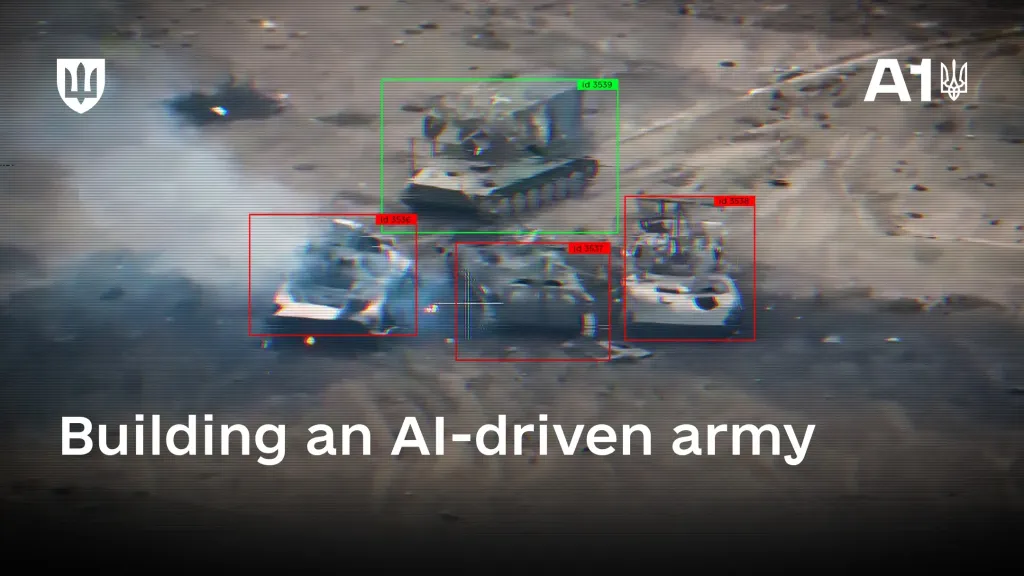
Smart weapons: More than 70 systems using AI and computer vision are already striking enemy targets
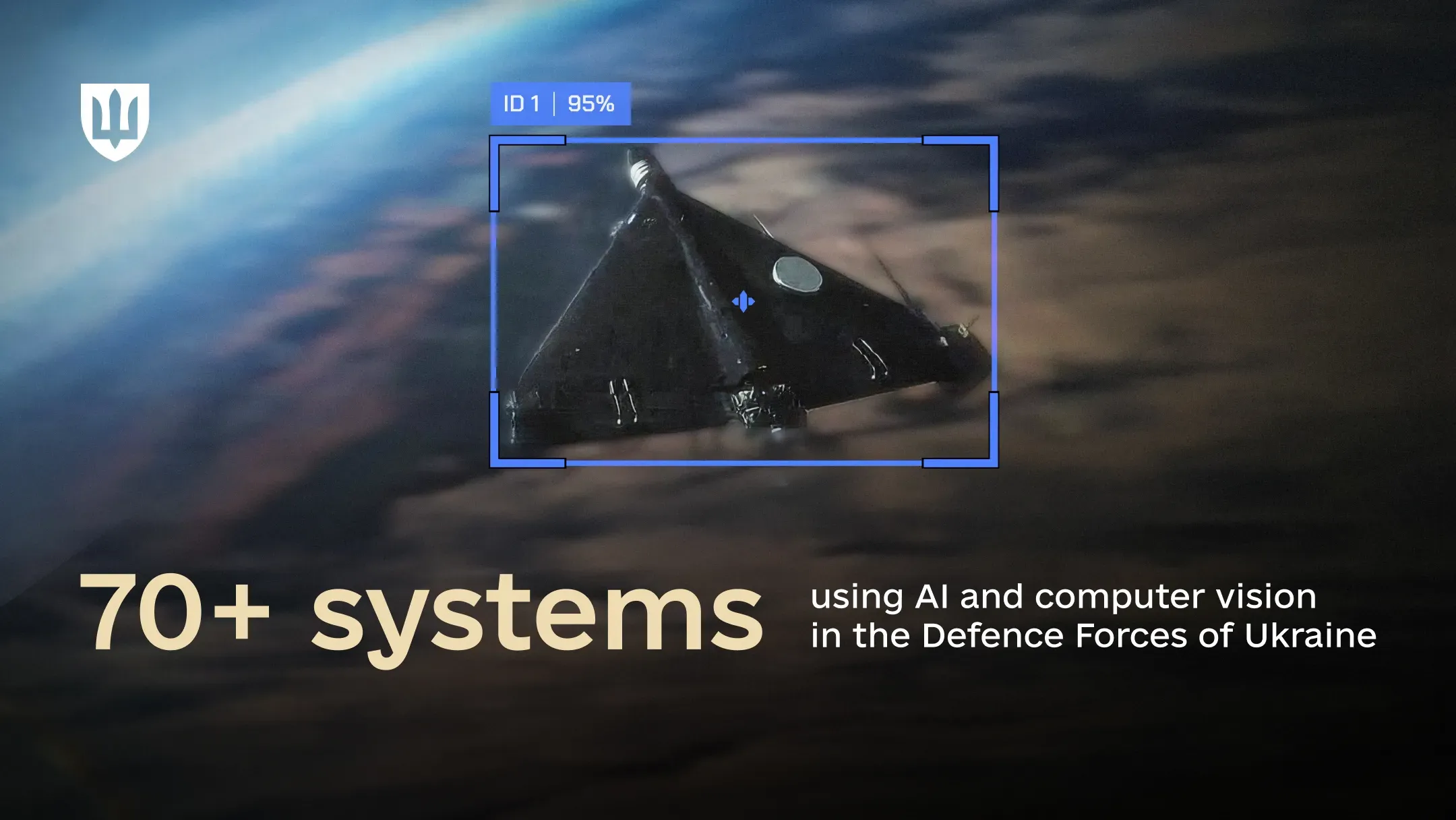
Units of the Defence Forces of Ukraine already use more than 70 different systems powered by AI and computer vision technologies to strike enemy targets.
More than 200 companies in Ukraine currently produce AI-enabled drones. Meanwhile, Brave1 Market, the government defense technology marketplace, offers defenders 46 AI solutions, including target recognition, optical stabilization, and automatic terminal guidance modules.
The Ministry of Defence of Ukraine aims to ensure that 100% of drones on the front line are equipped with computer vision and AI capabilities.
AI and computer vision enhance drone effectiveness
Integrating these technologies is fundamentally changing how unmanned systems are used. Algorithms are now being entrusted with critical combat tasks, ranging from navigation and object identification to autonomous target engagement. However, the final decision on target selection and engagement is made by a human operator.
In general, the process works as follows:
- Navigation without satellite-based systems. Computer vision algorithms analyze the terrain and landmarks below the aircraft and compare them with uploaded maps. This enables precise positioning without a GPS signal, both day and night.
- Object recognition. Neural networks analyze visual data to detect enemy equipment and personnel.
- Target engagement. Computer vision enables the drone to lock onto the target during its approach and continue toward it autonomously. This allows the drone to engage targets even after losing communication with the operator due to enemy electronic warfare (EW).
AI thus plays a role across the entire kill chain — the sequence from target detection to destruction — including target identification, engagement, and assessment of engagement effectiveness.
Ukraine scales up the use of AI on the battlefield
Effective algorithm performance requires large volumes of verified data. Such data are available, in particular, through Brave1 Dataroom, a secure environment where developers can access structured datasets to validate, train, and fine-tune AI solutions for military applications. The platform focuses on intercepting aerial targets.
More than 100 Ukrainian companies have already gained access to Brave1 Dataroom and are using the platform to train AI models using real-world data. The Dataroom contains datasets covering different types of targets, collected under varying weather conditions, at different times of day, and using different sensors, including visual and thermal imaging sensors. This enables models to be trained on the broadest possible range of real-world scenarios.
In addition, the Ministry of Defence of Ukraine has granted Ukrainian defense companies access to the Avengers Labs platform. The platform was created to train AI models for unmanned systems using real battlefield data.
Avengers Labs is built around an annotated dataset of 5 million frames collected on the battlefield.
Most of this data is sourced directly from the DELTA combat system and is constantly supplemented with new data. The targets include tanks, artillery, air defense systems, infantry, and aerial targets such as Shahed drones and reconnaissance UAVs.
Avengers Labs detects 70% of enemy equipment shown in video streams in Vezha, a module of the DELTA combat system. The system takes just 2.2 seconds to detect a single piece of equipment.
In addition, the Ministry of Defence launched the Defense AI Center “A1” in March to systematically integrate artificial intelligence across the military and the Ministry of Defence. AI will analyze combat data, help accelerate the kill chain, and improve combat technologies. The center’s team has already launched strategic projects to build an AI-driven military, with some solutions currently being tested by military units.