AI-driven army: How the Defense AI Center A1 is integrating artificial intelligence into the Defence Forces
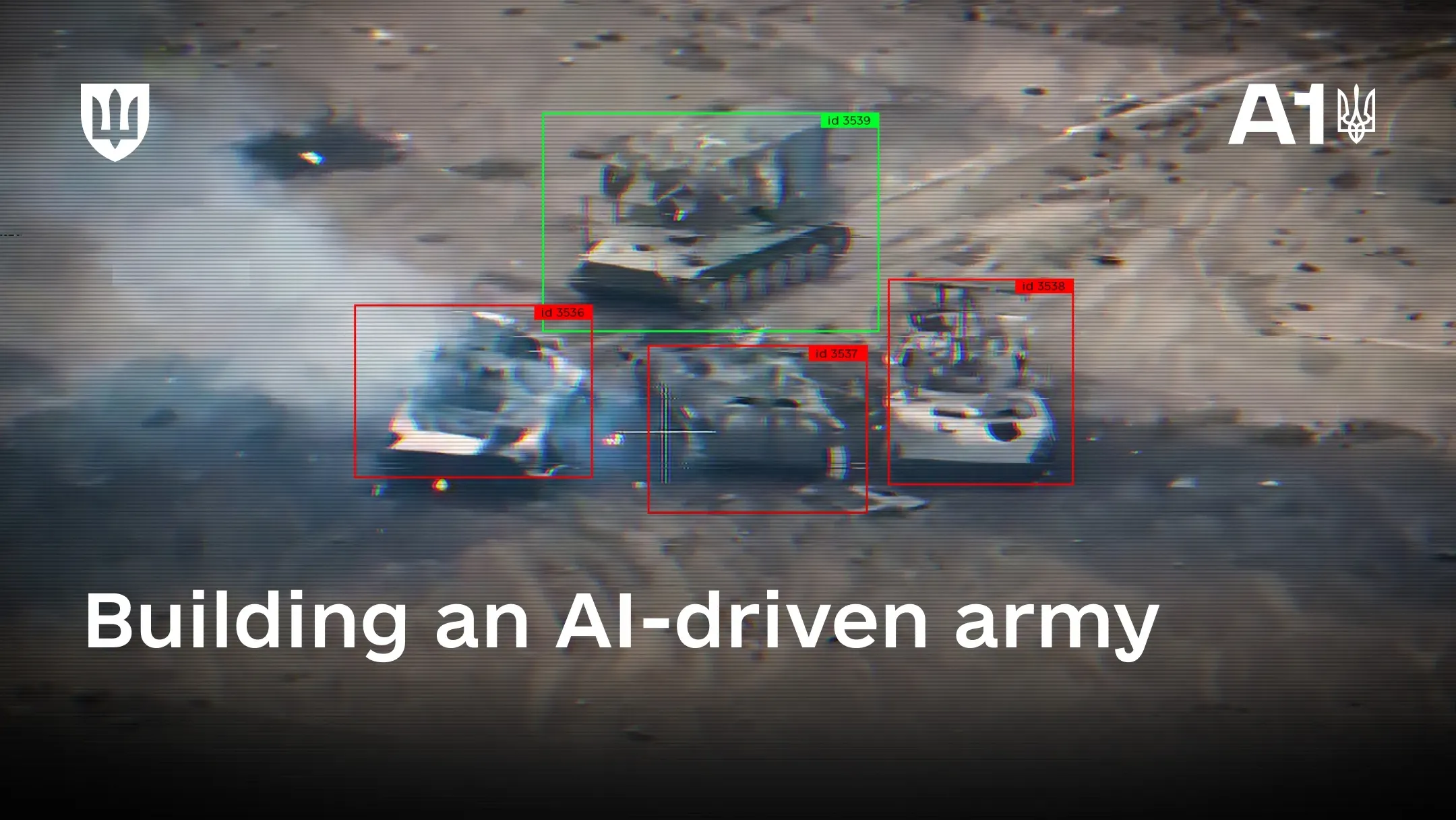
Defense AI Center A1, established under the Ministry of Defence of Ukraine in March, is already advancing strategic projects to transform the Defence Forces into an AI-driven army.
It is an army where artificial intelligence optimizes data analysis, decision-making, and target engagement at every level.
Artificial intelligence is our asymmetric response to the enemy’s numerical advantage.
The integration of AI plays a key role in halting the enemy across three domains: in the air, on the ground, and in the economic domain.
The future of the AI-driven army
According to Danylo Tsvok, there are two key areas of development for the AI-driven army.
The first area: Data-driven decision-making
AI enables the rapid and effective processing and analysis of large volumes of data, including battlefield data, helping determine how to use it most effectively in support of the military.
For example, it can simulate and predict battlefield scenarios.
The second area: The use of AI to support kinetic effects on the battlefield
AI is integrated throughout the kill chain—the sequence from target detection to destruction—covering target identification, engagement, and battle damage assessment.
Why we are developing AI capabilities
As Danylo Tsvok emphasized, every product developed by Defense AI Center has two clear objectives:
- to save the lives of Ukrainian service members;
- to maximize the effectiveness of frontline operations.
To achieve these objectives, the Defense AI Center works closely with military personnel, gathers feedback on their most pressing challenges, and develops technology solutions to address them.
The solutions are tested directly by military units.
How AI is shaping the battlefield
According to Danylo Tsvok, AI supports the processing and analysis of large volumes of data, especially during operational planning.
Another area of AI application is kinetic targeting, particularly through computer vision technologies. For example, last-mile guidance technology enables a drone to lock onto and engage a target even in the presence of electronic warfare.
AI is also used in interceptor drones to acquire and engage targets.
AI is also integrated into unmanned ground vehicles (UGVs) and remote weapon stations. Remotely operated autonomous weapon systems engage enemy targets while reducing the exposure of Ukrainian service members in forward positions.
There are also pilot projects exploring drone swarm technology, which enables multiple drones to operate as a unified system to execute coordinated missions.
The future of military technology is AI-enabled battlefield operating systems that rapidly build a comprehensive picture of the battlefield, generate insights, and support decision-making. It serves as a digital twin of the battlefield, enabling the military to understand the situation on the front line, plan operations, and determine which capabilities to employ for each mission.
Based on Danylo Tsvok’s interview with LB.ua.