EU 20th sanctions package: how Europe is constraining russia’s capacity to wage war
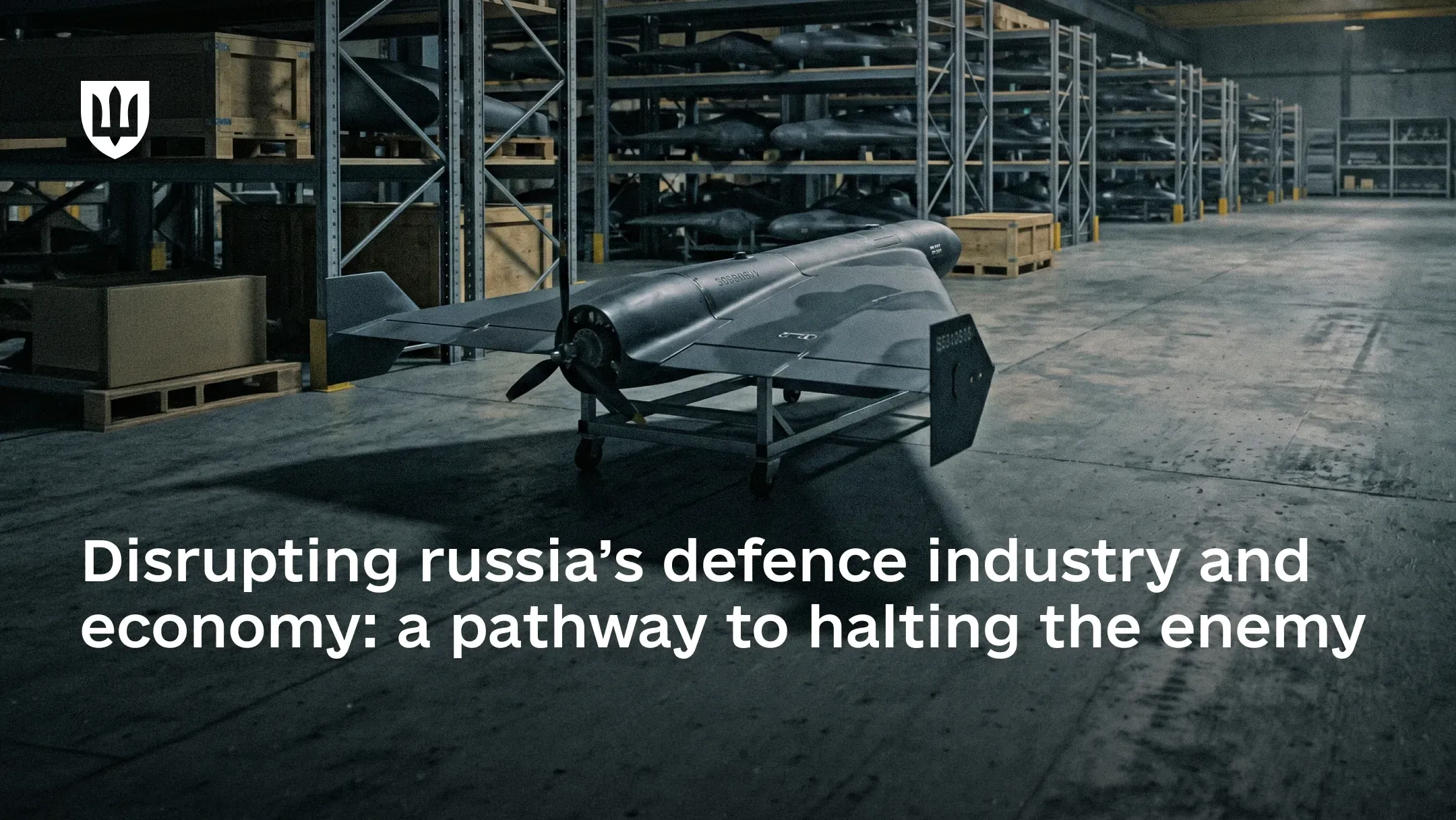
The Ministry of Defence of Ukraine outlines the contents of the EU’s 20th sanctions package, assesses how the new restrictions impact russia’s military-industrial complex (MIC), and examines whether they are sufficient to weaken the aggressor’s offensive potential.
The Council of the European Union has adopted the 20th sanctions package against russia — the most extensive in terms of individual and corporate listings in the past two years.
What the 20th sanctions package is and why it matters
EU sanctions constitute legally binding decisions of the Council of the European Union imposing trade restrictions, asset freezes, entry bans, and transaction-related limitations on individuals, companies, and entire sectors of russia’s economy.
The 20th package includes 120 new listings — both individuals and legal entities — and establishes multi-tier restrictions across the energy sector, banking, cryptocurrencies, the military-industrial complex, and trade. The package is grounded in Council Regulation (EU) 2026/506, amending Regulation (EU) No 833/2014, and Council Decision (CFSP) 2026/508 concerning the listing of individuals and entities. The package took effect on 23 April 2026.
Concurrently with the sanctions package, the EU approved a €90 billion loan to support Ukraine. These two decisions were adopted simultaneously, representing two sides of the same mechanism to compel the aggressor to peace.
Impact of the new package on the enemy’s military-industrial complex
For Ukraine, this represents the core dimension of the package. The EU has adopted a set of targeted measures directly affecting the production capacity of russia’s military-industrial complex.
Sanctions against manufacturers of weapons and drones
A total of 58 companies and associated individuals involved in the development and production of military products — including strike drones — have been added to the sanctions list. Among the specifically identified entities are Simbirsk Design Bureau Piranha LLC, a manufacturer of Piranha FPV drones used by russia on the front line, and the Archangel Military Tactical Center (LLC ‘Archangel Center’).
In addition, 16 entities from third countries — China, the UAE, Uzbekistan, Kazakhstan, and Belarus — have been sanctioned for providing dual-use goods or weapons systems to russia’s military-industrial complex. A further 60 companies (32 in russia and 28 in third countries — China, including Hong Kong, Turkey, the UAE, and Thailand) have been placed under enhanced export restrictions, preventing them from procuring EU technologies that enhance the occupiers’ combat capabilities.
Restrictions on drone and missile components — a new instrument
The most innovative element of the package is the first-ever activation of the EU anti-circumvention instrument — a mechanism introduced in 2023 that had not been used before. The EU has imposed a full export ban on computer numerical control (CNC) machine tools and telecommunications equipment to Kyrgyzstan, citing its “systematic and persistent inability” to prevent the re-export of these goods to russia. According to the European Commission, these components are used by the aggressor in the production of drones and missiles.
Previously, the EU was able to restrict trade only with specific entities. The new instrument allows the EU to block entire trade routes — regardless of the identity of the formal purchaser.
Ban on the supply of explosives, lubricants, and chemicals
The new bans on exports to russia cover chemicals, explosives, laboratory glassware, industrial lubricants and lubricant additives, as well as rubber products and components for industrial tractors. These components are directly used in the production of ammunition and the maintenance of military equipment. New export bans to russia exceed €365 million in total value, while new import bans from the aggressor country amount to €530 million, covering metals, chemicals, and minerals not previously targeted.
Ban on cybersecurity services
russia can no longer legally obtain cybersecurity services from EU companies. This restricts access to protective technologies for critical infrastructure and military-industrial facilities.
Impact of sanctions on russia’s war financing
The second dimension of the package focuses on restricting the financial flows that enable russia to fund missiles, drones, and payments to contract personnel. The main source of these funds is oil.
Seven russian oil refineries — located in Tuapse, Komsomolsk-on-Amur, Angarsk, Achinsk, Syzran, Ryazan, and Afipsky — have been included in the sanctions list. In addition, Bashneft (a Rosneft subsidiary) and Slavneft (co-owned by Rosneft and Gazprom Neft) have been added. In total, 36 new corporate listings cover the entire chain — from oil extraction to refining and transportation.
A further 46 russian vessels involved in the illegal transport of oil have been added to the sanctions list. The total number of sanctioned vessels now stands at 632. For the first time, a foreign port has been included in the sanctions list — the Karimun oil terminal in Indonesia, in addition to the russian ports of Murmansk and Tuapse.
Transaction bans have been imposed on 20 additional russian banks — bringing the total number of russian banks cut off from the EU market to 70. The bans have also been extended to four foreign financial institutions in Azerbaijan, Kyrgyzstan, and Laos that facilitate sanctions evasion or use SPFS — russia’s equivalent of SWIFT.
A distinct component of the package concerns cryptocurrencies, which the aggressor is increasingly using for international transactions. The EU has imposed a sectoral ban on all crypto platforms registered under russian law, blocked transactions involving the RUBx stablecoin, and prohibited any support for the development of the digital rouble.
Implications of the package for the three strategic objectives of the war
In assessing this sanctions package through the lens of these three objectives:
- Closing the sky Sanctions targeting drone manufacturers and restrictions on CNC machine tools are slowing the production cycle of strike UAVs used by russia to attack Ukrainian cities and energy infrastructure. This does not stop attacks immediately, but it increases the cost of each drone launched and reduces the rate at which stockpiles are built up.
- Stopping the enemy Restrictions on access to explosives, lubricants, and industrial components directly impact ammunition production and the operational readiness of armoured vehicles. Each month of these restrictions reduces the aggressor’s offensive potential on the battlefield.
- Depriving russia of the resources to wage war. Pressure on the oil sector, the shadow fleet, and financial channels targets the primary source of war financing. As oil revenues decline, funding for missiles, contract personnel, and propaganda also decreases.
What the package does not address and what remains a challenge
The package does not include a full ban on maritime services for transporting russian oil, as this measure has been deferred for coordination with G7 countries. Greece and Malta, where shipping is a critical sector of the economy, have their own reservations about the full introduction of a ban on maritime services — and without taking their interests into account, reaching consensus on this issue in the Council of the EU will be difficult. The package establishes only the legal framework for such a ban in the future; the Council will take a separate decision on its entry into force.
The package was delayed by two months as Hungary and Slovakia maintained their veto until russian oil transit through the Druzhba pipeline was restored. This indicates that the EU’s sanctions mechanism remains susceptible to internal political bargaining.
Finally, China — the main alternative supplier of industrial components — is not subject to EU sanctions. Blocking the Kyrgyz re-export route will have only a partial effect unless it is accompanied by coordinated pressure from the United States and the G7.
The impact of sanctions on russia’s offensive potential
The 20th package is systemic. Its impact on russia’s offensive potential is cumulative: each disrupted supply chain, each blocked company, and each sanctioned shadow fleet vessel adds additional costs and delays to the restoration of the aggressor’s combat capabilities. Combined with the €90 billion loan for Ukraine, the package generates pressure across both dimensions: russia incurs higher costs for continuing the war, while Ukraine receives additional resources to bring the war to an end on just terms.
The Ministry of Defence of Ukraine tracks the implementation of partners’ sanctions decisions and coordinates its position on future measures within international frameworks supporting Ukraine. For further details on the Ministry of Defence’s strategic priorities for depriving russia of the resources to wage war, see Ukraine’s three-domain strategy.