Combat experience and technological adaptability: Ukraine’s contribution to shaping new defense standards
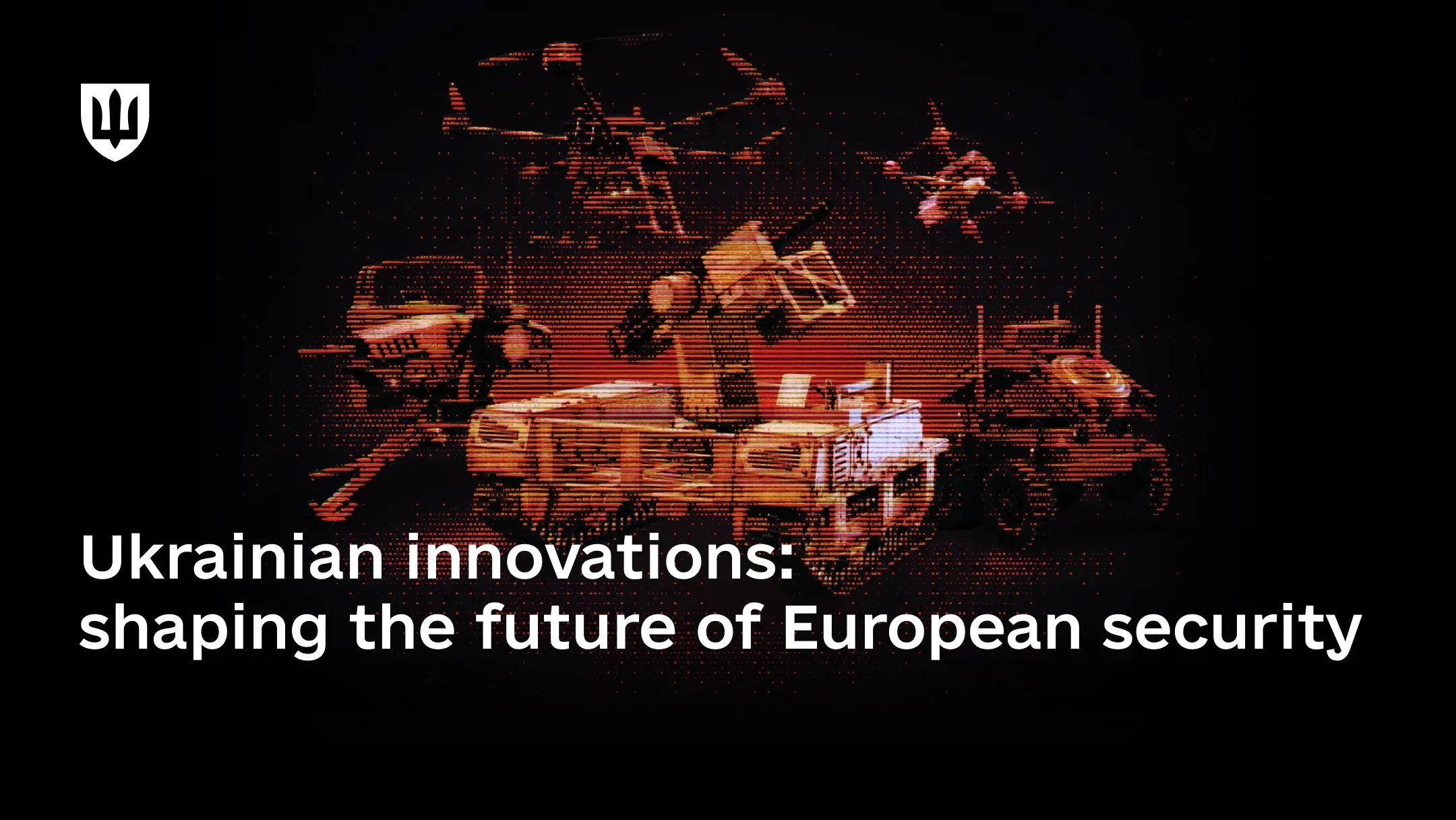
The Ministry of Defence outlines the significance of the rapid integration of domestic defense innovations into NATO standards in developing a resilient European security architecture.
Over four years of full-scale war, Ukraine has amassed a body of combat experience unmatched by any other military in the world, including experience in employing modern weapons and tactics in a real high-intensity conflict. Allies that are expanding defense budgets today without fully integrating this experience risk developing outdated responses to new threats. In this context, Ukraine’s role in the collective security system requires rethinking: not as a recipient of assistance, but as a state that generates and validates defense solutions.
Defense innovation in real war
The scope and scale of changes in Ukraine’s defense industry are unprecedented among NATO countries. In 2022, Ukraine had fewer than ten specialized defense companies; by 2026, this figure had increased to approximately 1,500, with one-third dedicated exclusively to unmanned systems. No NATO member state has undergone a transformation of this kind within a comparable timeframe.
Drone production grew from several thousand units in 2022 to 4 million in 2025, with the 2026 production target exceeding 7 million units. This is not only a reflection of industrial capacity — it is a growing body of combat data collected through every flight and every interception, directly shaping new doctrinal concepts.
In March 2026, NATO and Ukraine’s defense technology platform Brave1 launched a joint counter-UAS (C-UAS) grant program focused on scaling already validated solutions to NATO interoperability standards. This cooperation is not based on a transfer of technologies from the West to Kyiv; instead, it involves integrating Ukrainian-developed solutions into the Alliance’s architecture.
Why increasing defense budgets alone is insufficient
Last year, NATO member states in Europe spent approximately $530 billion on defense, placing second globally by this metric. The issue is not the level of funding, but the allocation architecture.
Analysis of the €100 billion special fund for the Bundeswehr indicates that approximately 95% of the funding has been directed toward traditional manned platforms. The share of research and development (R&D) spending remains at approximately 2%, less than one-fifth of the corresponding U.S. level. This expenditure structure reflects a procurement logic formed before unmanned systems and electronic warfare (EW) emerged as decisive factors on the modern battlefield.
The fragmentation of European defense planning across national frameworks exacerbates this problem. As a result, production volumes are low, costs per unit of weapon are high, and interoperability remains limited. Ukraine has resolved a comparable coordination challenge under conditions of active conflict by shortening the cycle from concept to operational deployment from several years to a matter of weeks.
Ukraine’s experience in a global context
After four years of countering Iranian and russian loitering munitions, Ukraine has developed a proven capability in neutralizing unmanned threats. This capability is in demand beyond Europe.
Several Middle Eastern countries — including Saudi Arabia, Qatar, and the United Arab Emirates — have approached Ukraine regarding cooperation in air defense. Mass attacks by low-cost drones on port and energy infrastructure are a threat these countries already face today, while Ukraine has developed and tested appropriate countermeasures under real combat conditions.
The situation in the Strait of Hormuz confirms this logic. The vulnerability of traditional naval forces to unmanned system attacks there mirrors the challenges Ukraine faced in the Black Sea. Ukraine’s experience using unmanned surface vessels (USVs) to neutralize the adversary’s advantage at sea offers a replicable model for countering asymmetric threats in any maritime environment.
Integrating Ukraine into NATO strategic planning
The effective rearmament of the Allies is impossible without the involvement of a country that already operates at the speed and scale demanded by modern armed conflict.
The Ramstein format reflects this dynamic, evolving from a mechanism for coordinating arms deliveries into a platform for jointly developing security solutions. Ukraine participates in it not only as a party requesting weapons, but as an expert hub that validates approaches through real-world combat employment that cannot be replicated in training environments.
The launch of the joint Brave1–NATO program is the first institutional step in this direction. The next step should be the full integration of Ukraine into the Alliance’s strategic planning processes and the development of new military doctrines.