Drone Line: implementing a new warfare doctrine
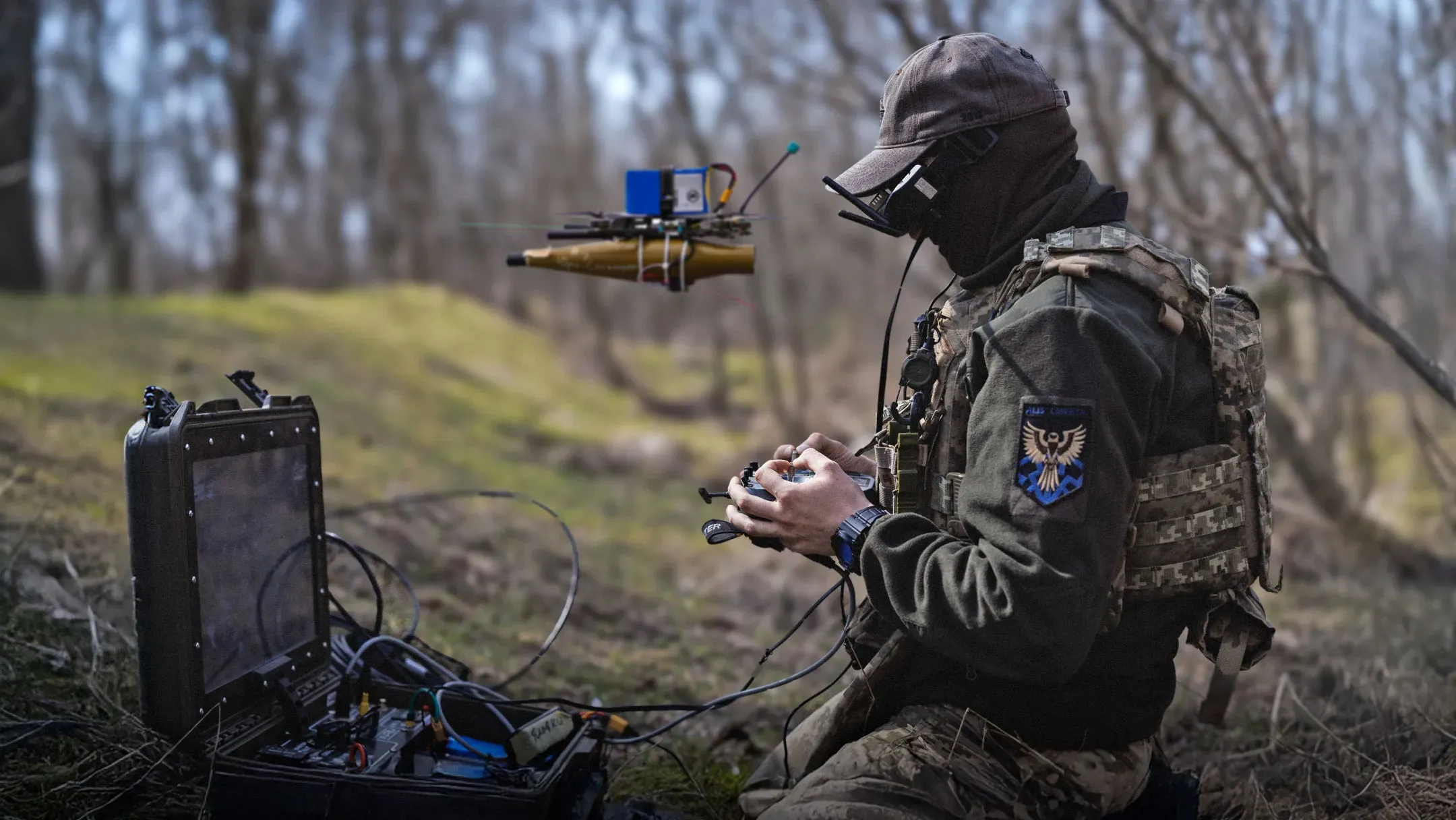
Drone Line, a large-scale project initiated by the President of Ukraine, continues to be rolled out across the Defence Forces. The objective of the project is to scale up a new doctrine of technology-driven warfare.
The core concept of the Drone Line project is to preserve the lives of personnel by establishing a killzone in which the enemy cannot advance without incurring losses.
Drone Line is designed to establish a unified system for employing unmanned systems, providing aerial support to infantry and continuously engaging the enemy at a depth of 10–15 km.
Drone Line constitutes the practical implementation of Ukraine’s War Plan and marks the transition to the systematic employment of unmanned systems along the front line. In just over a year since its launch, the project has shown strong results: units within or supported by Drone Line neutralize one in four targets on the battlefield.
Drones as a key element of strike operations
Drone Line systematically scales the most effective solutions that have already been proven in practice.
The project consolidates the following:
- combat experience from top units operating unmanned systems;
- modern technologies and analytics;
- stable funding and centralized support.
The project aims to create an environment in which enemy forces are detected and destroyed before they can approach Ukrainian warriors’ positions. The project has effectively driven the transition from fragmented drone use to a systematic model where unmanned systems become a key element of strike operations.
Drone Line units
Since the very beginning, the project has included leading units of the Unmanned Systems Forces (USF) of the Armed Forces of Ukraine:
- 20th Separate Brigade “K-2” (USF);
- 429th Separate Brigade “Achilles” (USF);
- 427th Separate Brigade “RAROG” (USF);
- 414th Separate Brigade “Magyar Birds” (USF);
- 3rd Border Guard Detachment “Phoenix” (State Border Guard Service of Ukraine).
At the same time, the Drone Line project also supports other units operating within the framework of the new doctrine, including:
- 412th Separate Unmanned Systems Brigade “Nemesis” (USF);
- 59th Separate Assault Unmanned Systems Brigade “Steppe Predators” (USF);
- 9th Separate Unmanned Systems Brigade (USF);
- 424th Separate Unmanned Systems Battalion “Svarog” (USF);
- 411th Separate Unmanned Systems Brigade “Hawks” (USF);
- 413th Separate Unmanned Systems Regiment “Raid” (USF);
- 1st Separate Unmanned Systems Center (USF).
This is a network operating under a unified set of approaches. Drone Line helps expand the most effective units and scale best practices in the employment of unmanned systems.
Results: scope and effectiveness
As of today, over 1,000 crews are operating under the project.
The results of their operations are already having a systemic impact on the battlefield. Drone Line units strike one in four targets on the front line.
During the winter period alone, Drone Line units within the Unmanned Systems Forces neutralized over 30,000 enemy personnel. In March, enemy losses resulting from the operations of Drone Line units within the Unmanned Systems Forces exceeded 10,500 personnel.
This demonstrates the effectiveness of a systematic approach to using drones.
International support for the project
Drone Line is one of the mechanisms for direct funding of Ukraine’s defense industry in the unmanned systems domain.
Under this mechanism, the Netherlands has allocated $880 million to scale up the project. Project funding has supported the procurement of FPV drones, intelligence, surveillance and reconnaissance (ISR) platforms, and bomber UAVs for the establishment of the killzone.
Drone Line vacancies
Drone Line is open to both military personnel and civilians. The project welcomes UAV operators, engineers, IT specialists, medical personnel, administrative staff, and other professionals ready to work with modern technologies.
Each recruit undergoes specialized training, including basic military training and professional training tailored to their selected specialization and role.
Applications may be submitted through the Unmanned Systems Forces website.
The project provides for changes of duty station for service members to units within its framework. Civilians receive full support from the enlistment office all the way to their place of service.