Weapons, corps-based structure, enhanced protection, digitalization, and more: the Ministry of Defence’s key highlights of 2025
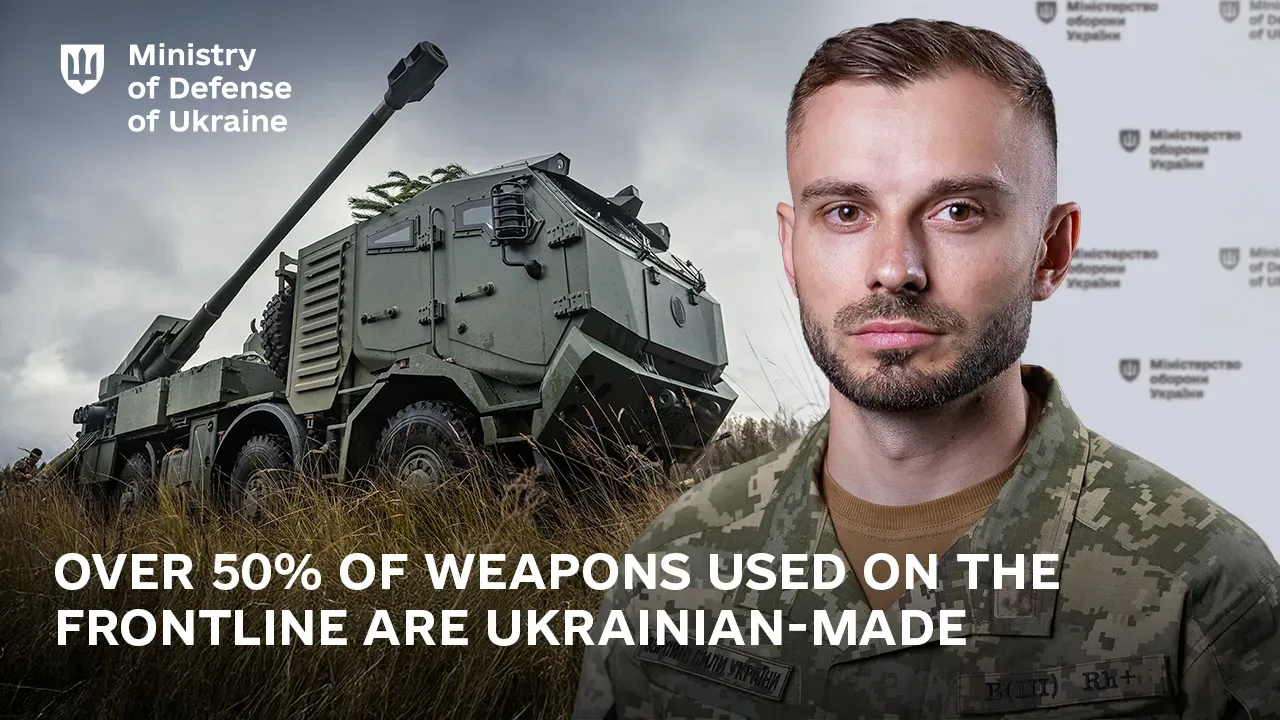
Ukrainian weapons for the Ukrainian military
More than 50% of the weapons currently used by Ukraine’s Defence Forces are of Ukrainian manufacture.
This includes, in particular, reconnaissance and strike unmanned systems, ground robotic systems, artillery and ammunition of various calibers, armored vehicles, missile weapons, maritime drones, and electronic warfare (EW) systems.
Meanwhile, in 2025, 76% of centralized procurement spending on weapons and military equipment was allocated to Ukrainian manufacturers. In 2024, this figure stood at 46%.
Further increasing the share of Ukrainian-made weapons will remain one of the Ministry of Defence’s key priorities in 2026.
Transition to a corps-based structure completed
The new command and control system of the Armed Forces of Ukraine comprises 18 corps:
- thirteen corps of the Land Forces of the Armed Forces of Ukraine;
- two corps of the Air Assault Forces of the Armed Forces of Ukraine;
- two corps of the National Guard of Ukraine;
- one corps of the Marine Corps of the Armed Forces of Ukraine.
All corps are already carrying out tasks as part of designated force groupings.
The transition to the new command and control system has enhanced command of large formations, brigade coordination, and reserve formation.
The reform began in early 2025 and was completed in October. Efforts to fully staff and train the corps are ongoing.
More protection for service members
For the first time, the Ministry of Defence launched the procurement of modular body armor sets in an extended configuration, which increases the protection area through additional modular components.
The expansion of the configuration was driven by changes in the nature of battlefield injuries, with over 90% of wounds caused by fragments and shrapnel. That is why the Ministry of Defence approved three additional protective components for the modular body armor: protection for forearms, shins, and tailbone (coccyx). This ensures broader protective coverage and improved adaptability to different combat scenarios.
To recap, a full body armor set comprises eight components, including front and rear covers with soft ballistic elements and hard armor plates, as well as groin, neck, shoulder, and thigh protection. The set also includes a load-bearing belt with a soft ballistic element.
The Ministry of Defence also announced the first procurement of ballistic blankets—versatile personal protective items configured as ballistic tents to protect against fragments from artillery shells, mines, and grenades. Ballistic blankets can be used for both individual protection and covering dugouts, vehicles, or wounded service members. This is a new item of gear that will enhance service members’ safety on the battlefield.
Adaptive clothing provided by the state
In 2025, the Ministry of Defence procured over 600,000 items of adaptive clothing under the ‘Wounded Warrior Package’ initiative.
These items were prioritized for delivery to military medical facilities in frontline and border regions, including the Sumy, Kherson, Mykolaiv, Kharkiv, Dnipropetrovsk, and Zaporizhzhia oblasts.
The adaptive clothing will help Ukrainian defenders who have been wounded and are undergoing treatment or rehabilitation feel more comfortable. The adaptive clothing features wider sleeves and trouser legs, textile hook-and-loop fasteners, additional width-adjustment options, and other functional elements. These design elements make wound access easier during treatment.
The Military Ombudsman institution was established
In 2025, Ukraine officially launched the Military Ombudsman institution, which serves as an additional mechanism for safeguarding the rights of service members.
Service members can now formally submit complaints and concerns, which will be reviewed by an independent institution.
The Military Ombudsman, appointed by the President of Ukraine for a five-year term, is empowered to initiate inspections in military units, develop proposals to remedy violations, and issue recommendations to military command.
Guaranteed annual leave for service members
In 2025, at the initiative of the Ministry of Defence, the Verkhovna Rada of Ukraine amended the legislation to ensure that service members are guaranteed to take at least 15 of their 30 days of annual main leave.
The amendments also restored the possibility of granting up to 14 additional days of leave to holders of combatant status, subject to the commander’s approval. This type of leave has not been provided since 2022 due to the martial law legal framework.
Accordingly, service members are entitled to 30 days of annual main leave, of which 15 days are guaranteed for use. A service member can opt out of these 15 days exclusively at their own initiative. In addition, service members may be granted up to 10 days of leave for family-related reasons and up to 14 additional days of leave for those with combatant status.
Development of the digital ecosystem
The Army+ mobile application has become a key digital tool for service members: 70% of military units now use the app to prepare reports, with more than 1.2 million reports signed in total.
One of the main updates is the expanded functionality of Army ID. It now provides not only a unique nine-digit ID number for submitting reports, but also a defender’s digital ID to confirm service member status.
The digital ID does not replace paper military registration documents, but will be helpful during checks, including at checkpoints. Army ID now includes a photo and basic information, accessible via a QR code, which representatives of Territorial Recruitment and Social Support Centers (enlistment offices) or the Military Law Enforcement Service (Military Police) can scan to obtain a service member’s details.