Ukrainian alternatives to Mavic tested: the most effective will be contracted for the military
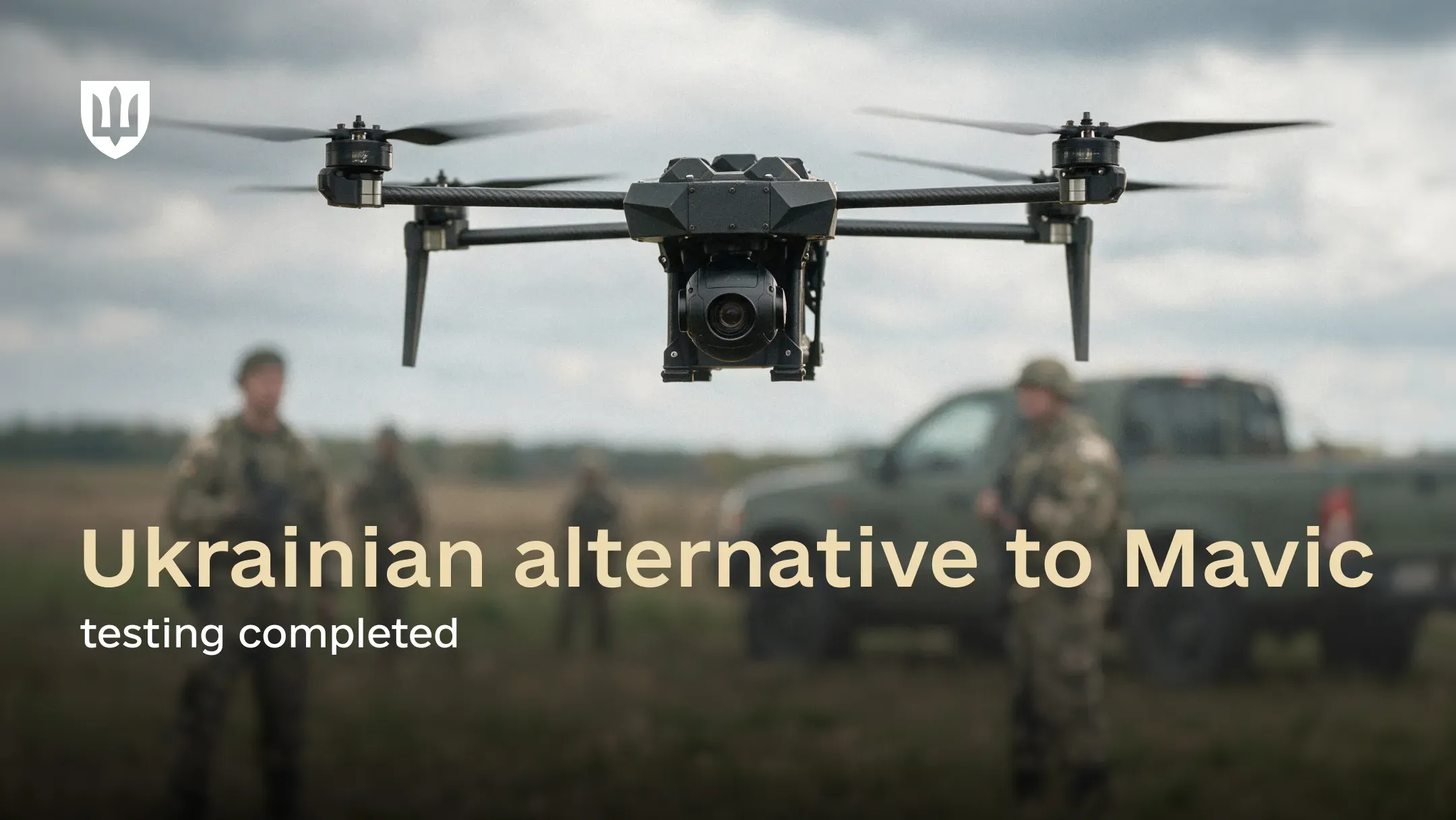
The Brave1 defense innovation cluster, together with the Ministry of Defence of Ukraine, has tested Mavic-class reconnaissance unmanned aerial vehicles (UAVs) from nine Ukrainian manufacturers.
The goal was to check whether the drones meet the military’s actual needs and can operate effectively under modern battlefield conditions.
Reconnaissance drone tests: EW resistance, video link, and flight time
During testing, the following were checked:
- the drones’ resistance to electronic warfare (EW);
- video link and data transmission quality;
- flight time and other characteristics important for front-line operations.
Based on the test results, manufacturers whose drones have demonstrated combat readiness are already moving toward signing contracts with the Ministry of Defence to supply military units.
Why does Ukraine need an alternative to Mavic?
Mavic has become one of the key tools for tactical-level reconnaissance. However, the war demands increasingly capable UAVs.
As the kill zone expands, the military needs drones that stay in the air longer, operate at greater distances, and remain effective where EW is actively used. Civilian drones are increasingly unable to meet these needs.
That is why the Ministry of Defence and Brave1 are systematically developing Ukrainian drones as an alternative to Mavic.
What should a Ukrainian alternative to Mavic be like?
Creating a simple copy of Mavic is not enough. What is needed is a functional alternative in the form of drones adapted to the conditions of the modern battlefield and the specific tasks of the military:
- EW resistance: the ability to operate under electronic jamming and without GPS;
- flight time: 60 minutes or more in the air;
- long-range control: the ability to operate at greater distances so that the operator can stay in a safer location;
- ease of control: an interface familiar to the military that will not require lengthy retraining.
The Ministry of Defence and Brave1 continue working to develop Ukrainian defense technologies. The task is to help the most effective developments move faster from testing to contracting and to provide the military with technologies that meet the real needs of the front.
As previously reported, the Ministry of Defence and Brave1 are also working to scale up multi-drone control technology, which eases frontline logistics. Thanks to its use, one unit doubled the number of cargo loads delivered within a month.