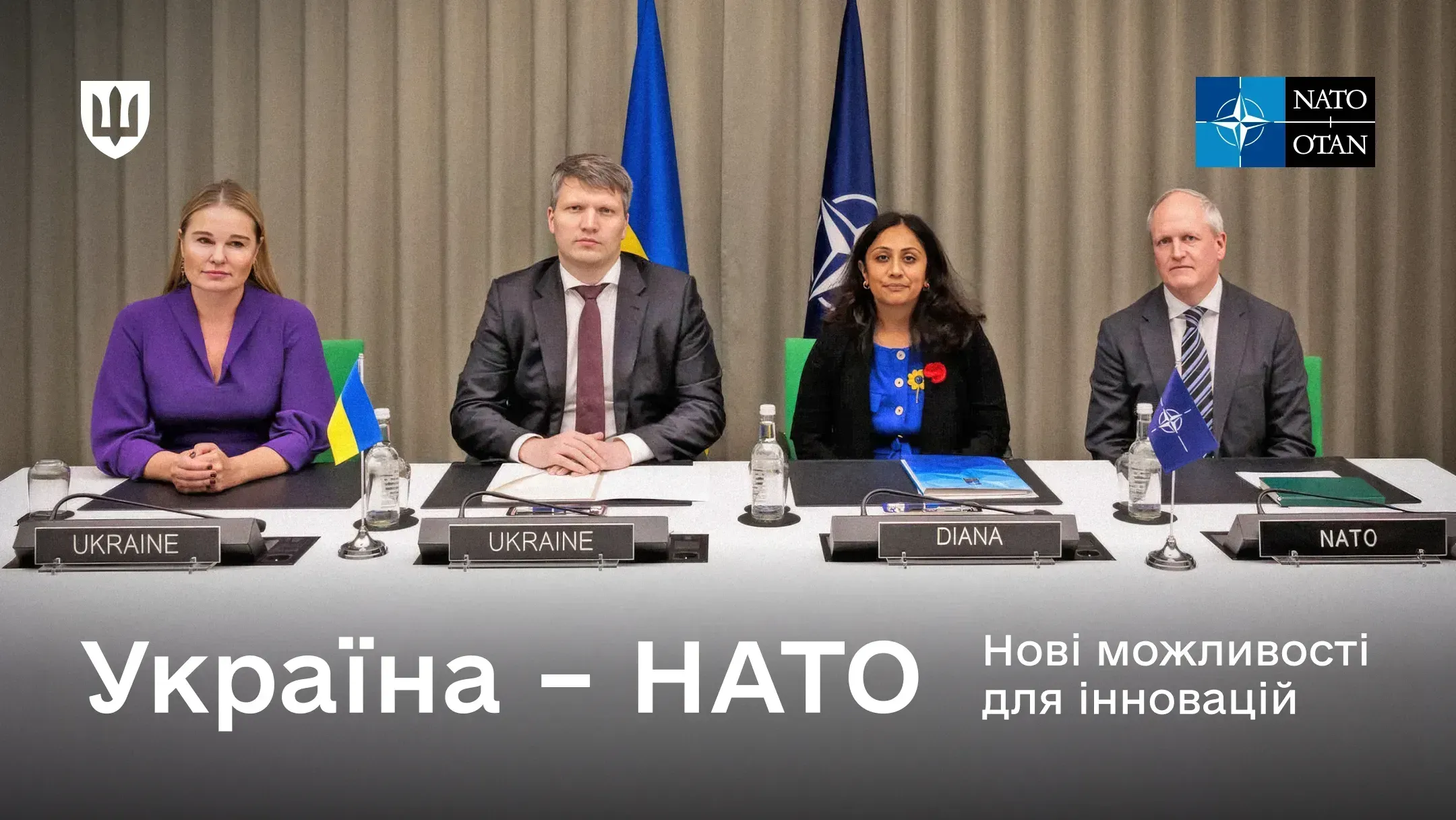
Ukraine and NATO DIANA sign a memorandum to deepen defense innovation cooperation
Ukraine and NATO are deepening cooperation in the joint development, testing, and adoption of innovative technologies.
Deputy Minister of Defence of Ukraine Sergiy Boyev and representatives of NATO’s Defence Innovation Accelerator for the North Atlantic (DIANA) signed a memorandum of understanding to this effect.
Why the innovation memorandum with NATO DIANA is unique
This is the first agreement of its kind between DIANA and a NATO partner country. It lays the groundwork for closer cooperation between the innovation ecosystems of Ukraine and the Alliance.
Ukraine has gained unique experience in rapidly developing, testing, and improving technologies in modern warfare.
For its part, DIANA gives Ukraine access to NATO’s defense expertise and infrastructure, helping promising technologies move from idea to practical application.
This will allow Ukrainian developers to gain a deeper understanding of the Alliance’s standards, open up new avenues for testing their own solutions, and help remove obstacles to scaling them up.
What the new memorandum between Ukraine and the Alliance covers
With the memorandum signed, joint Ukraine–NATO projects will receive additional funding.
The memorandum will also contribute to:
- building a comprehensive defense innovation system that combines the cataloging, testing, and adoption of technological solutions with deeper cooperation with NATO and other international partners;
- continuing to build and develop a catalog of innovative defense technologies that covers, in particular, unmanned aerial vehicles (UAVs), electronic warfare (EW) systems, radars, and unmanned ground vehicles (UGVs).
The catalog is to contain harmonized information on existing and prospective solutions, their readiness level, test results, and potential applications, and to be used to set priorities for the development, procurement, and scaling of technologies.
Other benefits include:
- deeper engagement with NATO institutions, including the NATO-Ukraine Joint Analysis, Training and Education Centre (JATEC) and DIANA, ensuring that Ukrainian combat experience and the needs of the Defence Forces of Ukraine are taken into account when setting technological priorities, preparing and announcing innovation competitions, supporting projects, and testing solutions, including in Ukraine;
- synchronization of the innovative technology catalogs of Ukraine and NATO member states;
- exchange of information to strengthen situational awareness, identify common needs, and plan joint competitions, testing, and technology adoption.
Consistently carrying out these tasks will strengthen Ukraine’s ability to shape NATO’s innovation priorities and attract partner support in line with the needs of the Defence Forces. Synchronizing catalogs and jointly setting technological priorities will lay the foundation for a systematic approach to situational awareness, long-term planning, and forecasting the development of defense technologies.
As previously reported, the Ministry of Defence of Ukraine is also working to implement the NATO Status of Forces Agreement (NATO SOFA). The document defines the legal status of the armed forces of States Parties while they are in the territory of another State Party. It regulates entry and exit, criminal and disciplinary jurisdiction, compensation for damage, and customs and tax regulation.