Leadership principles of the Commander-in-Chief of the Armed Forces of Ukraine: implementation in coordination with the Ministry of Defence of Ukraine
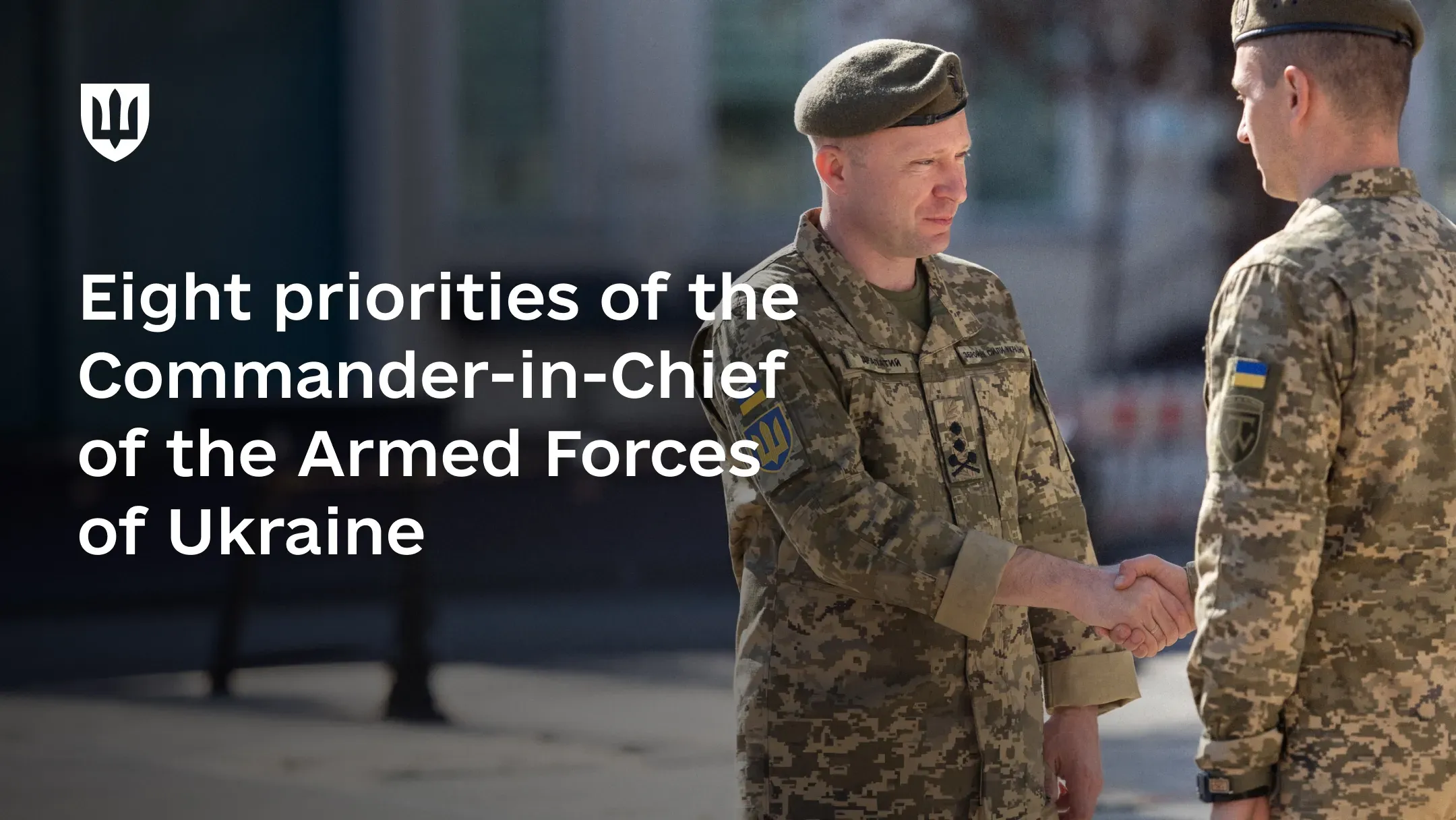
Commander-in-Chief of the Armed Forces of Ukraine Major General Mykhailo Drapatyi presented a document titled “Principles of Leadership and Military Development in Wartime.”
It provides a framework for the Commander-in-Chief’s intent, priorities, and requirements for commanders, which he will implement jointly with the Ministry of Defence of Ukraine.
Intent: fighting today and building the military for tomorrow
The Commander-in-Chief frames the task as two parallel efforts: stabilizing the front and developing the Armed Forces for the future. The primary duty is to stabilize the front, integrate new combat capabilities, and provide commanders with the resources and freedom of action needed to defeat the enemy. At the same time, the Armed Forces build, train, and retain human capital, equip the troops with weapons and military equipment, and develop defense-industrial capabilities for a protracted war.
The Commander-in-Chief makes decisions that fall exclusively within his authority and creates the conditions for subordinate commanders to succeed through intent, delegation, and accountability at every level.
Eight priorities of the Commander-in-Chief
The document identifies eight areas that will guide decisions and the allocation of resources:
- Stabilizing the front: preserving and increasing combat capabilities, protecting the population, cities, and critical infrastructure.
- Human resource management: developing a system for recruitment, training, rotation, and discharge of military personnel, ensuring predictable and equitable military service.
- Unity of effort: coordinating actions on land, in the air, at sea, in cyberspace, and in the cognitive environment under a unified intent, while reducing competition for resources among structural elements.
- Adaptation and innovation: implementing lessons learned from the war and adopting new technologies faster than the enemy.
- Transformation of the Armed Forces: modernizing command and control, doctrine, education, personnel management, and digital and unmanned capabilities.
- Mission Command: delegating authority to subordinate commanders and integrating the capabilities of all components of the Defence Forces.
- Taking care of people: training service members, protecting them from unjustified risk, assisting the wounded, and supporting families and veterans.
- Public and partner trust: professional leadership, responsible governance, and maintaining the trust of the Ukrainian people and international partners.
Joint decision-making with the Ministry of Defence
The modernization of the Armed Forces under the transformation priority is taking place alongside combat operations and is coordinated directly with the Ministry of Defence.
Every decision made jointly with the Minister of Defence must strengthen the military, and every change we make must increase our effectiveness in the war today.
The Armed Forces are not implementing this intent on their own. As part of the Ministry of Defence system, they work closely with other elements of the Ministry of Defence, the Ministry for Veterans Affairs, state and local government authorities, and volunteer organizations. The Office of the Commander-in-Chief is structured to ensure the continuous development of the military in coordination with the Ministry of Defence, combat commanders, the defense industry, the scientific community, and international partners.
The document does not replace existing strategic and operational plans. The procedures for implementing the principles, specific tasks, and performance indicators will be set out in separate documents agreed with the Ministry of Defence.
Requirements for commanders
The Commander-in-Chief’s expectations apply equally to officers, NCOs, and civilians serving in leadership roles. Leaders of the Armed Forces of Ukraine:
- tell the truth and provide honest assessments, not allowing optimism or ambition to distort reality;
- understand the commander’s intent and act decisively within it, without waiting for permission when the situation demands it;
- accept calculated risk and take responsibility for the consequences of their decisions;
- preserve the combat capabilities of personnel, weapons, and equipment;
- care for service members, their families, and veterans, and honor the fallen with dignity;
- develop the next generation of leaders through mentorship and delegation;
- learn faster than the enemy through honest analysis of results;
- implement innovations and build disciplined, professional teams that leave no room for corruption or abuse.
The Commander-in-Chief also outlined his expectations for how staffs should operate. Staffs exist to help commanders on the front succeed, not to create additional work. The Commander-in-Chief requires staffs to reduce bureaucracy, make decisions faster than the enemy, provide honest military advice, and delegate authority to the lowest appropriate level. Every staff decision is tested against one question: does it increase the military’s ability to fight and succeed?
Implementation of the leadership principles will continue through separate documents that will set out procedures, specific tasks, and performance indicators. These documents will be prepared jointly with the Ministry of Defence of Ukraine within the unified defense management system.
The full text of the “Principles of Leadership and Military Development in Wartime” is available on the website of the Armed Forces of Ukraine.