Lasertag, 3D printers, and anti-drone guns: Modern technologies used in cadet training
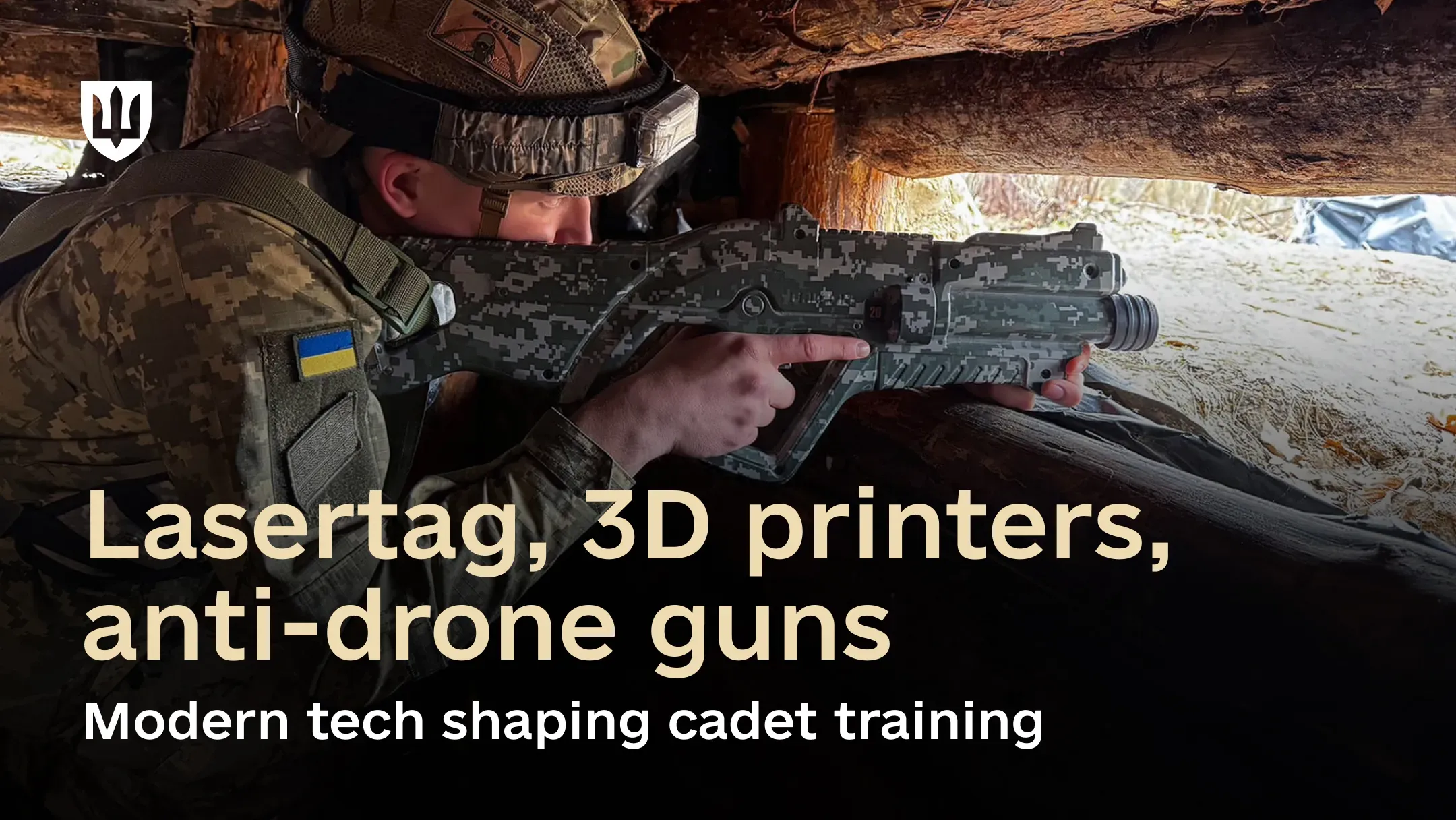
Ukraine’s higher military educational institutions place particular emphasis on preparing cadets for combat operations in the conditions of modern warfare. To achieve this, the training process incorporates advanced instructional methods that leverage technological innovations such as Lasertag, 3D printers, and anti-drone guns.
The Ministry of Defence highlights the key features of each technology.
Lasertag
The Lasertag system enables realistic combat simulations and the development of skills in the use of multiple types of weapons, including small arms and grenades. The system operates by equipping weapons with laser emitters, while service members wear specialized sensors that register simulated impacts.
This ensures the following during training:
- safety and cost-efficiency (no live ammunition is required);
- realism (simulation of combat scenarios and coordination between units);
- accuracy (every hit on a simulated adversary is recorded by the system);
- analytics (automatic collection of data and statistics for instructors);
During Lasertag training, cadets practice battlefield maneuvers, precision fire, area patrolling, reacting to and setting up ambushes, deploying into combat formations, pursuing and neutralizing enemy forces, conducting building-clearance drills, navigating minefields, and other tactical tasks. Simulation technologies allow future officers to train in a realistic environment that closely mirrors combat conditions, strengthening their tactical skills, teamwork, and strategic thinking.
3D Printers
Unmanned aerial vehicles have become an integral component of contemporary warfare. Therefore, service members are trained not only to operate UAVs but also to repair them and fit them with additional equipment.
Laboratories at higher military educational institutions are equipped with 3D printers and plotters that cadets use to independently manufacture components for UAVs.
During classes, cadets learn the history of 3D printing, examine various types of 3D printers, and practice preparing 3D models for printing, conducting additive manufacturing—creating objects by depositing material layer by layer—and carrying out post-printing finishing of components.
As part of their hands-on training, cadets manufacture various items, including components for UAVs.
Anti-Drone Guns
Effective counter-UAV measures are one of the essential conditions for successful operations in modern combat. Accordingly, cadets master counter-UAV techniques using, for example, anti-drone guns—an effective electronic warfare tool that blocks communication channels between a drone and its operator, and thus its control and navigation signals.
Higher military educational institutions have all the required equipment, facilities, and qualified personnel to support this training process. Classes cover the theoretical foundations of modern UAVs: their categories, characteristics, including radio-frequency parameters, their vulnerabilities, as well as a detailed examination of how anti-drone guns operate. The knowledge acquired is consolidated through practical sessions.