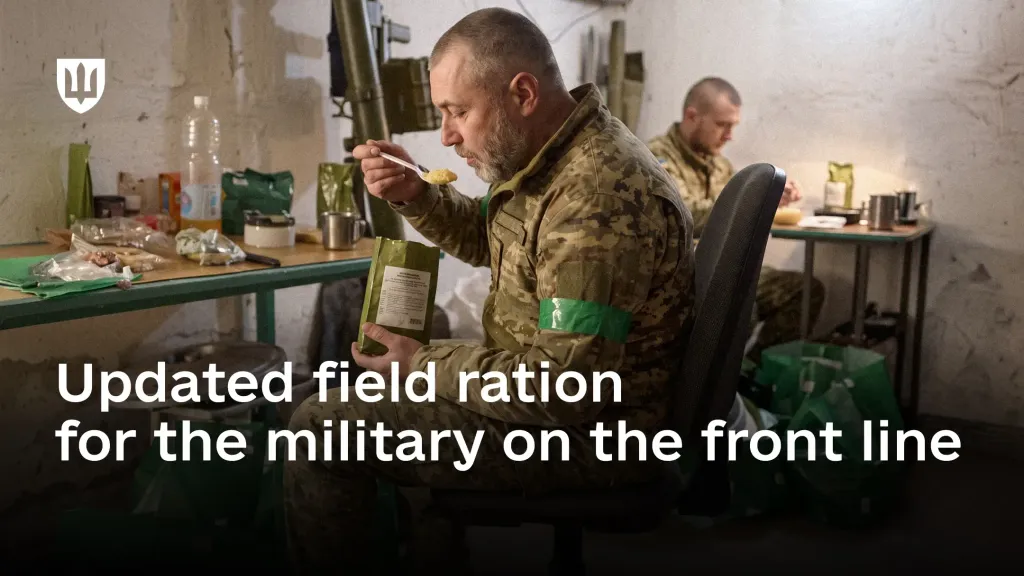
Ukraine’s military has received over 1.3 million tonnes of food through DOT-Chain Food
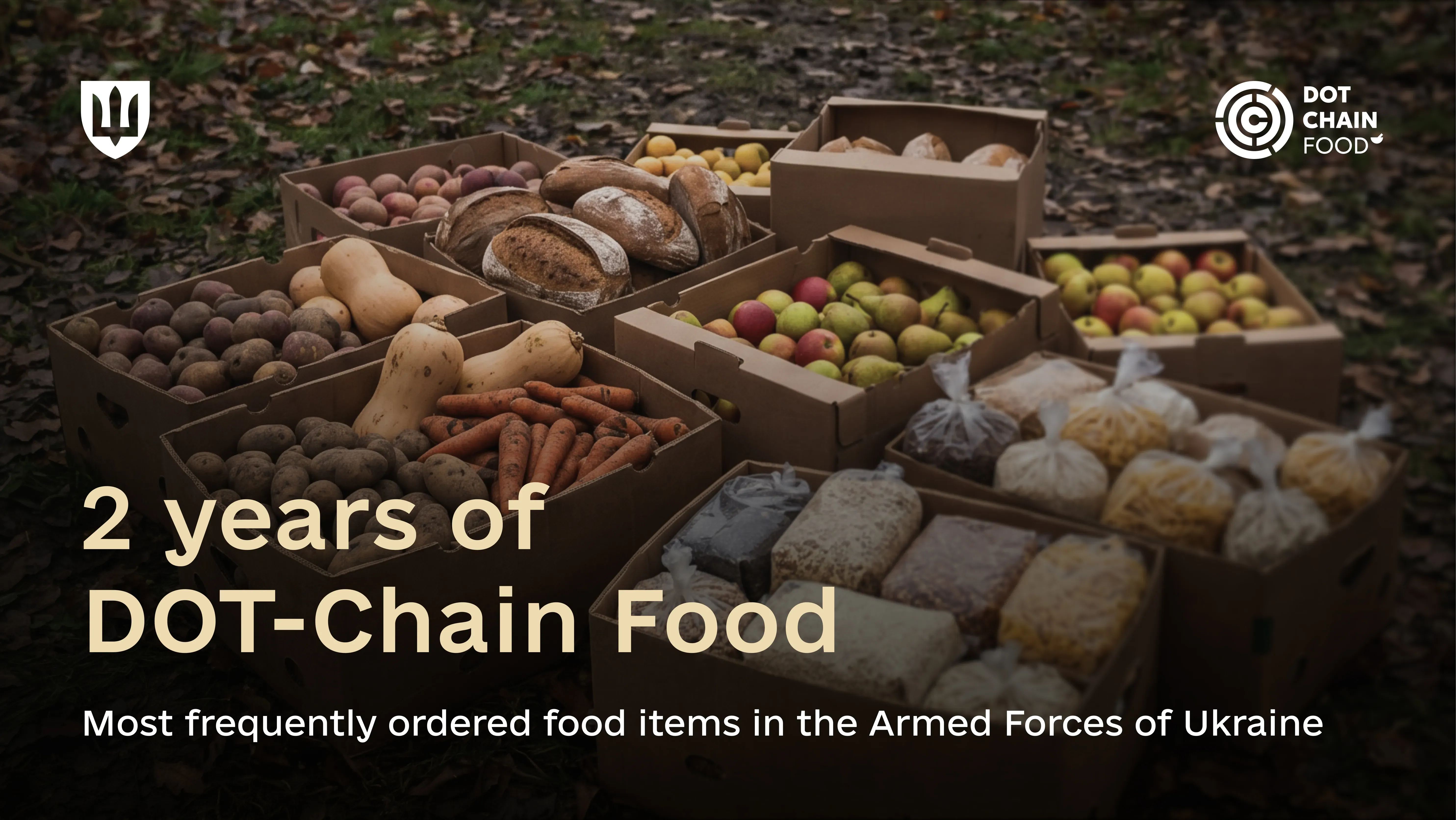
In two years of operation, the Defence Procurement Agency DOT has ensured the delivery of 1.35 million tonnes of food through DOT-Chain Food.
DOT-Chain Food is a digital ecosystem for interaction between military units of the Armed Forces of Ukraine and the State Special Transport Service, the Defence Procurement Agency DOT, and suppliers.
The system covers the food supply cycle after contracts with suppliers are concluded based on the results of tenders on the Prozorro electronic platform.
How DOT-Chain Food simplifies food supplies to the Armed Forces of Ukraine
The DOT-Chain Food system has moved most of the document flow to electronic format, with more than 45,000 documents generated in the system every week. At the same time, the overall supply cycle, from submitting a request to paying the supplier, has been shortened fourfold.
Digital processes obviously move faster than paper ones. Document templates, automated claims, and other digital mechanisms provide greater access to data and more control over processes. At the same time, the administrative burden on the military is reduced. In this way, we are gradually overcoming the “paper army”.
Electronic document management makes the supply system more transparent and, at the same time, more accountable. The document preparation process itself also becomes faster and more straightforward.
The scale of the change can be illustrated by one figure: 1.9 million expenditure invoices confirming food deliveries have been processed in the system since its launch. Previously, the supplier prepared this document only on paper, in three copies, and a service member spent up to two hours working with it. Today, the process is fully digital, and preparing, reconciling, and signing an invoice takes an average of 15 minutes.
The system also gives the Agency real-time access to up-to-date data, in particular on the volumes and dynamics of food deliveries.
Which food items military units ordered most often
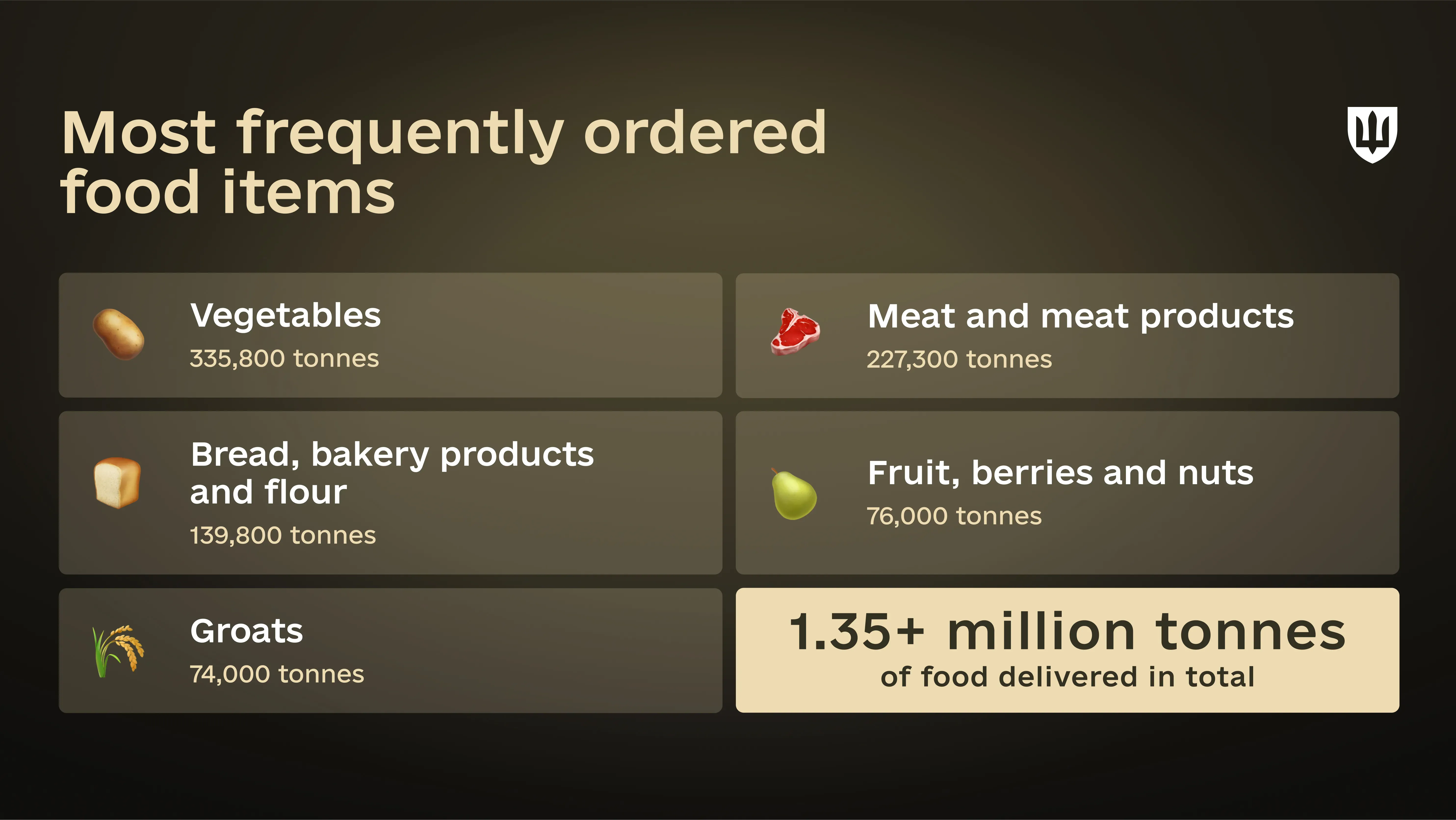
Since DOT-Chain Food was launched, the largest order volumes have been for the following product categories:
- vegetables: 335,800 tonnes;
- meat and meat products: 227,300 tonnes;
- bread, bakery products, and flour: 139,800 tonnes;
- fruit, berries, and nuts: 76,000 tonnes;
- groats: 74,000 tonnes.
A catalog of more than 300 food items is available for ordering through DOT-Chain Food
From request to payment: how the DOT-Chain Food system works
Before DOT-Chain Food, the entire document flow was on paper, and the documents themselves were transferred physically. This included food orders from military units, as well as preparing expenditure invoices, signing certificates, and filing claims (complaints).
The process now works as follows: the military unit’s representative responsible for its food supply submits a weekly request for the consumption period, choosing from the available catalog of more than 300 unique items for which the Agency has previously concluded supply contracts.
Next, an Agency logistics specialist uses the request to place an order with the supplier in the system, and the supplier starts fulfilling it. At this stage, the military unit can create a request to adjust the order if needed.
Before the food is shipped, an expenditure invoice is created, which allows the military unit to plan the receipt of the products in advance. Based on all expenditure invoices for a given period, certificates of completed work are generated and signed by all participants in the process. They serve as the basis for payment to the supplier and effectively complete the food supply cycle.
Thanks to DOT-Chain Food, all these documents are generated online using templates and drop-down lists, which significantly simplifies and speeds up filling them out. The information exchange itself takes place within the system.
Filing claims and calculating penalties for suppliers
DOT-Chain Food also has an automated claims mechanism. It simplifies filing claims against suppliers if they breach their contractual obligations regarding the completeness and timing of food deliveries.
The system automatically generates a report on the identified violations and calculates the amount of the penalties. The military unit’s authorized representative only needs to review the report, add comments if necessary, and sign the document.