Blocking enemy airfields: Ukrainian company among winners of NATO competition
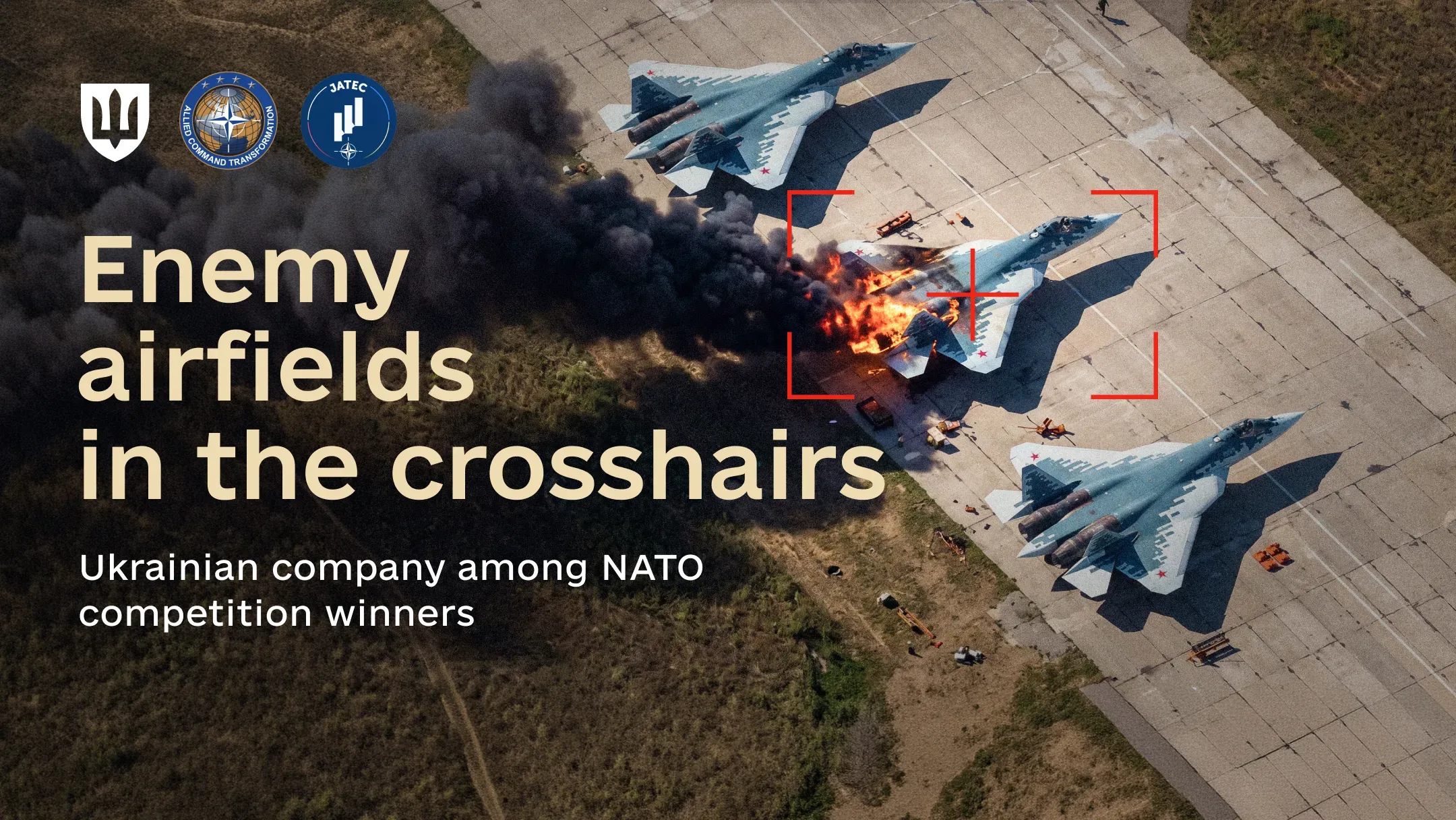
Companies from Czechia, Poland, and Ukraine were named winners of the Persistent Airfield Denial innovation competition, which was held by NATO Allied Command Transformation (ACT) and the NATO-Ukraine Joint Analysis, Training and Education Centre (JATEC).
The objective is to identify solutions capable of restricting the adversary’s use of airfield infrastructure and aviation assets over the long term.
Ukrainian combat experience is a key feature of Persistent Airfield Denial
Persistent Airfield Denial places a special focus on the autonomy of solutions, their scalability, their resistance to electronic warfare, as well as the ability to operate in conditions of limited or no access to navigation and communication systems.
A key feature of the competition is the involvement of Ukrainian combat experience in the evaluation of the proposed technologies. Both the technological novelty of the solutions and the possibility of their application in a modern combat environment were assessed.
Solutions presented by the Persistent Airfield Denial winners
The Czech team LPP Holding took first place, presenting a long-range solution designed to work with minimal dependence on external control.
Second place went to innovators from Poland with a comprehensive proposal for the pre-planned destruction of elements of the enemy's airfield infrastructure.
Third place went to developers from Ukraine, who proposed an artificial intelligence module for targeting. The solution is expected to increase the autonomy and accuracy of the attack systems.
60 applications to the competition – 9 teams in the final
In total, the organizers received more than 60 applications. Nine teams presented their solutions during the final stage of the challenge in Warsaw, Poland.
Ukraine’s experts and jury members included representatives of the Armed Forces of Ukraine and the Ministry of Defence of Ukraine, including the Air Force Command, the Unmanned Systems Forces, the Omega unit of the National Guard of Ukraine, and other formations of the Defence Forces of Ukraine.
On NATO’s side, the finalists’ proposals were evaluated by representatives of Allied Commands and NATO’s Defence Innovation Accelerator for the North Atlantic (DIANA).
The next stage will be testing and combat testing of the solutions, which will allow assessment of their effectiveness and potential for further scaling.