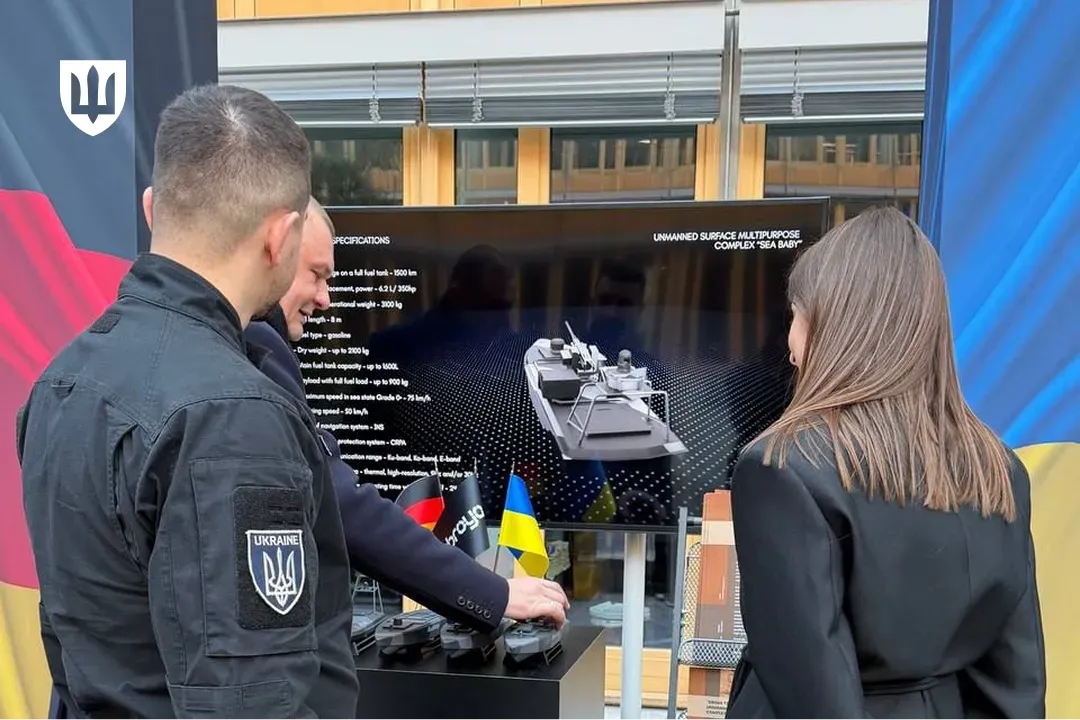
Anna Gvozdiar: Cooperation with allies and localization of production are key to a strong Ukrainian defense industry

During the full-scale war, Ukraine’s defense industry has undergone a profound transformation—from a state-centric model to a flexible ecosystem with hundreds of private companies, decentralized production, and direct feedback loops between the military and engineers. Combined with reforms and the alignment of standards with NATO, this has enabled Ukraine to expand its defense capabilities thirty-fivefold—from $1 billion in 2022 to $35 billion in 2025.
This was stated by Anna Gvozdiar, Deputy Minister of Defence of Ukraine, at the 8th German-Ukrainian Business Forum ‘Resilience in Action — Partnership in Progress’ in Berlin.
In her address, she underscored that European and global security is grounded in strong cooperation among allies, noting that only coordinated, proactive, and swift decisions by defense industries can effectively counter russian aggression.

According to Anna Gvozdiar, a key priority in Ukraine’s cooperation with partners is advancing air and missile defense systems, especially scalable and affordable capabilities to counter russian drones.
At the panel discussion ‘Transforming the Defense Industry: From Wartime Requirements to Long-Term European Security,’ the Deputy Minister of Defence highlighted the key results of Ukraine’s defense industry development. She noted that the fastest growth was seen in the production of drones, robotic systems, electronic warfare (EW) assets, and software solutions, alongside artillery systems, armored vehicles, missiles, and ammunition.
Anna Gvozdiar also highlighted the role of regulatory and procurement reforms, including opening the market to private companies, simplifying imports, introducing transparent electronic procurement, and launching a digital marketplace that enables military units to independently select and order the equipment they need. According to her, the next step should be further localization of production and the establishment of the Defence City special legal regime to support the development of the defense business in Ukraine.
It was also underscored that exporting defense products is considered a means of leveraging surplus production capacity, subject to the full satisfaction of the Defence Forces of Ukraine's requirements. Ukrainian manufacturers are already in a position to offer European partners unmanned and automated systems, counter-drone and electronic warfare capabilities, and a wide array of dual-use products.