200 units of Bohdana self-propelled artillery systems, record support under the Ramstein format, UAH 12 billion for drones, and more: this week’s MoD highlights
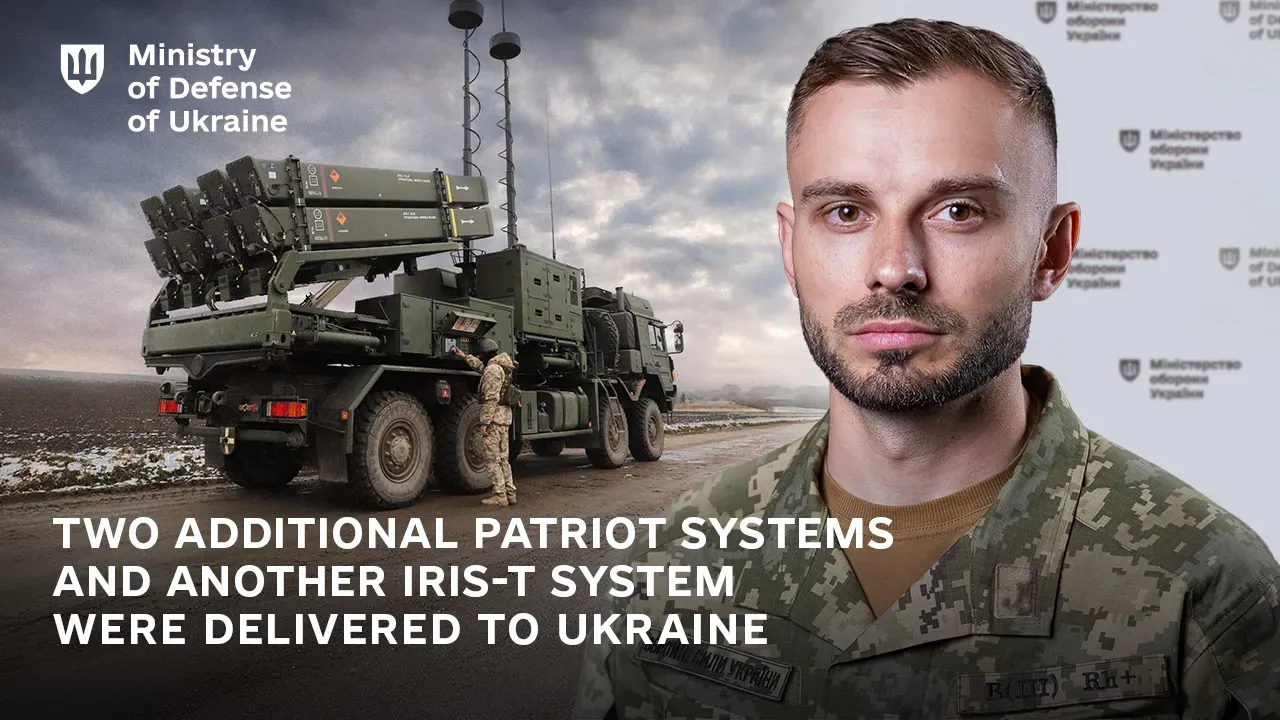
Two additional Patriot systems from Germany, 200 units of Bohdana artillery systems for the Armed Forces of Ukraine, record support under the Ramstein format, and UAH 12 billion for direct drone procurement through DOT-Chain Defence. Below is a summary of the Ministry of Defence’s work this week.
German–Ukrainian defence partnership: over €1 billion in contracts
Ukraine and Germany have signed a package of new defence agreements. The flagship project is the production of 200 units of Bohdana self-propelled artillery systems based on the modern Mercedes-Benz Zetros chassis. This large-scale artillery contract is valued at €750 million.
In addition, a long-term contract for the supply of spare parts for Patriot systems has been signed, along with a €200 million agreement to procure Ukrainian drones.
Overall, Berlin plans to allocate €11.5 billion in support of Ukraine next year.
32nd Ramstein-format meeting: 2025 expected to be a record year for international assistance
2025 is expected to see record levels of international military assistance.
This was stated by the Minister of Defence of Ukraine, Denys Shmyhal, during the 32nd Ramstein-format meeting held this week.
Provided that all commitments are fulfilled, Ukraine could secure $45 billion, exceeding the amount received in any year since the onset of the full-scale war.
Ukraine’s overall defense requirements for 2026 total $120 billion. Ukraine can cover half of this amount from its own resources, while the remaining $60 billion would need to come from partners, the Minister of Defence emphasized.
During the meeting, partners announced new support packages. Specifically, Germany delivered two additional Patriot systems that had been pledged earlier, along with a ninth IRIS-T system. The United Kingdom will reinforce Ukraine’s air defense with £600 million.
The Netherlands will allocate €700 million to drone production. Canada, Denmark, Luxembourg, Lithuania, Estonia, and other countries also announced their plans to support Ukraine in the coming year.
UAH 12 billion allocated for procurement through the DOT-Chain Defence
The Ministry of Defence is allocating UAH 12 billion to DOT-Chain Defence in the first quarter of next year.
What does it mean? Even more direct procurement of drones and electronic warfare (EW) systems for combat brigades.
Equipment worth over UAH 7.5 billion has already been delivered to the frontline through DOT-Chain Defence. Over 100 manufacturers have already been onboarded to the marketplace.
In just a few clicks, service members can order the drones they need on the frontline—within the allocated budget.
The Ministry of Defence is working to ensure that 70% of all FPV drone supplies next year are carried out through DOT-Chain Defence.
Nearly 1,000 interceptor drones per day
The Ukrainian military receives nearly 1,000 interceptor drones per day. In December, the average supply of interceptor drones to counter Shahed-type UAVs reached almost 950 units per day.
The Defence Procurement Agency (DPA) is currently cooperating with more than 10 manufacturers.
Interceptor drones are now available through DOT-Chain Defence, allowing brigades to independently select systems to counter enemy reconnaissance drones like Orlan or Zala.
Large-scale construction of fortifications
Large-scale fortification construction efforts are ongoing in Ukraine. Works to strengthen defensive fortifications are continuing across all frontline regions of Ukraine.
During a visit to Zaporizhzhia Oblast, the Minister of Defence received a briefing from the State Special Transport Service on works carried out in the Zaporizhzhia, Donetsk, Sumy, Kharkiv, Chernihiv, and Kyiv regions.
As of now, more than 2,000 platoon strong points, over 3,000 km of anti-tank trenches, more than 1,000 km of pyramidal anti-tank obstacles, and 16,000 km of ‘Yegoza’ concertina-wire barrier lines have been constructed.
Fortification construction is ongoing, with plans to further increase the pace of works and enhance construction technologies.
Female uniform needs fully met
In 2025, all requirements of female service members of the Armed Forces of Ukraine for field uniforms and base layers were fully met.
The Ministry of Defence supplied over 30,000 sets of field uniforms, including 500 enhanced-durability sets, along with more than 100,000 units of base layers for different seasons.
The uniforms are designed with a specialized cut and a broad size range, enhancing comfort and service conditions for female service members.