Air Force Capability Coalition: how partners are helping build the future of Ukraine’s Air Force
The Ministry of Defence of Ukraine explains what the Air Force Capability Coalition is, which countries are part of it, and what aircraft and aviation equipment Ukraine receives from partners through the Ramstein format.
The Air Force Capability Coalition (AFCC) is one of the capability coalitions established within the Ukraine Defense Contact Group (Ramstein format).
The Coalition’s primary mission is to help Ukraine develop a modern, Western-style Air Force aligned with NATO standards. This involves not only providing combat aircraft but also comprehensively transforming the aviation component of the Defence Forces of Ukraine, including training aircrew and technical personnel, developing infrastructure, providing weapons, establishing maintenance systems, and integrating into modern air operations command and control systems.
How the Air Force Capability Coalition was established
The groundwork for establishing the Air Force Capability Coalition was laid in 2023, when Ukraine and its partners began working on the transition from Soviet-era aircraft and aviation equipment to modern Western platforms.
In May 2023, the United Kingdom and the United States proposed establishing an international coalition to develop Ukraine’s combat air capabilities.
In October 2023, the establishment of the Air Force Capability Coalition was officially announced at a meeting of the Ukraine Defense Contact Group. Denmark, the Netherlands, and the United States became its co-leads.
Air Force Capability Coalition member countries
The Coalition comprises 14 partner countries: Belgium, the United Kingdom, Denmark, Canada, Luxembourg, the Netherlands, Norway, Poland, Portugal, Romania, the United States, France, Czechia, and Sweden.
Each country contributes according to its capabilities, from personnel training and equipment transfers to funding training programs and infrastructure development.
Key areas of focus for the Air Force Capability Coalition
The Air Force Capability Coalition supports the comprehensive development of Ukraine’s military aviation in line with NATO standards through personnel training, the provision of modern aircraft and weapons, and the development of the necessary infrastructure.
Personnel training
One of the Coalition’s key areas of focus is training Ukrainian pilots, engineers, technicians, and flight operations support personnel.
To this end, a multi-level international training system has been established, covering language training, training on Western aircraft and aviation equipment, and the training of instructors and technical personnel. Training takes place in several partner countries — the United Kingdom, Canada, the United States, and Belgium — as well as at the European F-16 Training Center in Romania.
Modern combat aircraft
The Coalition’s most prominent achievement has been Ukraine’s acquisition of F-16 multirole fighters.
Today, however, the Coalition’s activities extend far beyond a single platform.
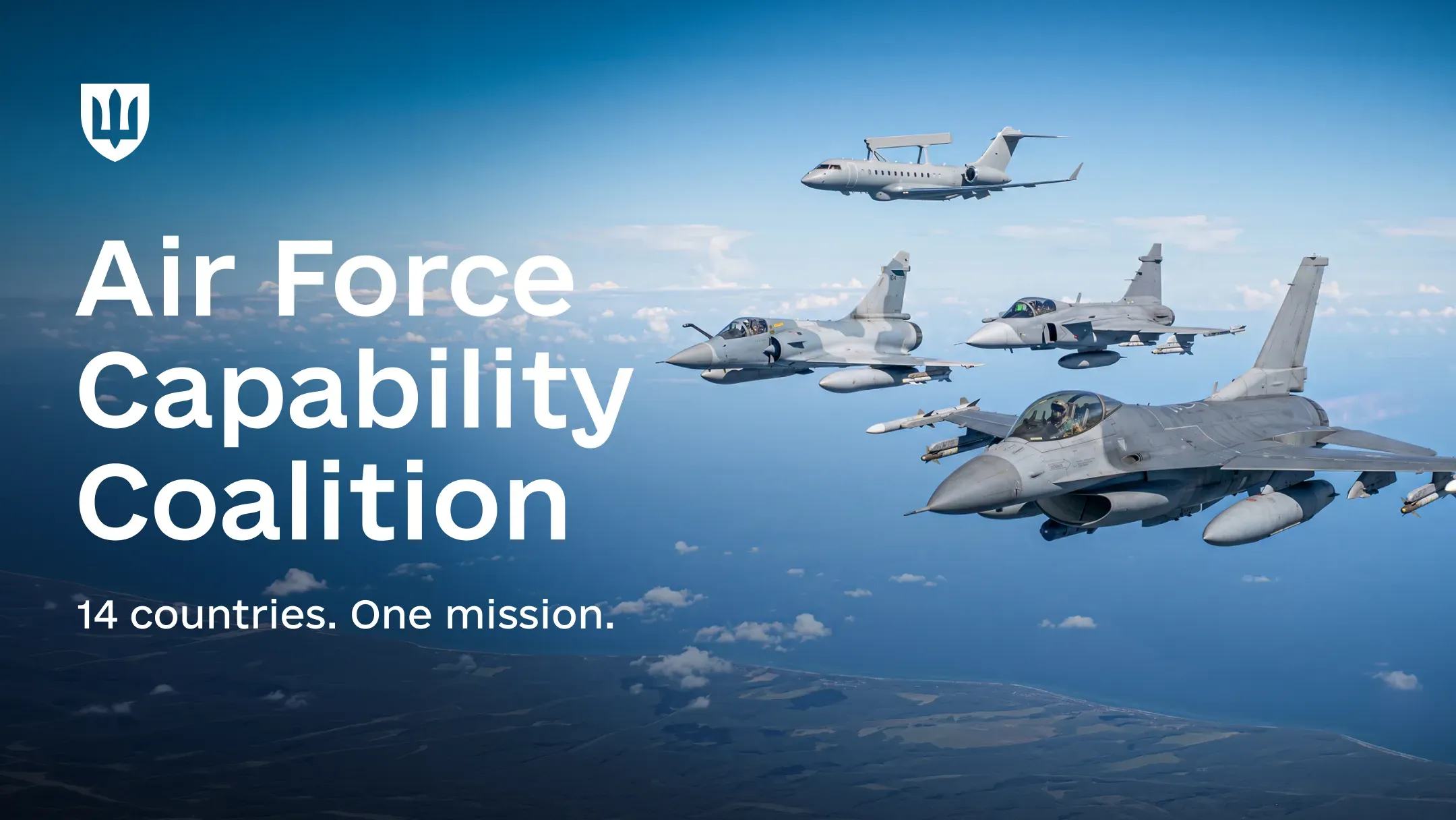
French Mirage 2000 fighters are also strengthening Ukraine’s air capabilities, while cooperation with Sweden has already resulted in concrete agreements to develop capabilities based on JAS 39 Gripen aircraft.
On May 28, 2026, Ukraine and Sweden signed a declaration to deepen defense cooperation in combat aviation. Sweden will transfer 16 Gripen C/D fighters to Ukraine at no cost. In June, Ukraine and Sweden officially signed an agreement for the procurement of 16 Swedish JAS 39 Gripen E multirole fighters. These aircraft will take to Ukrainian skies as early as the beginning of 2029.
Airborne early warning and control (AEW&C) aircraft
An important part of developing Ukraine’s air capabilities was Sweden’s decision to provide Ukraine with an ASC 890 AEW&C aircraft. The transfer was announced in May 2024 and confirmed in August 2025, while the first combat sorties by the ASC 890 over Ukraine were recorded as early as March 2026.
An AEW&C aircraft can detect airborne targets at long range, coordinate combat air operations, and enable more effective employment of fighter aircraft. Combined with F-16, Mirage 2000, and Gripen fighters, it forms the foundation of a modern network-centric air combat system aligned with NATO standards.
Weapons, logistics, and infrastructure
The Coalition also coordinates the provision of air-launched weapons, spare parts, and ground equipment, and helps develop the infrastructure needed to operate Western aircraft and aviation equipment.
This includes modernizing airfields, developing maintenance and repair capabilities, training technical personnel, establishing a resilient logistics support system, and constructing protected aircraft shelters.
Another important component of this effort is the development of training infrastructure. In 2026, through the Coalition, Ukraine received modern mobile F-16 flight simulators that enable aircrew to train and maintain their skills to NATO standards without using combat aircraft. These systems enable more intensive aircrew training, reduce wear on aircraft and aviation equipment, and accelerate the training of new pilots.
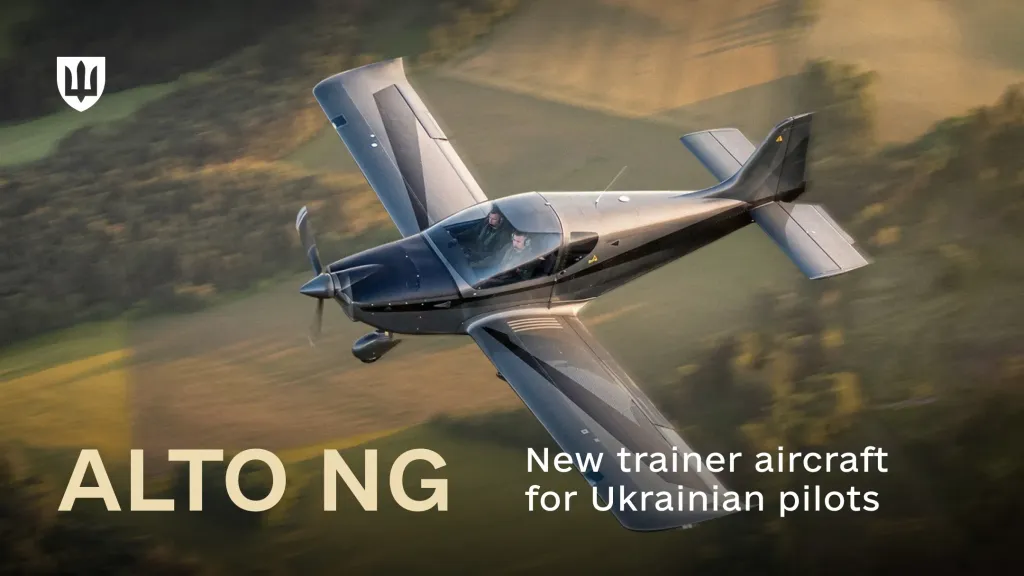
For its part, Czechia has made its L-39 training and combat aircraft available through the Air Force Capability Coalition as a transitional platform for training Ukrainian pilots. Czechia has also transferred light Alto NG aircraft to Ukraine. These aircraft will help establish a new NATO-standard training system for young pilots in Ukraine.
Why the Coalition is strategically important
In its early days, the Air Force Capability Coalition was associated primarily with training Ukrainian pilots on the F-16. Today, however, its role is much broader.
In practice, the Coalition is facilitating the gradual transition of Ukraine’s Air Force from its Soviet legacy to a modern Western model of operation.
This work is expected to result in a comprehensive aviation ecosystem comprising modern combat aircraft, an airborne early warning and control (AEW&C) aircraft, trained personnel, modern weapons, integrated command and control systems, and advanced infrastructure.
This is why the Coalition is not only a mechanism for military assistance but also one of the key instruments for the long-term modernization of Ukraine’s Air Force and its integration into the Euro-Atlantic security framework.
The Ministry of Defence of Ukraine previously explained how the Capability Coalitions operate within the Ramstein format and the role they play in strengthening the Defence Forces of Ukraine.