Ukrainian air defense intercepted nearly 92% of drones amid intensified aerial attacks in May
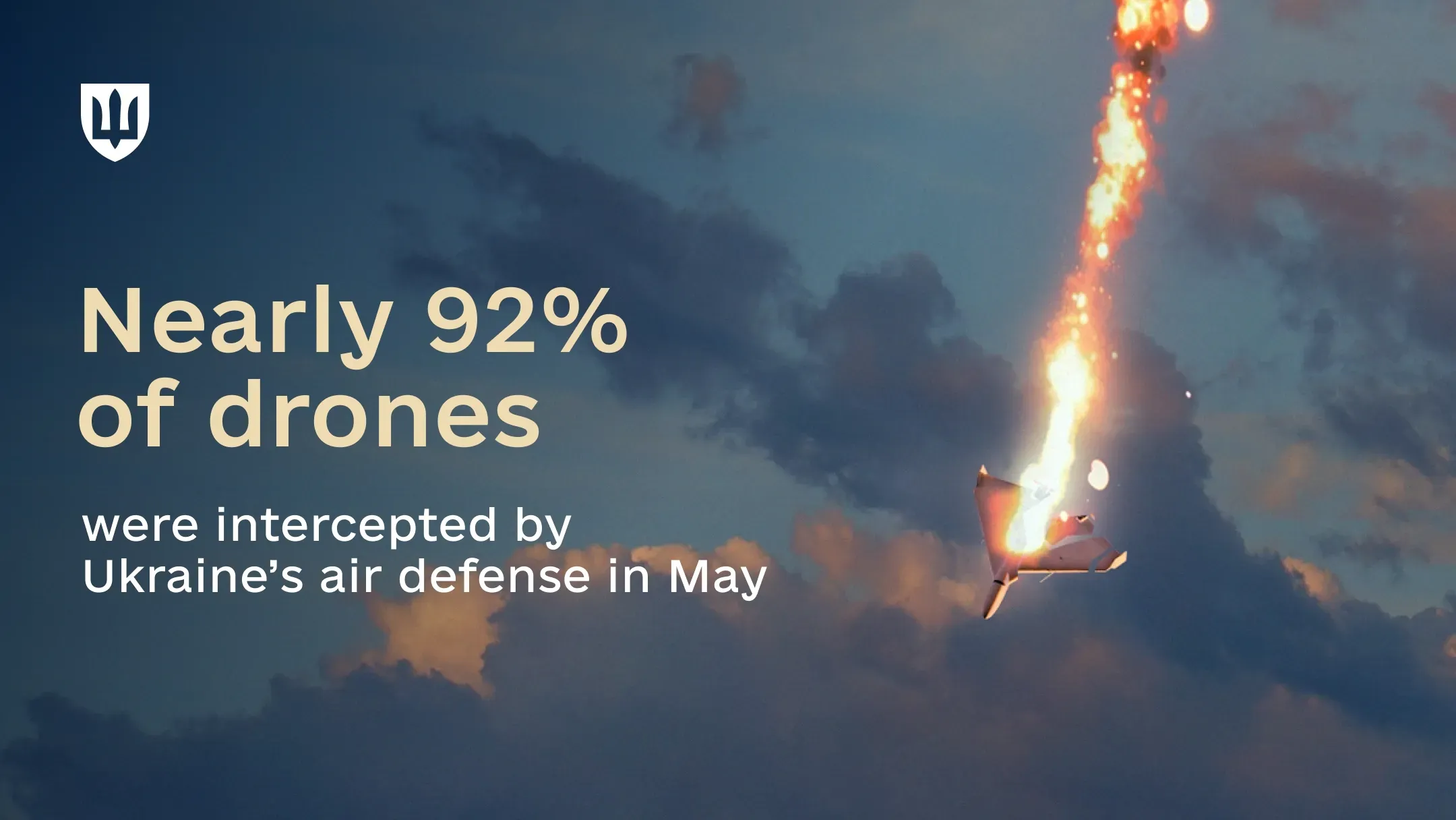
Despite an increase in the intensity of enemy aerial attacks, Ukraine’s air defenses improved their effectiveness at intercepting drones and missiles in May.
According to the Ukrainian Air Force’s daily reports, the enemy employed 8,351 aerial attack assets during large-scale strikes last month. By comparison, the figure in April was approximately 6,700.
The intensity of enemy attacks has therefore remained at record levels for several consecutive months.
How Ukraine’s air defense performed in May
In May, Ukraine’s air defense intercepted 7,588 drones and missiles:
- Shahed, Gerbera, Italmas, and other UAVs: 8,150 launches recorded, 7,476 intercepted; interception rate — 91.73%;
- Cruise and ballistic missiles: 211 launches recorded, 112 intercepted; interception rate — over 53%.
The overall interception rate for aerial targets during large-scale attacks reached 90.75%.
Among the missiles destroyed in May were:
- 2 Kh-47M2 Kinzhal aeroballistic missiles, which are exceptionally difficult to intercept;
- 50 Kh-101 cruise missiles;
- 10 Iskander-M/KN-23 ballistic missiles;
- 11 Kalibr cruise missiles;
- 14 Kh-59/69 guided air-launched missiles;
- 24 Iskander-K cruise missiles.
Ukraine’s air defenders continue to achieve results unmatched by any other military. However, air-raid alerts must never be ignored under any circumstances. Whenever air defense forces are repelling enemy attacks, people should remain in shelters.
The largest drone and missile attacks of May
Overnight into May 13, the enemy launched a large-scale attack that lasted for more than 30 hours, attempting to overwhelm Ukraine’s air defense system through multiple waves of strikes.
A total of 1,567 drones and 56 missiles of various types were employed during the attack. The interception rate reached 93% for drones and 72% for missiles. Ukraine’s air defense forces operated virtually without interruption, pausing only briefly to restore operational readiness, reload equipment, and allow personnel short periods of rest.
Another exceptionally large and complex attack took place overnight into May 24. A distinctive feature of this large-scale attack was the use of numerous air attack assets with different flight characteristics, launched in several waves and flying almost simultaneously.
During the attack, the enemy launched 600 UAVs of various types, 30 conventional ballistic missiles, Kinzhal and Tsirkon missiles (which also follow ballistic trajectories of flight), more than 50 cruise missiles, and two Oreshnik intermediate-range ballistic missiles.
Despite the complexity of the attack, Ukraine’s air defenders intercepted 91% of the drones and more than half of all missiles launched.
Even under record pressure, Ukraine’s air defense continues to protect the population and critical infrastructure. Every missile and drone intercepted means civilian lives saved, less destruction, and a significant blow to the enemy’s plans.
However, under record operational strain, Ukraine urgently needs additional missiles capable of intercepting ballistic threats. Therefore, Ukraine is relying on support from partners to procure PAC-3 missiles for Patriot air defense systems capable of intercepting ballistic missiles. The matter was discussed with partners ahead of the next meeting of the Ukraine Defense Contact Group (Ramstein-format), scheduled for June.
Earlier, the Ministry of Defence provided an overview of the characteristics of the North Korean KN-23 and KN-24 ballistic missiles that russia has used in attacks against Ukraine.
In addition, newly available information indicates that the enemy has modified the Kh-101 cruise missile at least three times in an attempt to overcome Ukraine’s air defense.